Back to topics

Topic

Prohibition

Browse primary sources, people, eras, and related themes connected to prohibition.

4
Sources
9
People
3
Eras
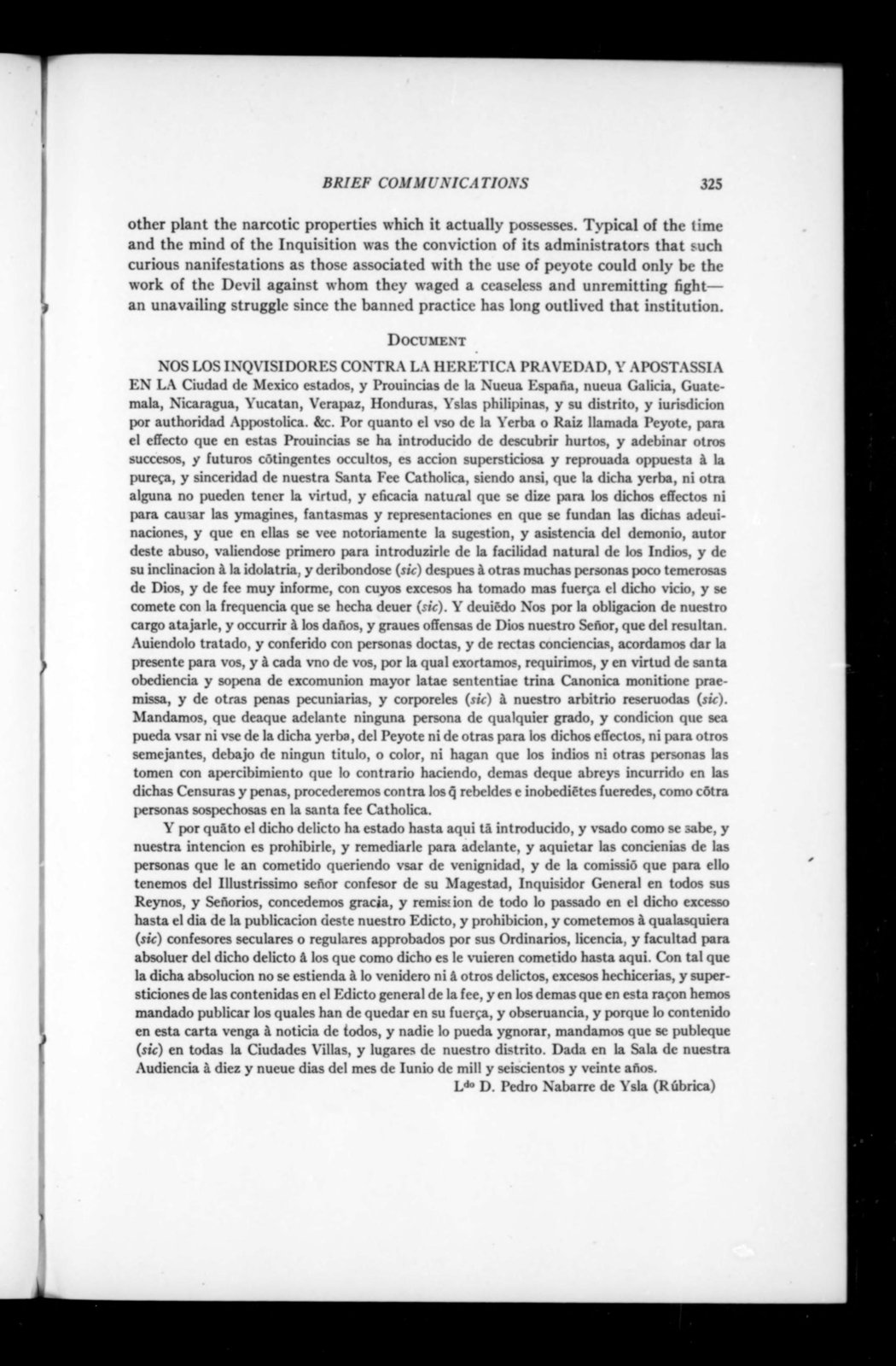
Edict of the Mexican Inquisition Prohibiting the Use of Peyote (1620)

Inquisition Edict against Peyote

An edict of the Mexican tribunal of the Holy Office, issued in Mexico City on 19 June 1620 over the signature of Licenciado Pedro Nabarre de Isla, prohibiting the use of peyote to discover thefts and divine hidden or future events. The inquisitors deny the plant any natural power to produce visions, attribute them to the devil, threaten users with excommunication and proceedings as suspects in the faith, and pardon use before the edict's publication. The Spanish text is hosted as printed by Irving A. Leonard (1896–1996) in American Anthropologist in 1942, with a new English translation.

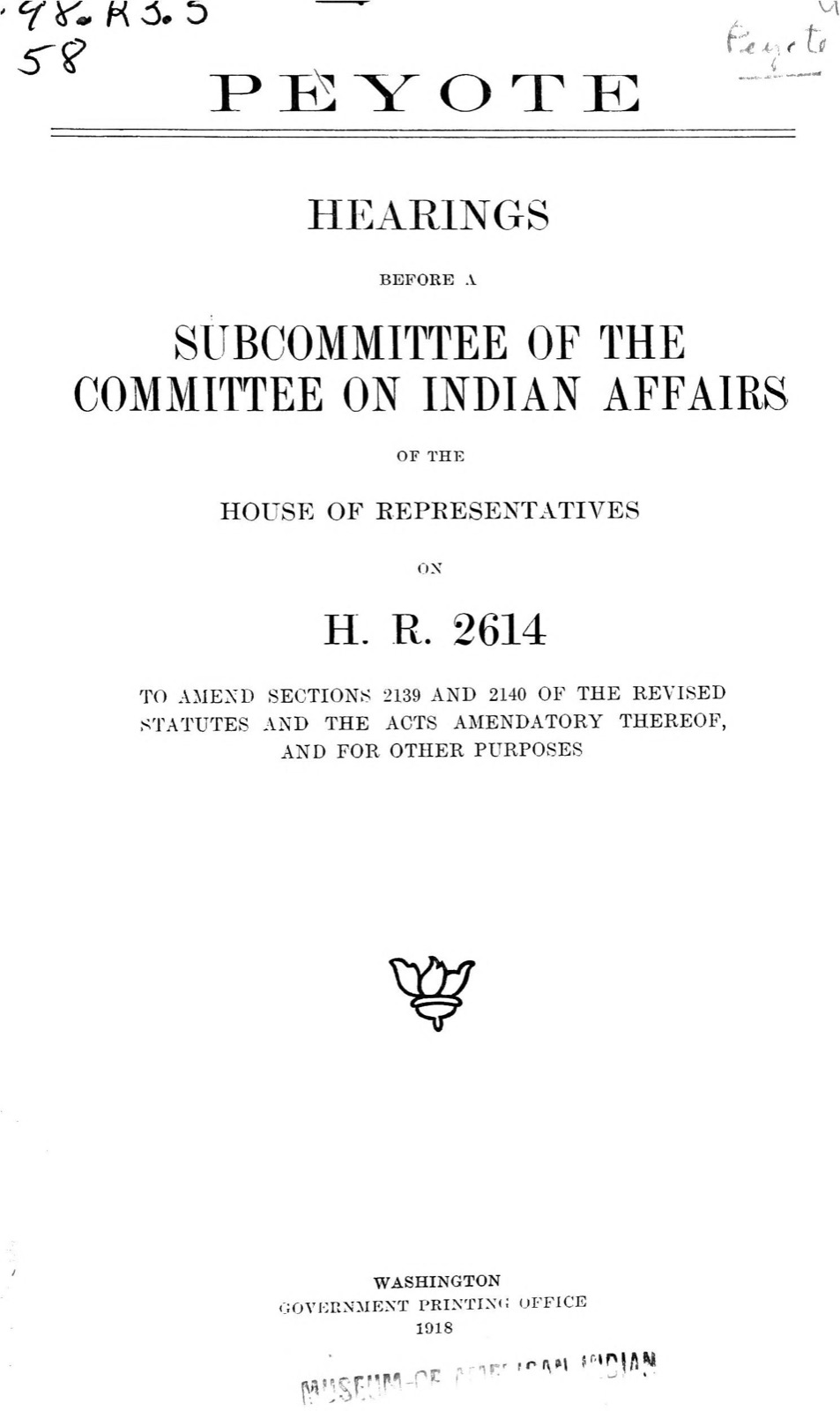
Peyote: Hearings Before a Subcommittee of the Committee on Indian Affairs, House of Representatives, on H.R. 2614

Peyote Hearings, H.R. 2614 (1918)

Hearings Before a Subcommittee of the Committee on Indian Affairs, House of Representatives, on H.R. 2614

A subcommittee of the House Committee on Indian Affairs held February-March 1918 hearings on H.R. 2614, a bill to prohibit peyote use in Indian Country. Witnesses included ethnologist James Mooney, Osage chief Fred Lookout, Omaha ethnographer Francis La Flesche, Arapaho delegate Cleaver Warden, and Cheyenne-Arapaho Paul Boynton.

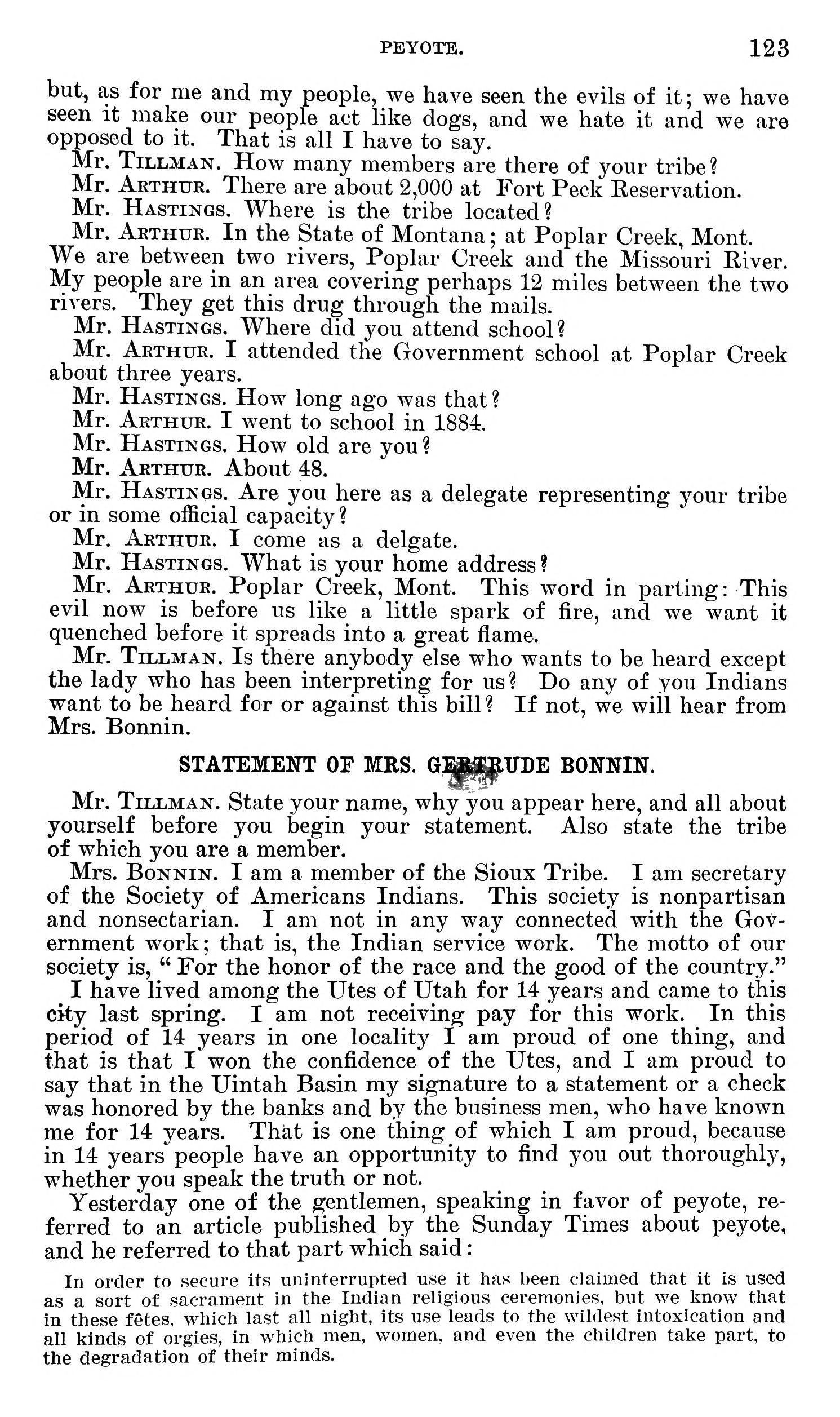
Testimony of Gertrude Bonnin (Zitkála-Šá) against Peyote, House Indian Affairs Subcommittee Hearings on H.R. 2614

Zitkála-Šá Peyote Testimony (1918)

Gertrude Simmons Bonnin (Zitkála-Šá, 1876–1938), the Yankton Dakota writer and secretary of the Society of American Indians, testified against peyote on February 22, 1918, before the House Indian Affairs subcommittee considering H.R. 2614, a bill to prohibit peyote among Indians. Drawing on her fourteen years among the Utes of the Uintah Basin, she described deaths, sexual misconduct, and fraud by the peyote missionary Peter Phelps, and she disputed the ethnologist James Mooney (1861–1921), who had ridiculed her newspaper photograph the day before. The record hosts her statement and cross-examination in full, her additional statement, the signed statements she co-authored, and the passages by Mooney and Cleaver Warden that answer her.