Sources in this era
16 results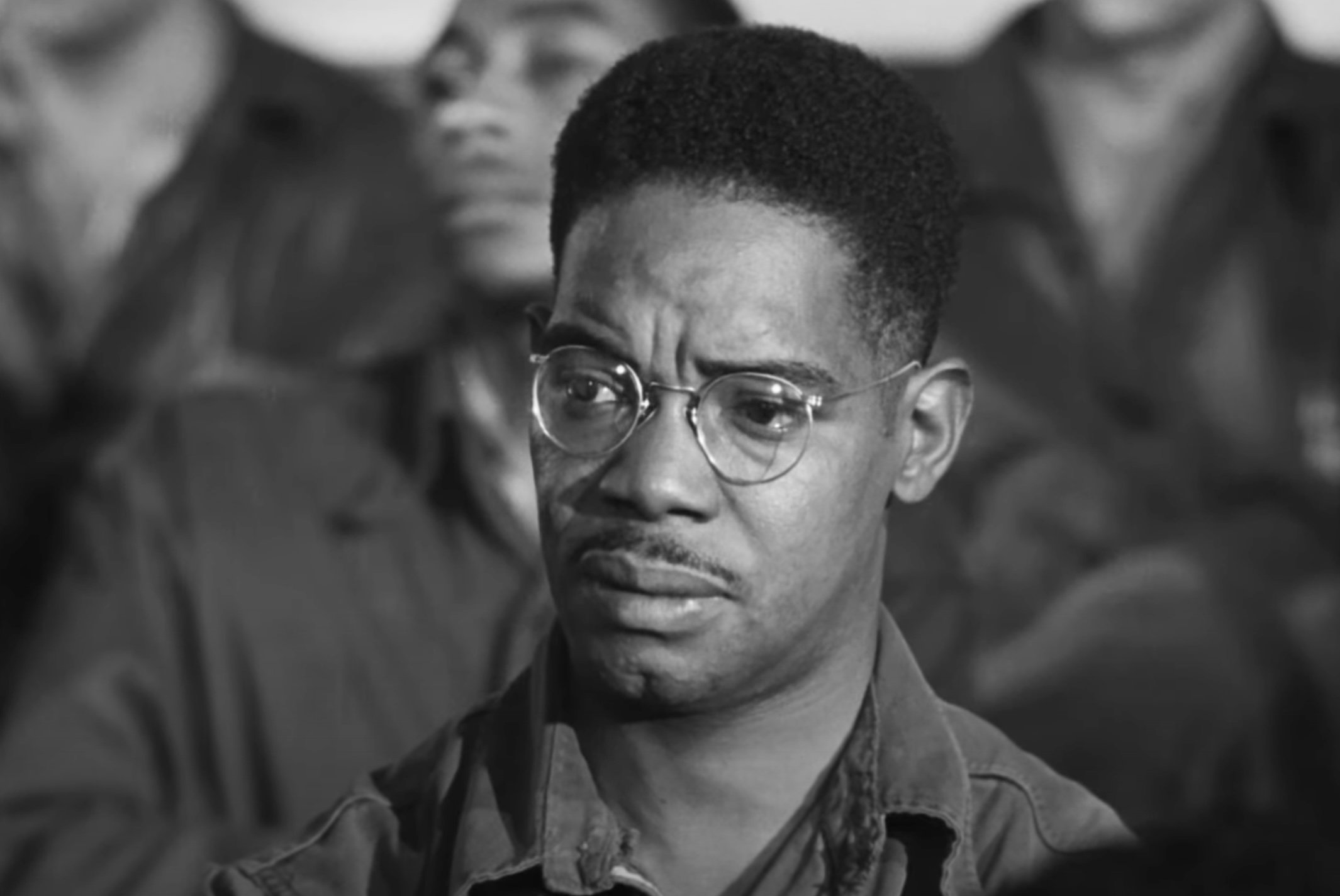 1946 (withheld from release until 1980)
Let There Be Light
John Huston · Film
John Huston's documentary for the U.S. Army about soldiers treated for psychiatric breakdown at Mason General Hospital on Long Island after the Second World War. The Army kept it from the public until 1980. Its scenes of narcosynthesis, in which doctors interview soldiers under an intravenous barbiturate, record a d...
TherapyPTSDMilitary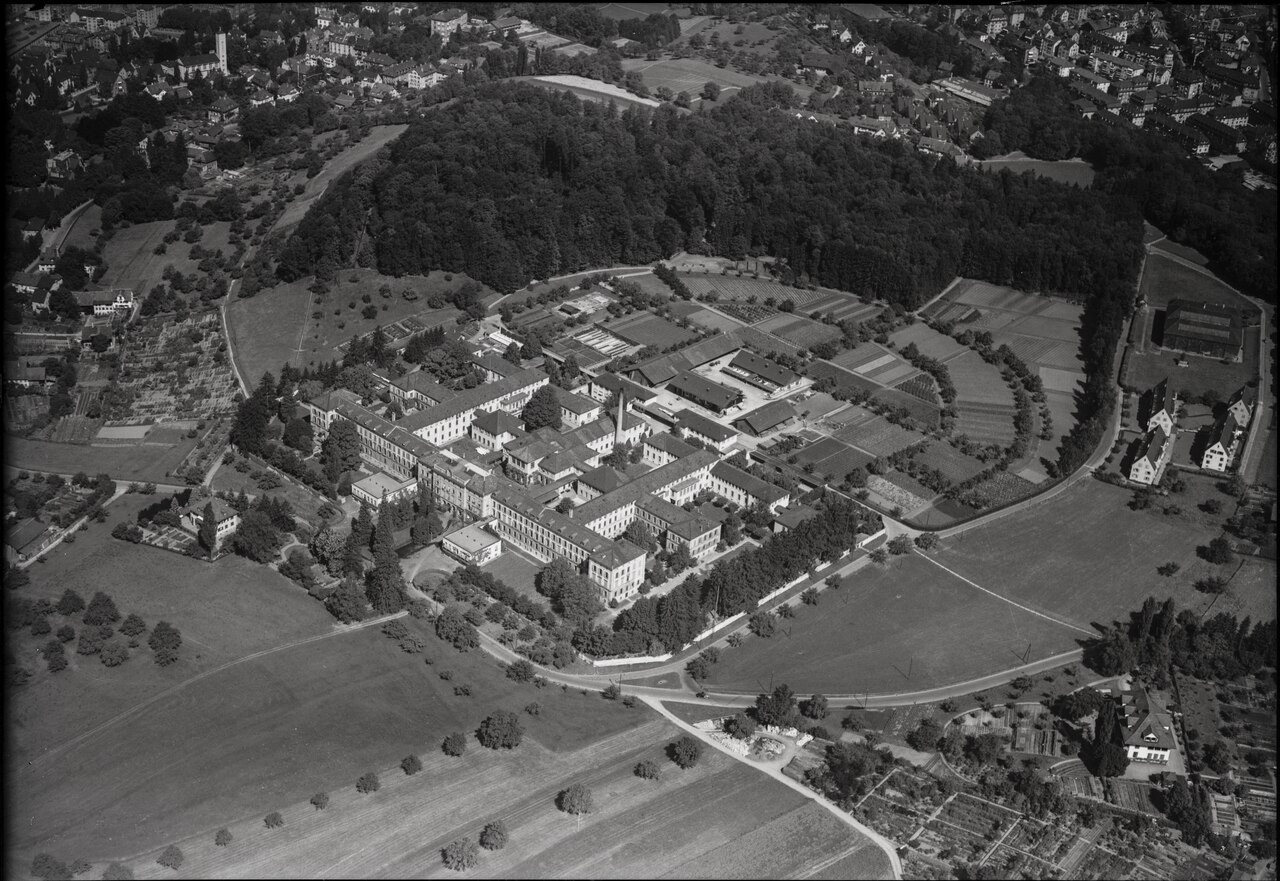 1947
LSD, a Phantasticum from the Ergot Group
Werner A. Stoll · Academic Article
Werner Stoll's first systematic clinical study of LSD, examining sixteen healthy volunteers and six schizophrenic patients, plus Stoll's own self-experiment. Published in 1947 following Hofmann's 1943 discovery at Sandoz, it established key vocabulary for psychiatric LSD research.
PsychiatryLSD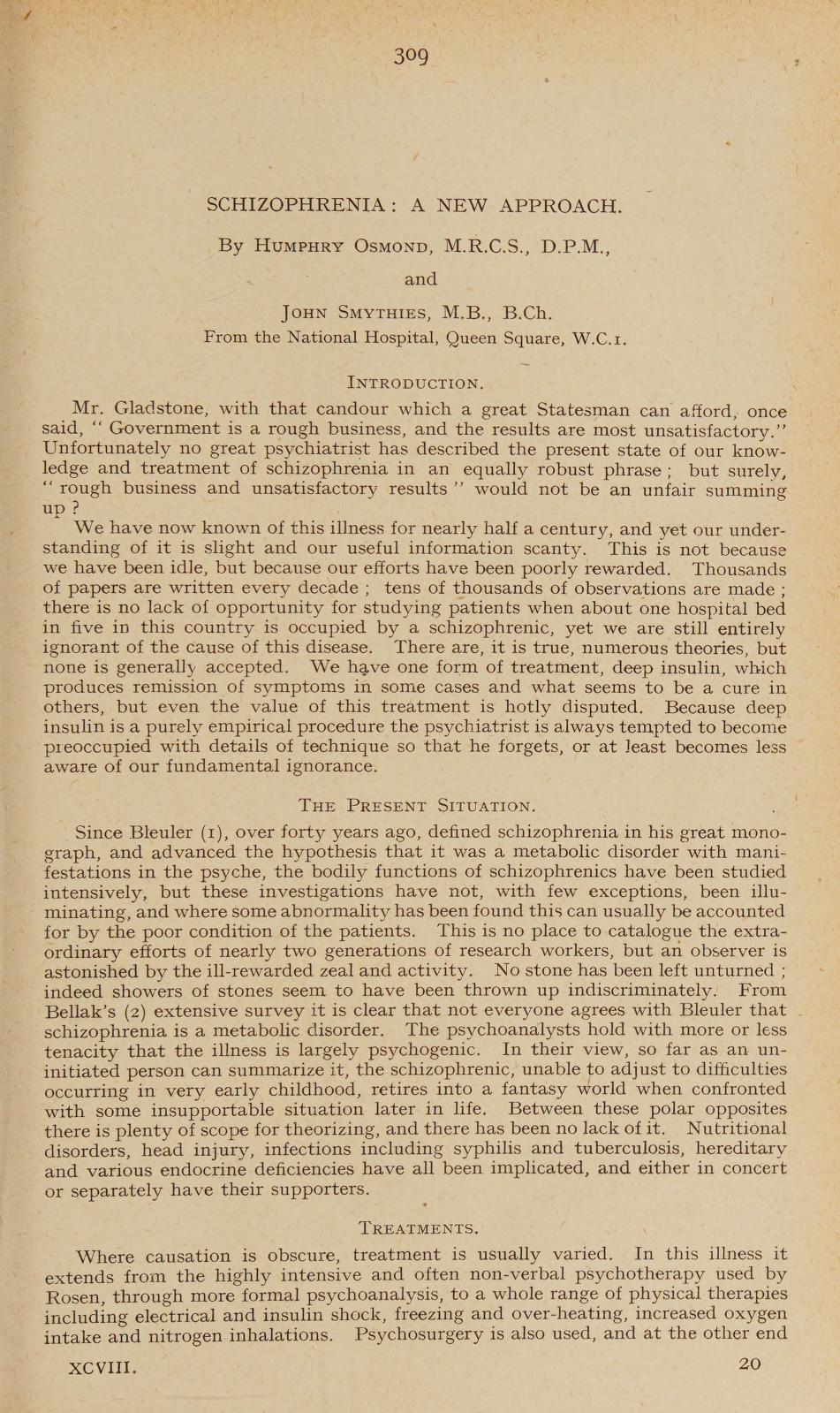 April 1952
Schizophrenia
John Smythies and Humphry Osmond · Academic Article
Osmond and Smythies argue that schizophrenia involves a naturally occurring adrenaline derivative chemically close to mescaline. Hosted here is a fair-use excerpt: their case that mescaline intoxication reproduces the symptoms of acute schizophrenia, the biochemical note on how a disorder of adrenaline's transmethyl...
LSD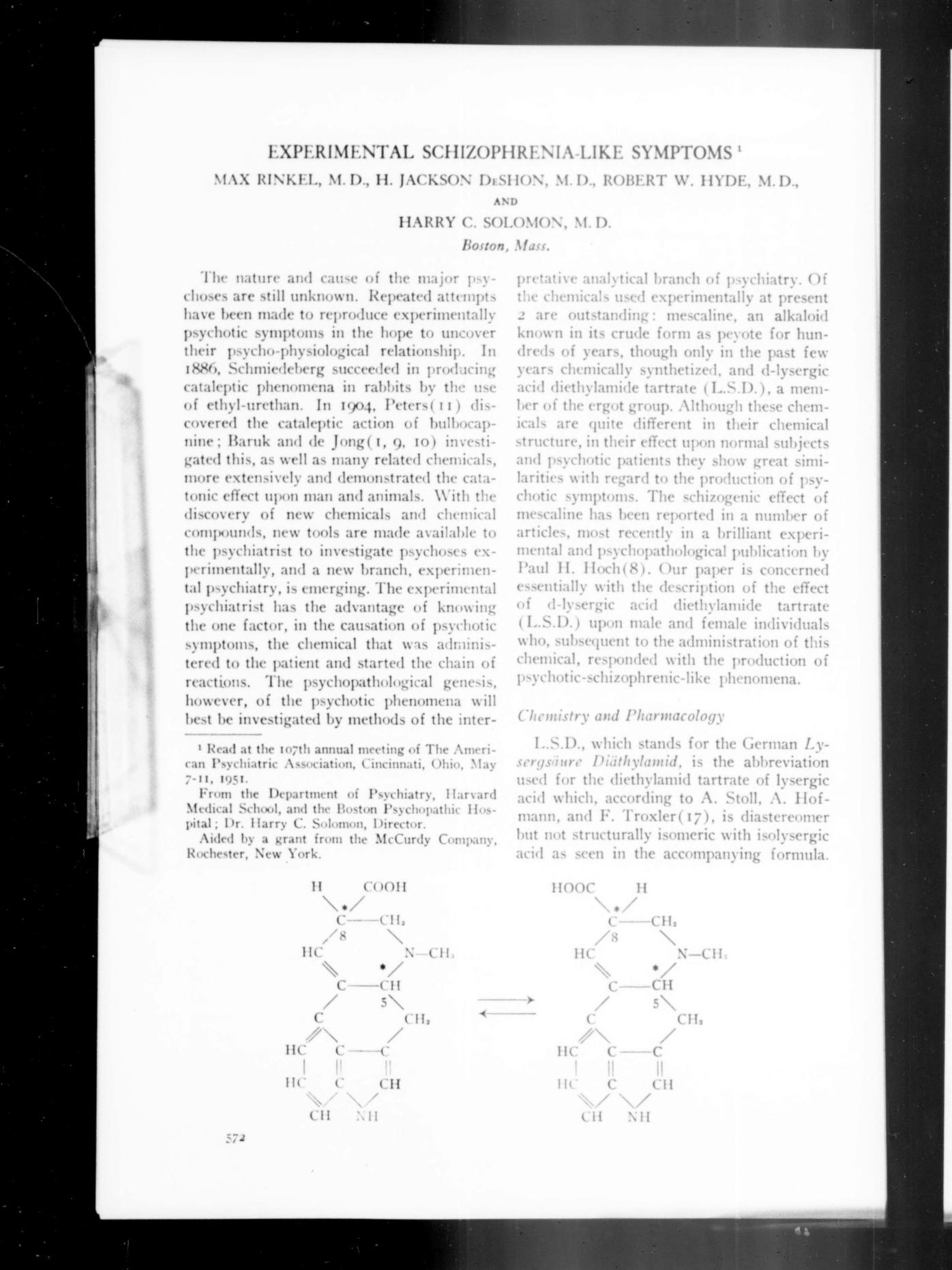 February 1952
Experimental Schizophrenia-Like Symptoms
Max Rinkel, Harry C. Solomon, H. Jackson DeShon, and Robert W. Hyde · Academic Article
Rinkel and colleagues at Boston Psychopathic Hospital administered microgram doses of LSD tartrate to normal volunteers and schizophrenic, depressive, and paranoid patients. They reported the drug reliably produced thought disorder, hallucination, and depersonalization resembling clinical schizophrenia.
LSD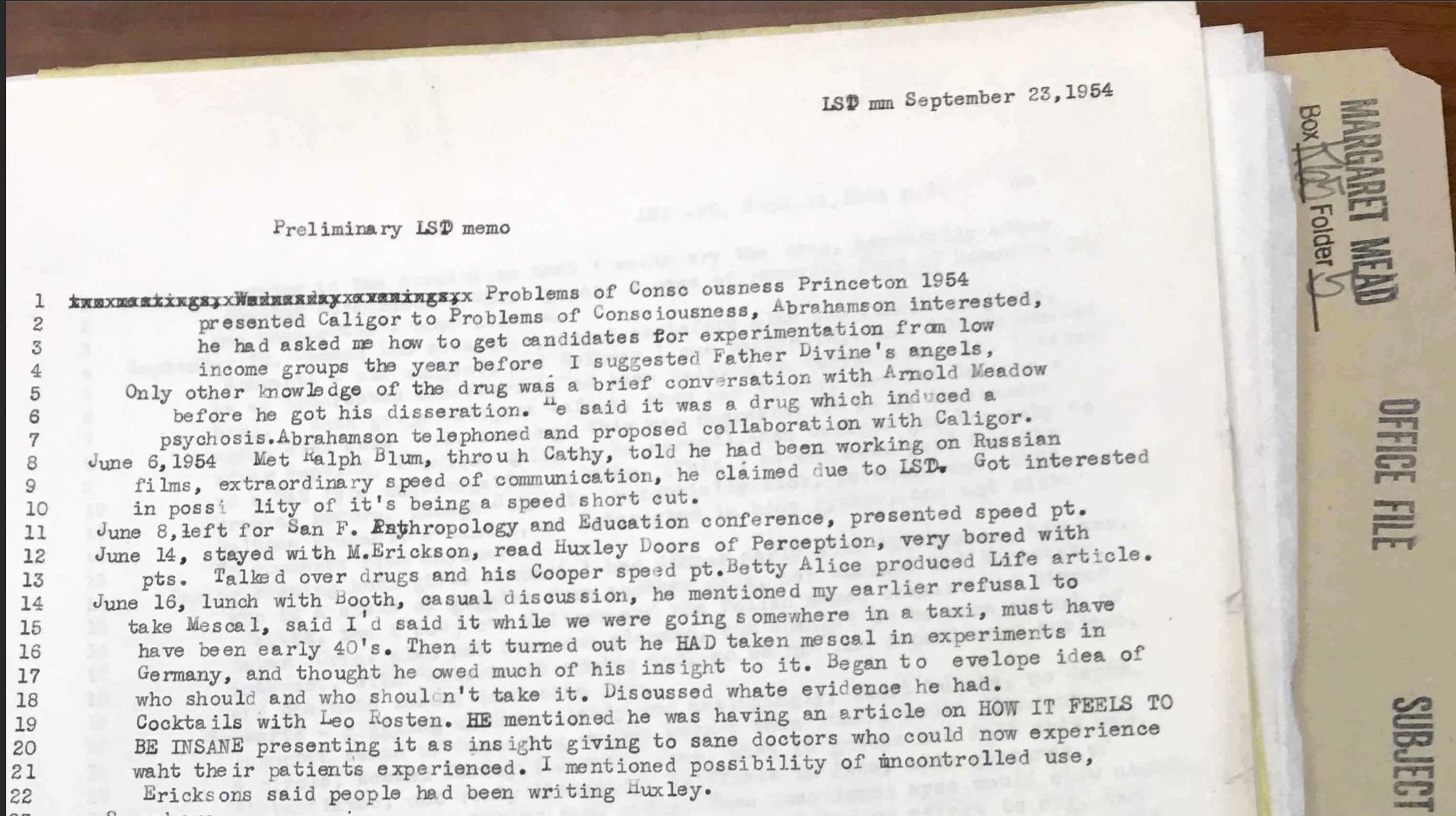 September 23-25, 1954
Margaret Mead’s LSD Memo
Margaret Mead · Manuscript
A memo from anthropologist [Margaret Mead](/biographies/margaret-mead)'s papers at the Library of Congress, recording her interest in LSD and other psychedelics in the summer of 1954 and her work with [Harold Abramson](/biographies/harold-abramson)'s research team, including [Conan Kornetsky](/biographies/conan-korn...
AnthropologyMKULTRALSD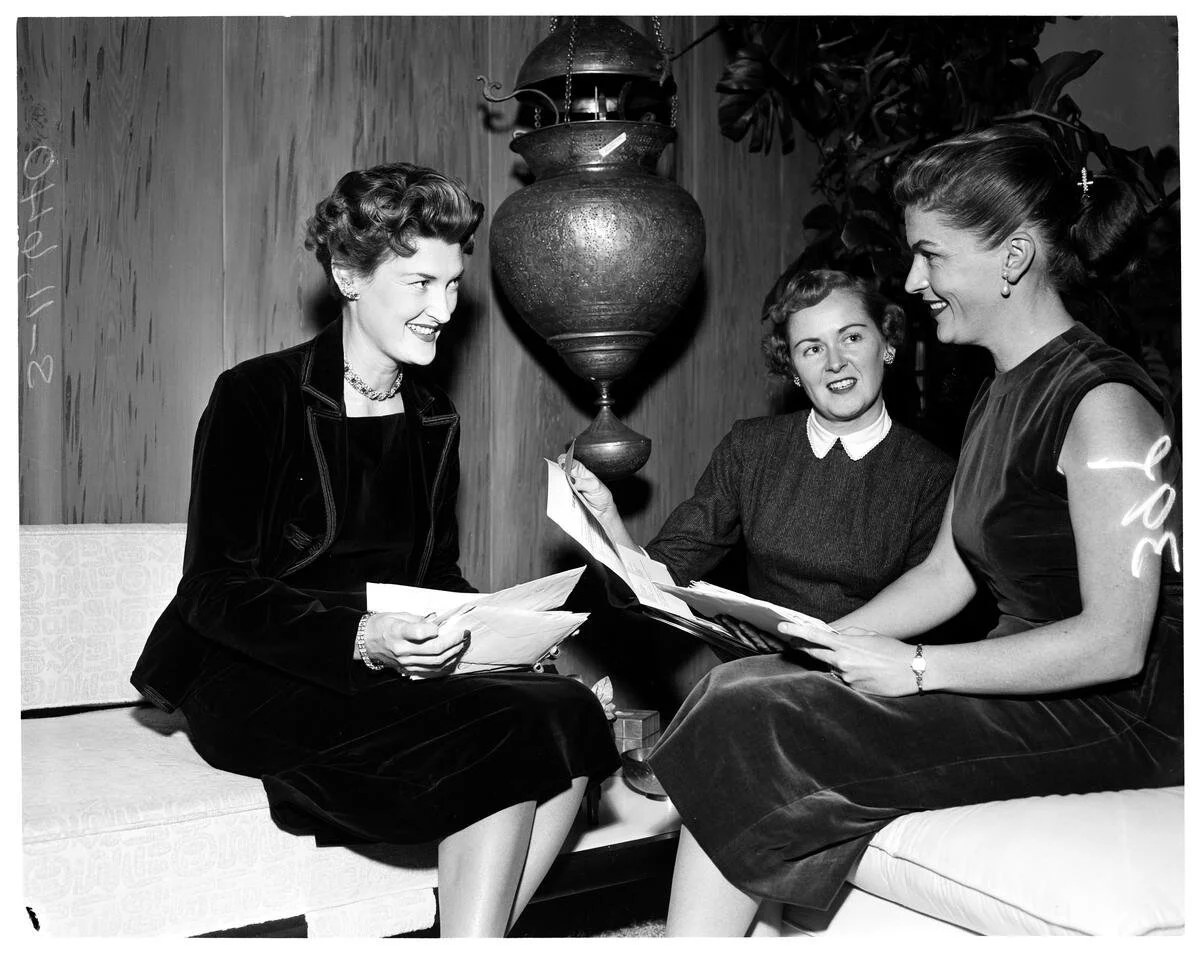 October 10, 1955 (recalled in 2002)
Betty Eisner's first LSD trip
Betty Eisner · Manuscript
The psychologist Betty Eisner (1915–2004) recalls being the first research subject in Sidney Cohen's LSD study at UCLA in October 1955, quoting at length from the report she wrote after the session. The excerpt describes the psychological tests she was asked to take while under the drug, and her sense that they were...
Trip ReportsLSDTherapy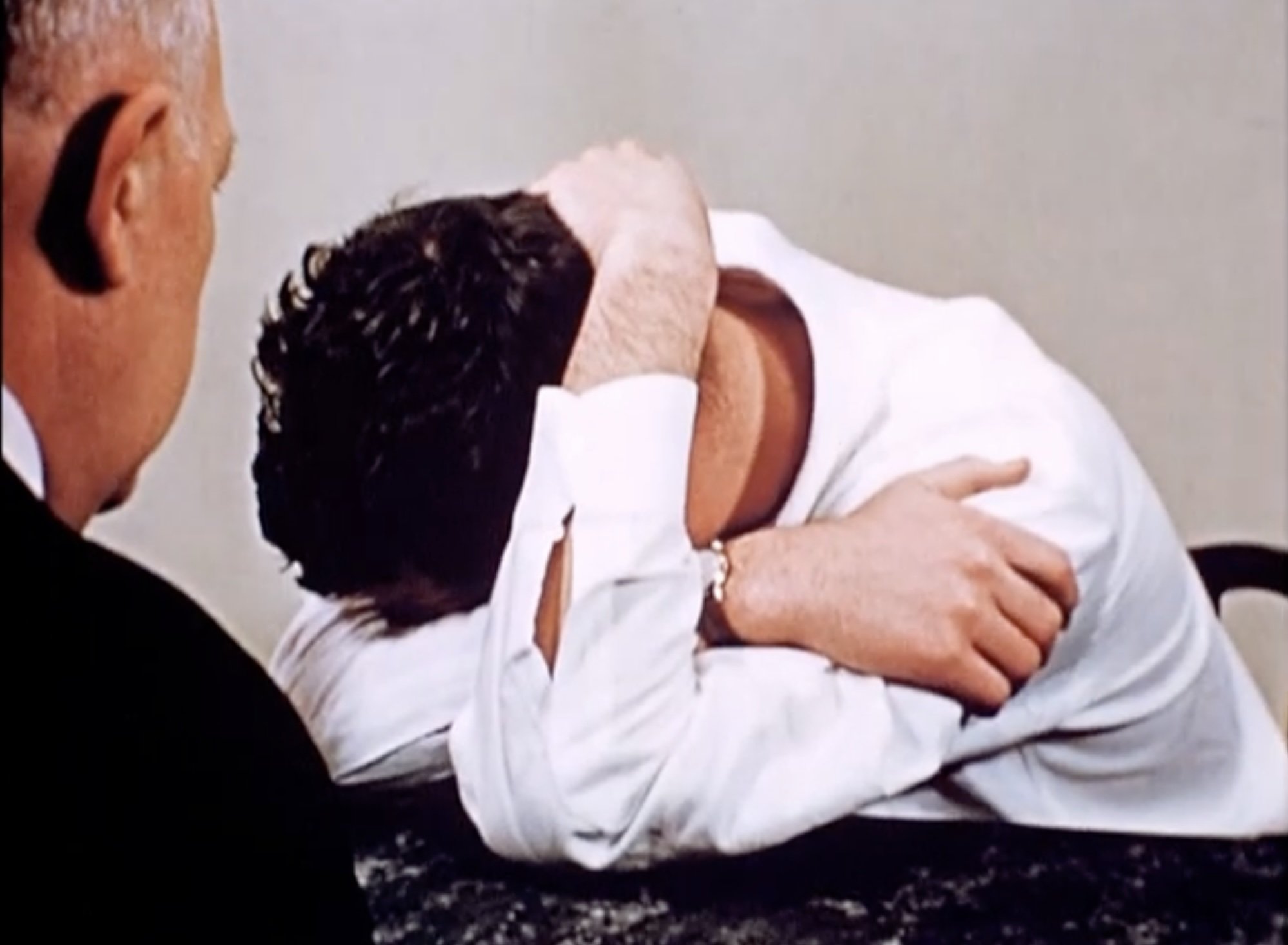 1955
Experimental Compound MER 17 (Frenquel) and LSD-25
Howard D. Fabing · Film
A 1955 medical film made for the drug company Wm. S. Merrell about Howard D. Fabing's experiments at Christ Hospital in Cincinnati. A 22-year-old graduate student, "Ronnie," takes 100 micrograms of LSD; the film then shows Merrell's compound MER-17 (azacyclonol, sold as Frenquel) given to prevent or reverse the effe...
PsychosisGovernment ResearchLSD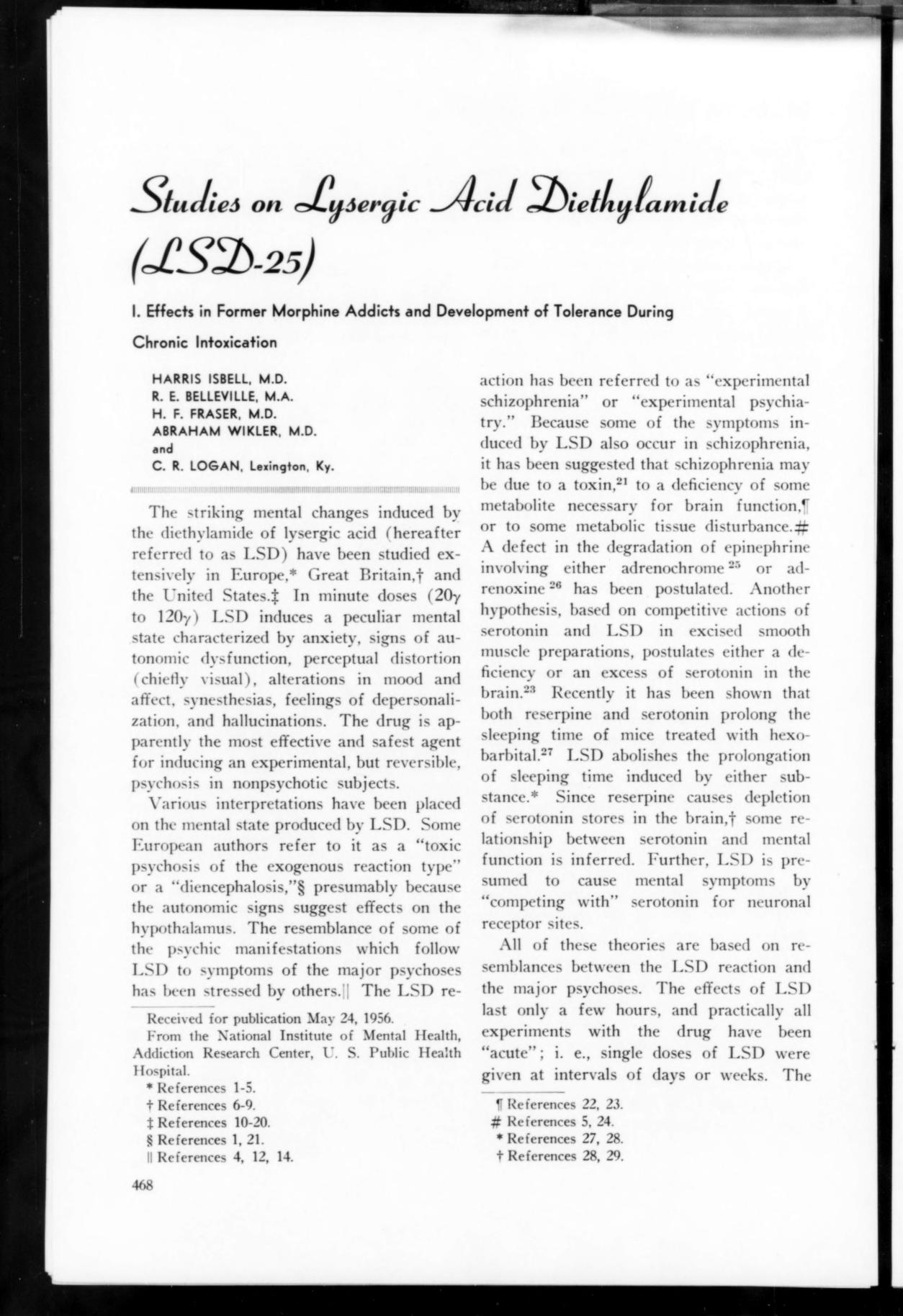 November 1956
Studies on LSD-25: Tolerance in Former Morphine Addicts
Harris Isbell, H. F. Fraser, Abraham Wikler, C. R. Logan, and R. E. Belleville · Academic Article
Harris Isbell and colleagues at the NIMH Addiction Research Center in Lexington, Kentucky, gave LSD daily for up to eighty-five days to former morphine addicts to measure tolerance and compare effects to psychosis. They found rapid tolerance to both physiological and mental effects, which disappeared upon discontinu...
LSD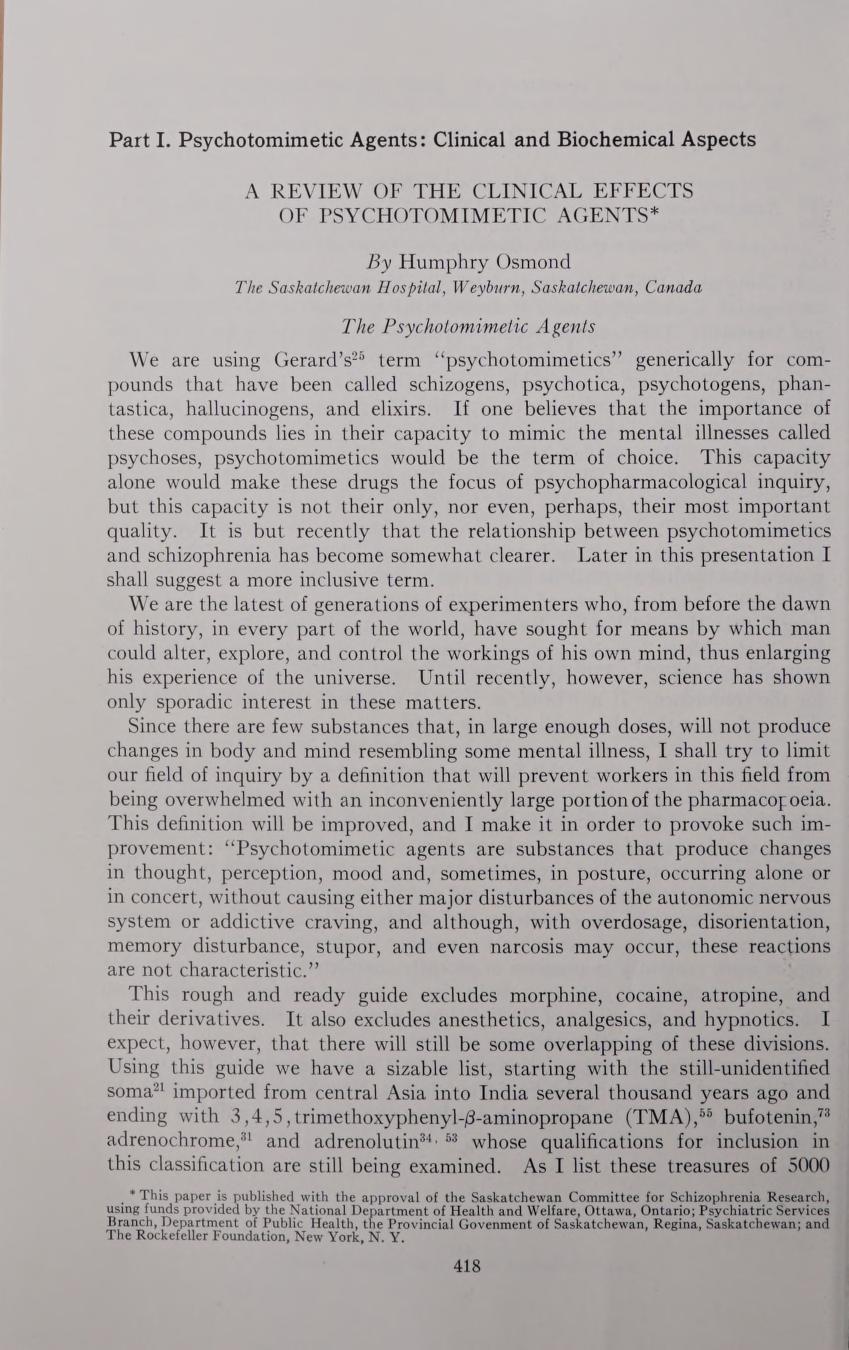 March 1957
A Review of the Clinical Effects of Psychotomimetic Agents
Humphry Osmond · Academic Article
Osmond surveyed psychotomimetic agents and proposed new terminologies, settling on "psychedelic, mind-manifesting" as his choice. This paper put the word into circulation among psychiatrists, coining the term still used today.
LSD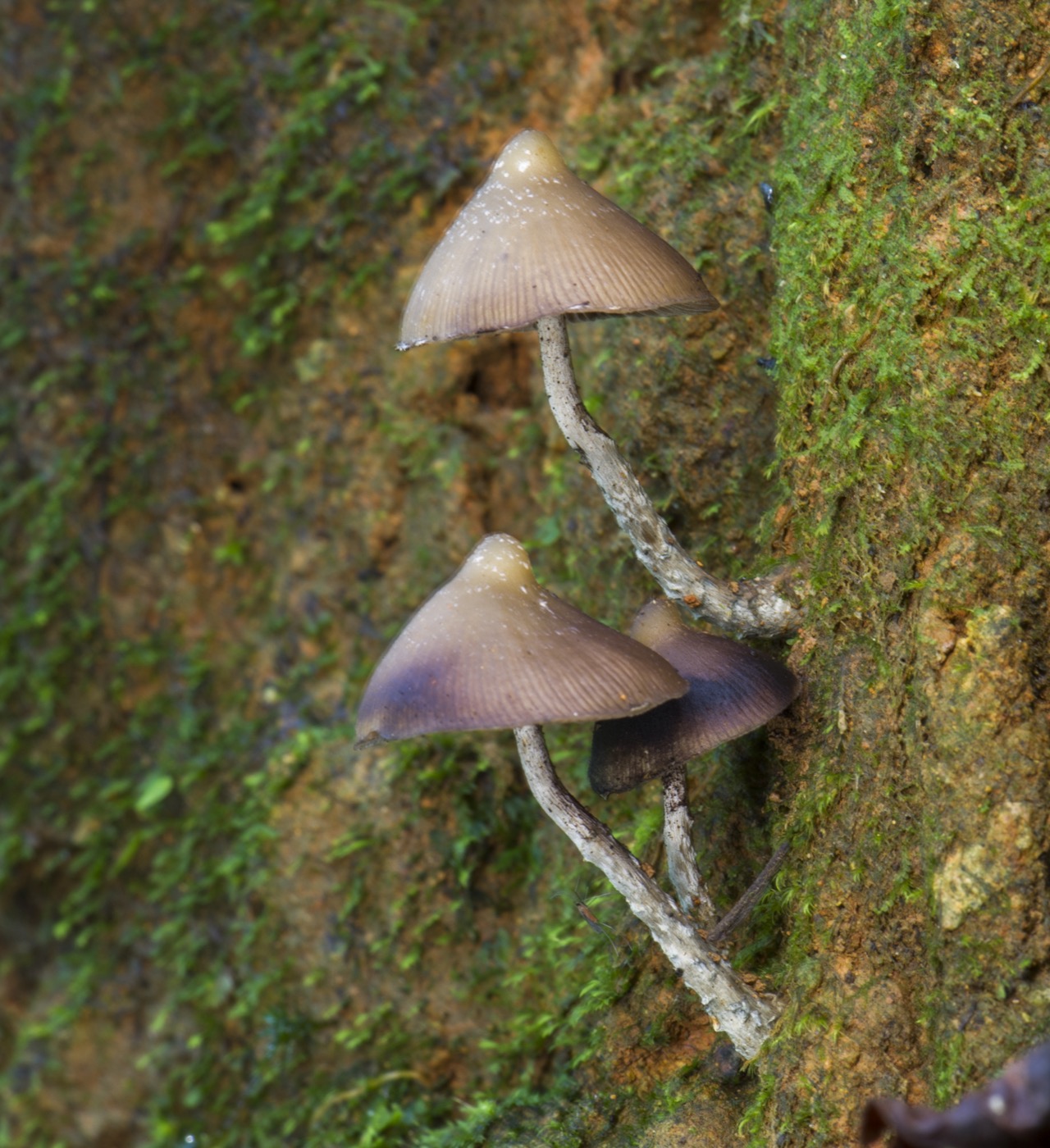 May 13, 1957
Seeking the Magic Mushroom
R. Gordon Wasson · Newspaper Article
R. Gordon Wasson's photo-essay in Life magazine announcing that he and photographer Allan Richardson had participated in a Mazatec mushroom ceremony near Huautla de Jiménez in June 1955. The article, illustrated with color photographs and watercolor plates, named Roger Heim as Wasson's collaborator.
Psilocybin September 10, 1957
Psychoanalysis and LSD-25
Luisa de Álvarez de Toledo · Academic Article
Luisa G. de Álvarez de Toledo's paper to the Argentine Psychoanalytic Association in Buenos Aires on September 10, 1957, setting out a method for combining LSD sessions with psychoanalysis. Case reports by Alberto E. Fontana and Francisco Pérez Morales follow. It is one of the earliest attempts in Latin America to f...
LSDPsychoanalysisTherapy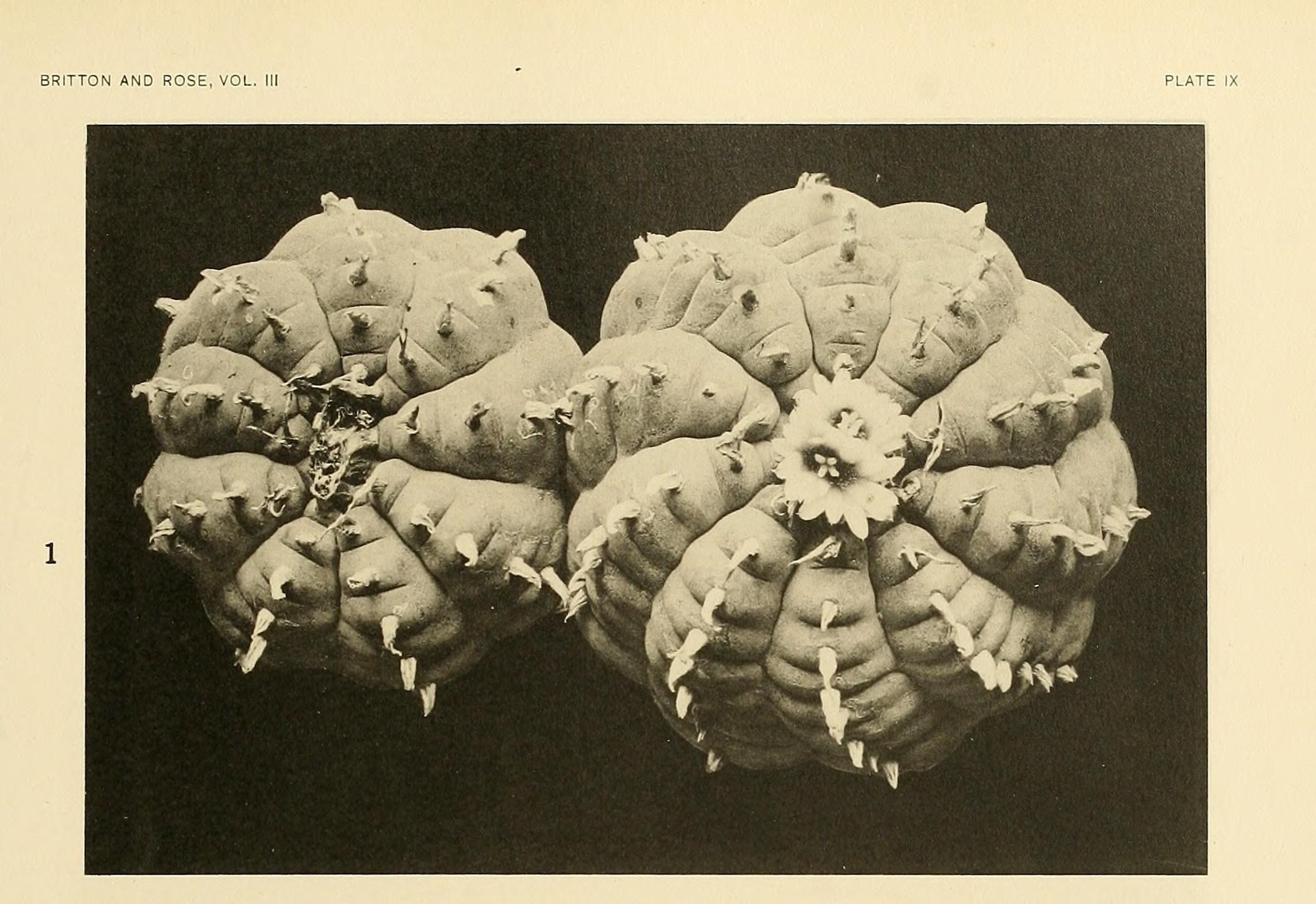 November 17, 1959
Native American Church v. Navajo Tribal Council
Delmas C. Hill · Source
The Tenth Circuit affirms dismissal of a Native American Church suit against the Navajo Tribal Council's 1940 peyote ban, holding that the First Amendment does not apply to tribal governments unless Congress extends it. The court treats tribes as sovereign nations outside the federal Constitution.
Historical overview
On April 19, 1943, the Sandoz chemist Albert Hofmann ingested 250 micrograms of a substance he had first synthesized five years earlier and shelved as uninteresting. The bicycle ride home through wartime Basel — vivid, terrifying, transformative — initiates the modern psychedelic era.
What follows in the next two decades is not yet "the sixties." It is, instead, the strange middle period in which LSD circulates almost exclusively through the laboratory, the psychiatric clinic, and the covert intelligence program. Sandoz distributes thousands of ampules to researchers worldwide. The U.S. Army and Central Intelligence Agency fund studies under cover names. Aldous Huxley takes mescaline in Hollywood and writes a book.
By the late 1950s, ethnographers and amateur mycologists begin to bridge the gap between the laboratory and the long history of Indigenous use. R. Gordon Wasson's 1955 velada with María Sabina in Huautla de Jiménez, reported in Life two years later, opens a channel through which the postwar laboratory will encounter — and very often misunderstand — much older traditions. By 1962 the conditions are in place for the cultural rupture that the next era will deliver.
This is a placeholder summary. A full description will be added later.
Key figures in this era
Further reading
Secondary sources- Vetted secondary sources for this era are being prepared.