Texts / 1800-1950 / Academic Article

Browse filters
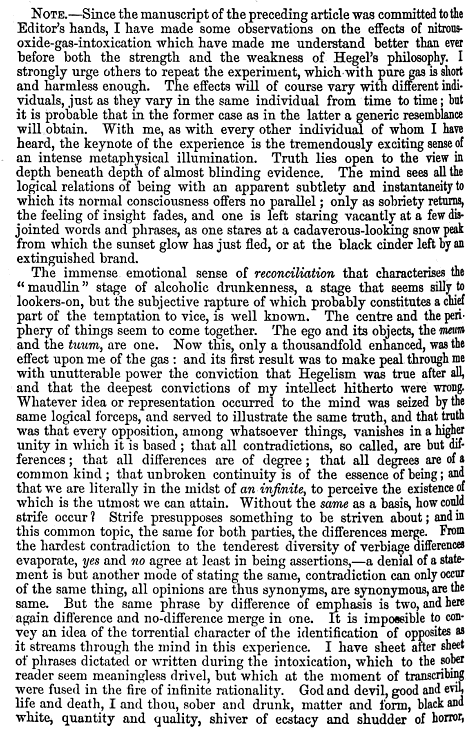
Note on Nitrous Oxide, from “On Some Hegelisms”

Note on Nitrous Oxide, from “On Some Hegelisms”

The note William James added to his essay "On Some Hegelisms" in Mind (1882), reporting nitrous oxide experiments he made after reading Blood's pamphlet. He describes a sense of metaphysical illumination and reconciliation of opposites that fades on recovery into "a few disjointed words and phrases." James reprinted the note in The Will to Believe (1897), and Charles Tart excerpted it in 1969 as "Subjective Effects of Nitrous Oxide."

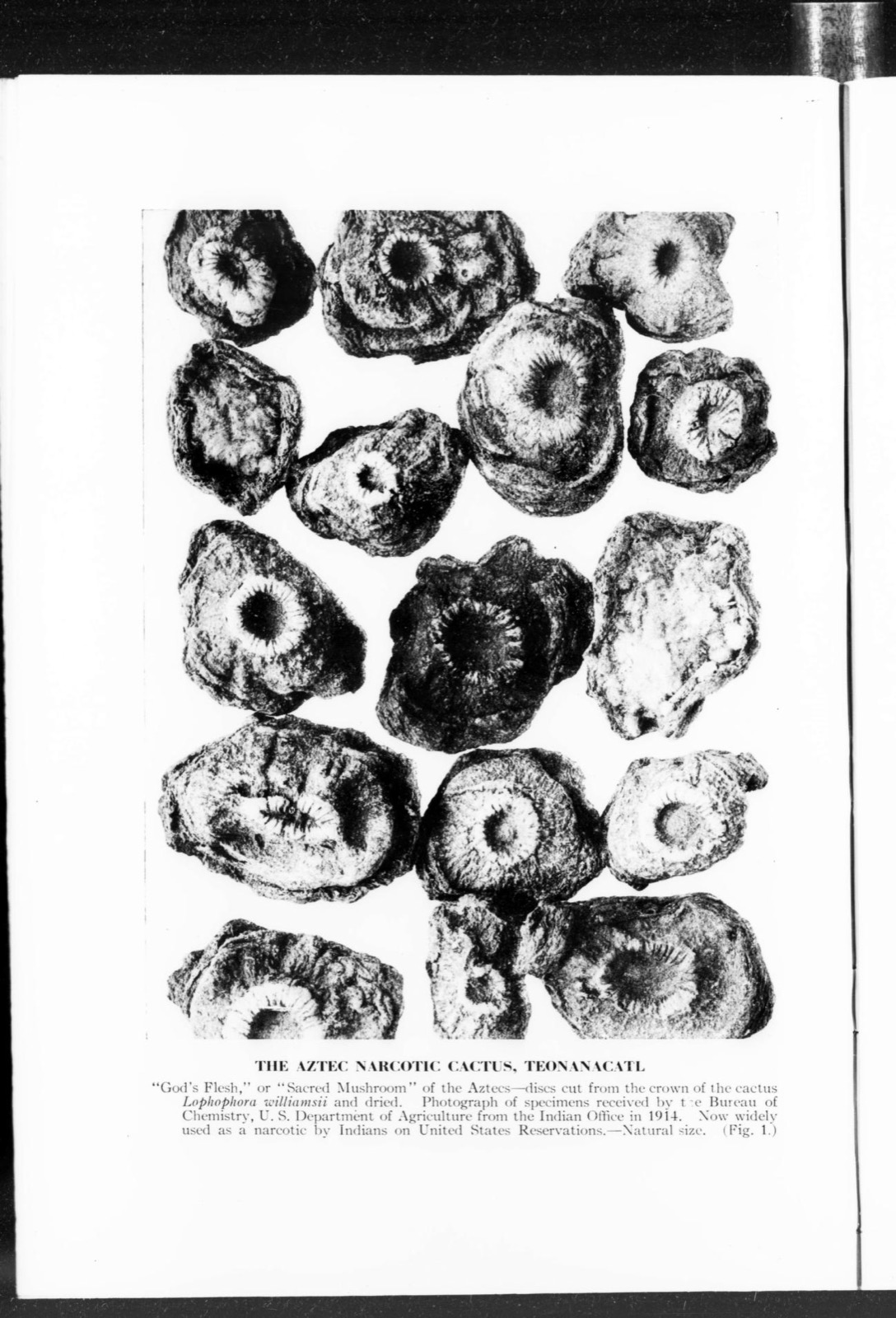
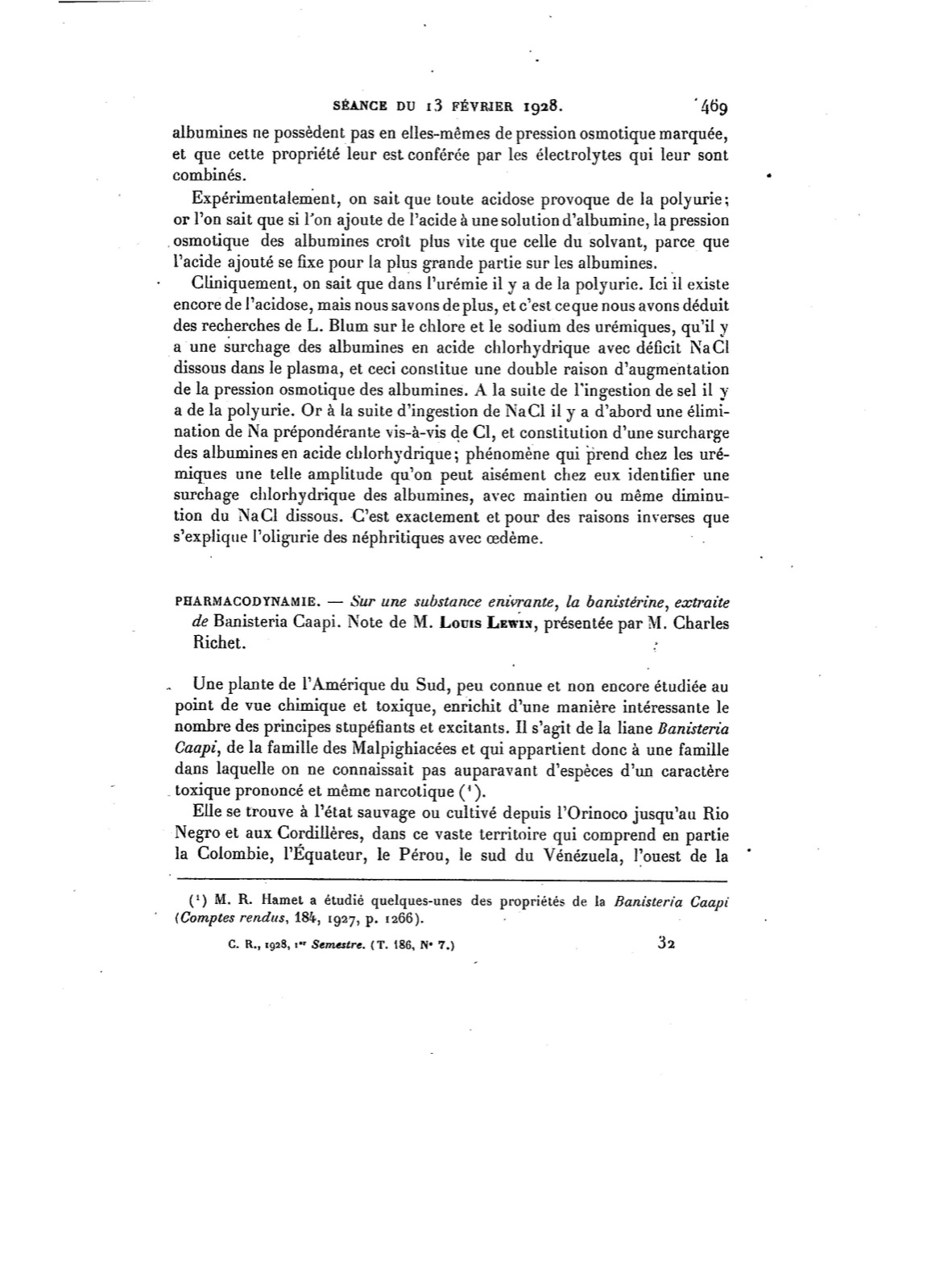
Ueber Anhalonium Lewinii

On Anhalonium Lewinii

Berlin pharmacologist Louis Lewin (1850–1929) reports on "Muscale Buttons" received from Parke, Davis & Co. during a visit to the United States in 1887. The botanist Paul Hennings identified the dried cactus as a new species and named it Anhalonium Lewinii after him, and Lewin describes a crude base he called anhalonine and its strychnine-like convulsant effects in frogs, pigeons and rabbits. Hosted here are the introduction, the preliminary chemistry, and the full section on the drug's effects, with the historical survey of cacti omitted.

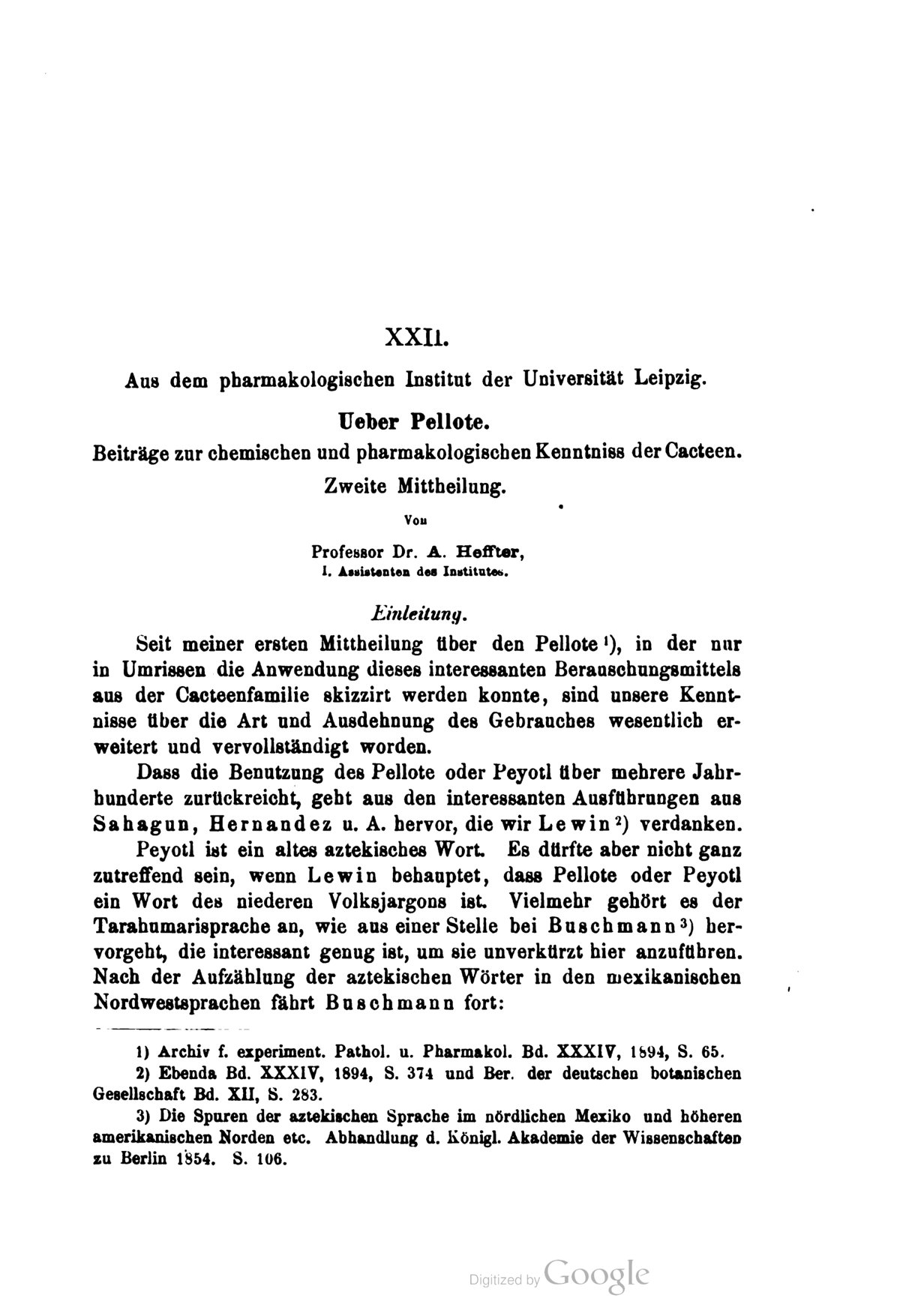
Ueber Pellote. Beiträge zur chemischen und pharmakologischen Kenntniss der Cacteen. Zweite Mittheilung

On Pellote (Second Communication)

Leipzig pharmacologist Arthur Heffter (1859–1925) reports his separation of five alkaloids from mescal buttons, among them mescaline ("Mezcalin"), and a series of self-experiments made between June and November 1897. Testing the whole drug, its resin, the mixed alkaloids and each isolated base in turn, he found that 0.15 g of mescaline hydrochloride alone reproduced the visions, slowed pulse, dilated pupils and loss of time sense produced by the cactus. Hosted here are the description of mescaline and its salts and the whole of section VI on the drug's action in humans.

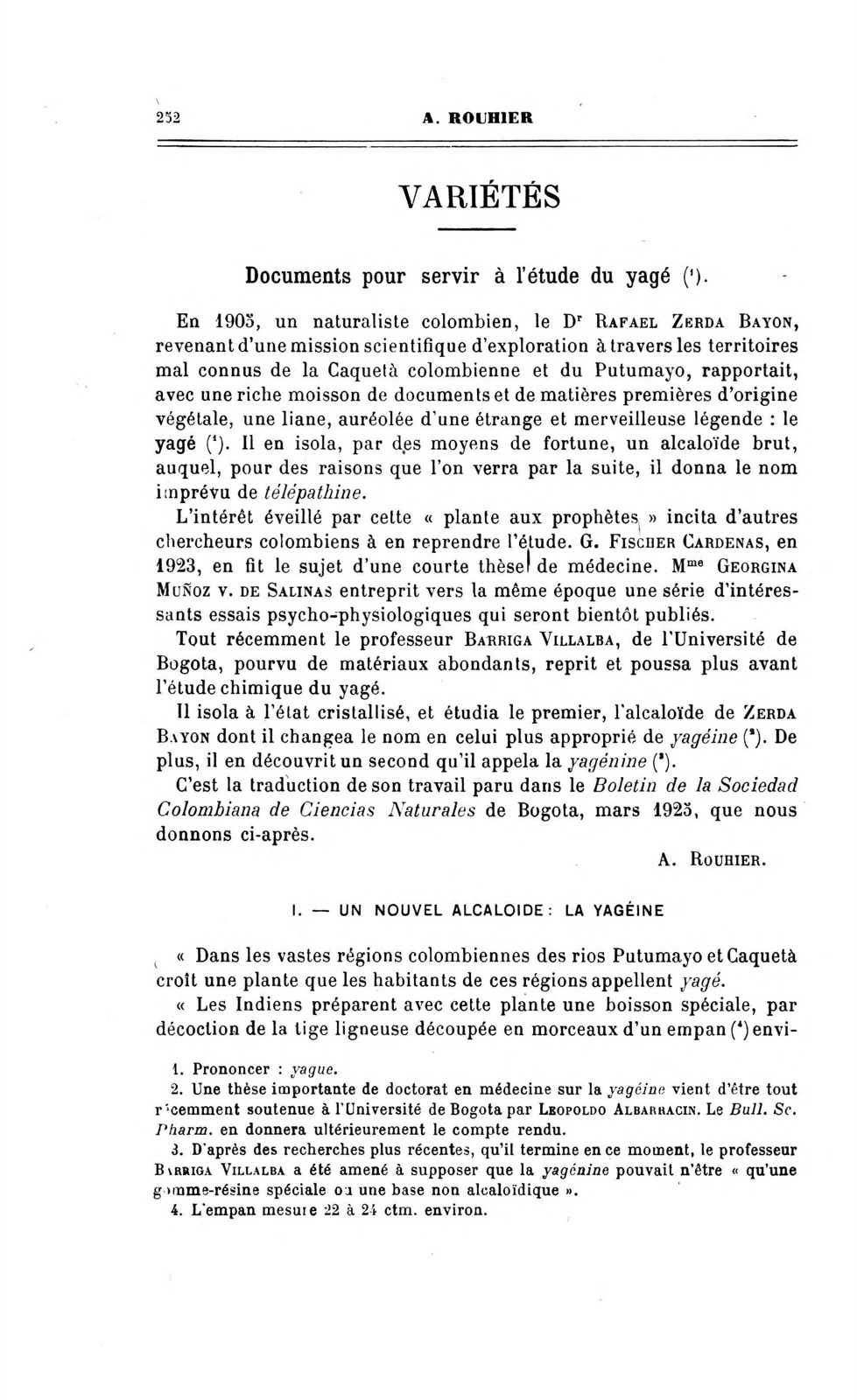
Estudio sobre el principio activo del Yagé

Study on the Active Principle of Yagé

A 1923 doctoral thesis reporting Fischer Cárdenas's isolation of the yagé alkaloid that Rafael Zerda Bayón had named telepathine (telepatina) decades earlier without isolating it. Seven case reports detail effects on human subjects, including the author's self-experiment, describing vivid dreams, visual hallucinations, and euphoria at low doses, followed by a systematic summary of physiological action.

The Elements of Mazatec Witchcraft

The Elements of Mazatec Witchcraft

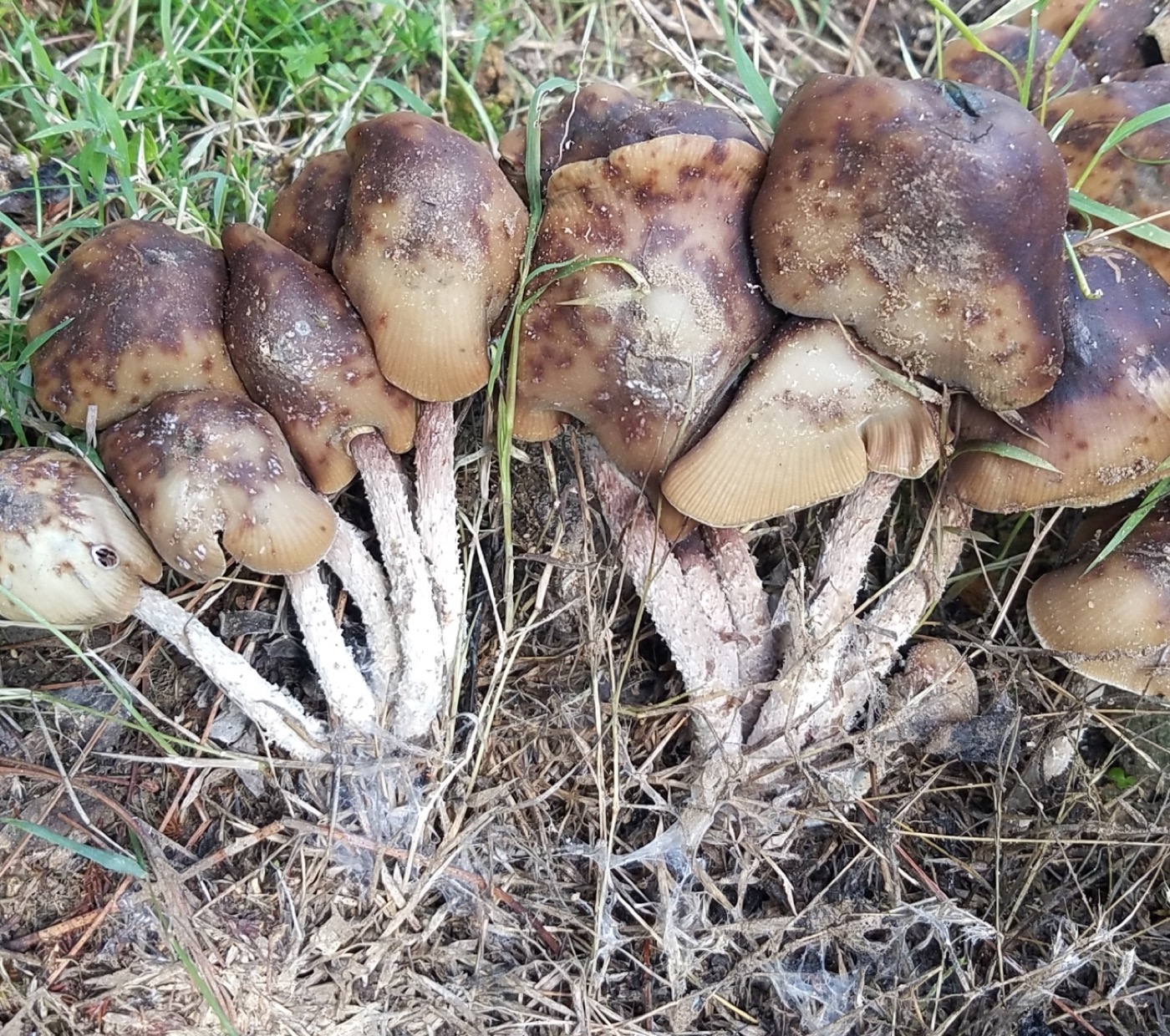
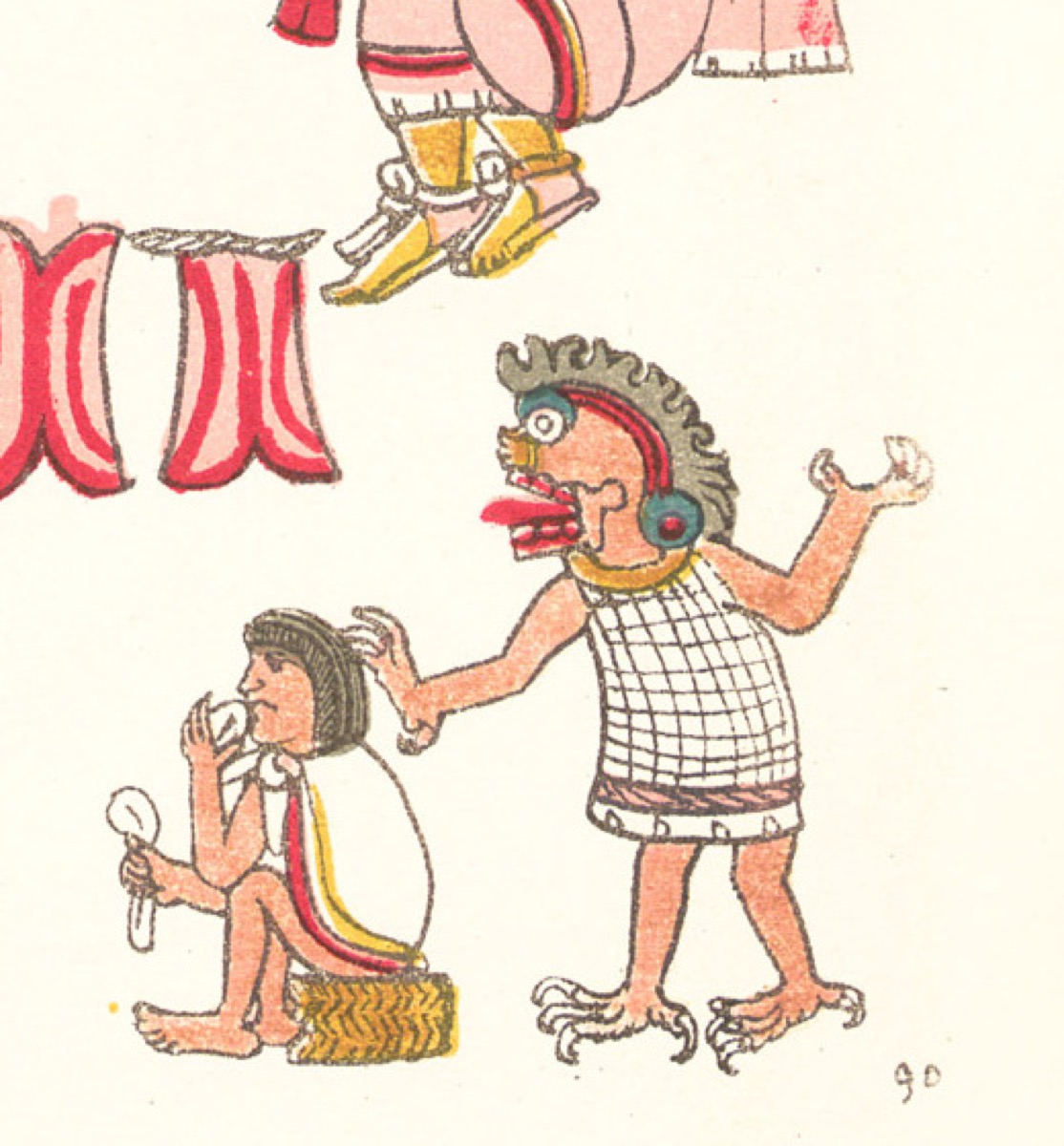
A Berkeley anthropologist's field survey of Mazatec witchcraft from a 1938 expedition to Huautla de Jiménez, Oaxaca. Hosted here is a fair-use excerpt: Johnson's eyewitness account of a curing ceremony he and his party attended on July 16, 1938 -- the first outsider-witnessed session involving the sacred mushrooms -- along with his description of the mushroom species and their ritual use among Mazatec brujos.

External source