Texts / 1800-1950

Browse filters
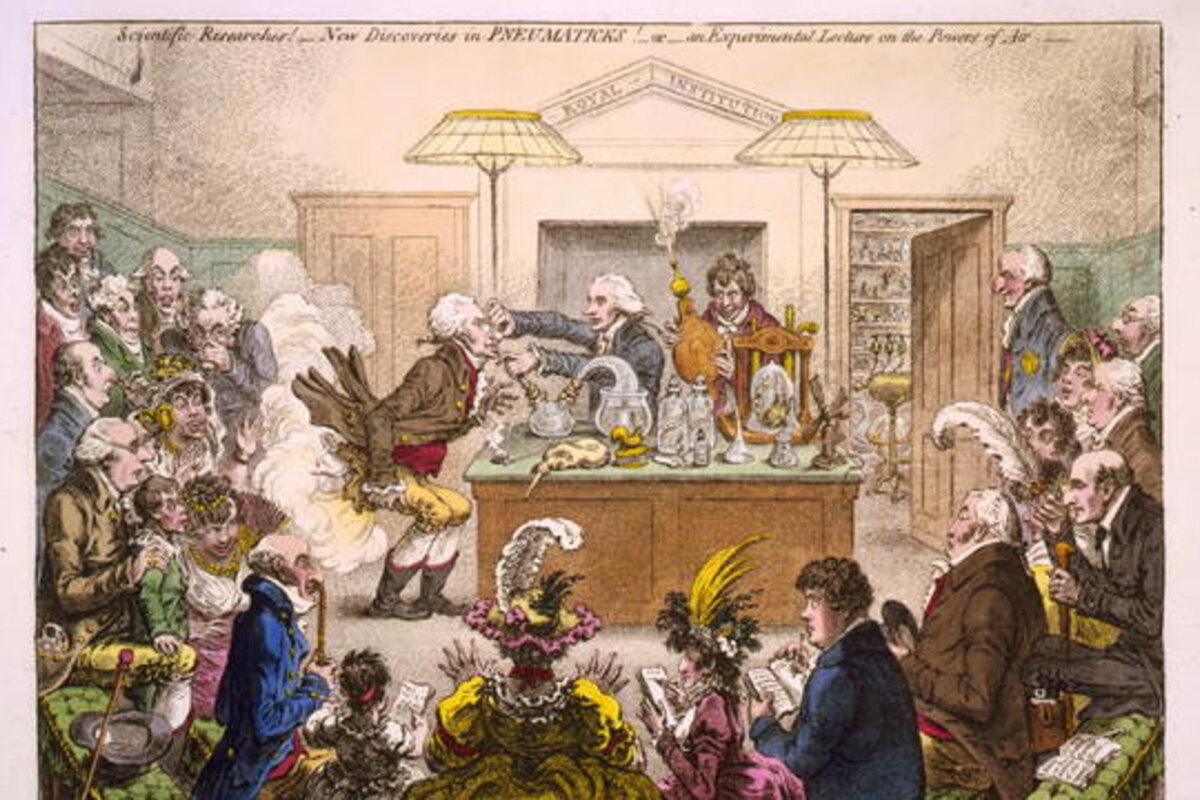
Researches, Chemical and Philosophical; Chiefly Concerning Nitrous Oxide
Researches, Chemical and Philosophical; Chiefly Concerning Nitrous Oxide

Humphry Davy's account of breathing nitrous oxide at Thomas Beddoes's Pneumatic Institution in Bristol in 1799, from the fourth part of his Researches. The excerpt gives Davy's own experiments, including the session that ended with "Nothing exists but thoughts!", and the reports he collected from Robert Southey, Peter Roget, Samuel Taylor Coleridge, and Thomas Wedgwood.

Caapi and Niopo in “On Some Remarkable Narcotics of the Amazon Valley and Orinoco”

Caapi and Niopo in “On Some Remarkable Narcotics of the Amazon Valley and Orinoco”

Richard Spruce on ayahuasca, yopo/paricá, and Amazonian medicine-men

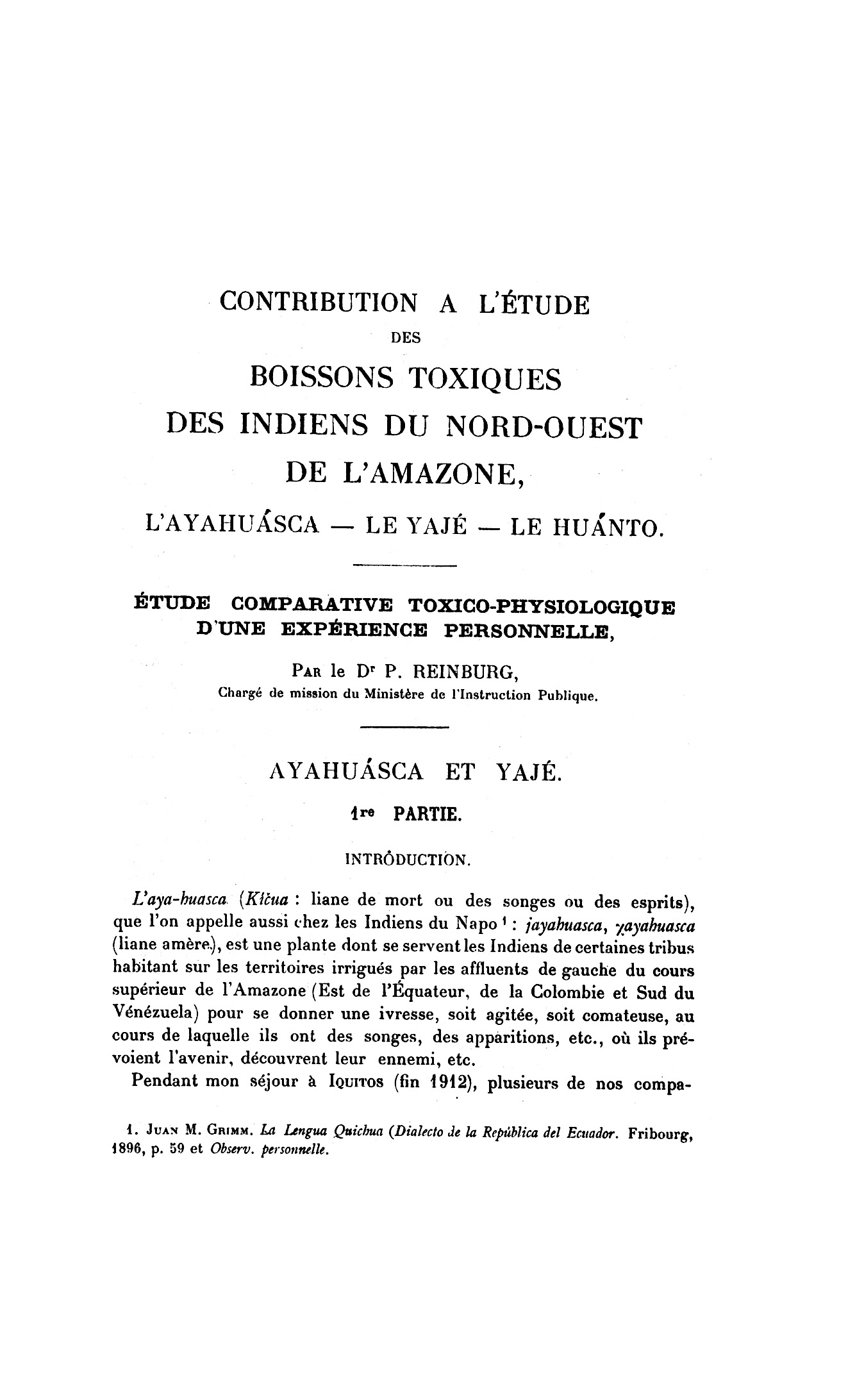
Richard Spruce's nineteenth-century account of caapi, aya-huasca, niopo, and paricá, based on field observations in the Uaupés, Orinoco, Rio Negro, Napo, and Pastasa regions. The excerpt records plant identifications, preparation methods, visual effects, ceremonial uses, and the role of payes in curing and divination.

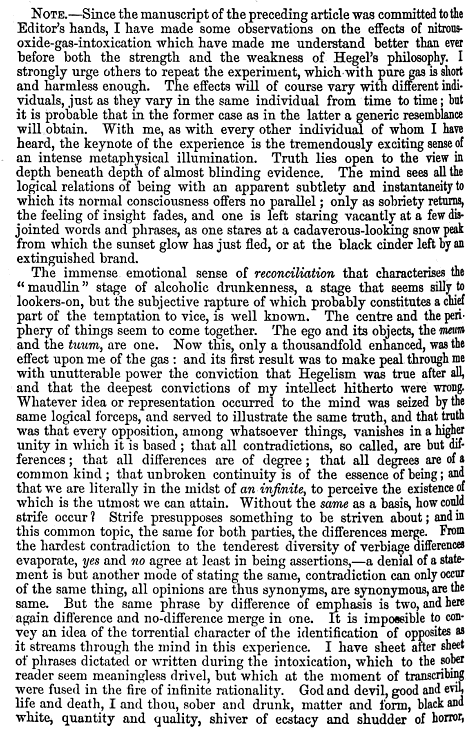
Note on Nitrous Oxide, from “On Some Hegelisms”

Note on Nitrous Oxide, from “On Some Hegelisms”

The note William James added to his essay "On Some Hegelisms" in Mind (1882), reporting nitrous oxide experiments he made after reading Blood's pamphlet. He describes a sense of metaphysical illumination and reconciliation of opposites that fades on recovery into "a few disjointed words and phrases." James reprinted the note in The Will to Believe (1897), and Charles Tart excerpted it in 1969 as "Subjective Effects of Nitrous Oxide."

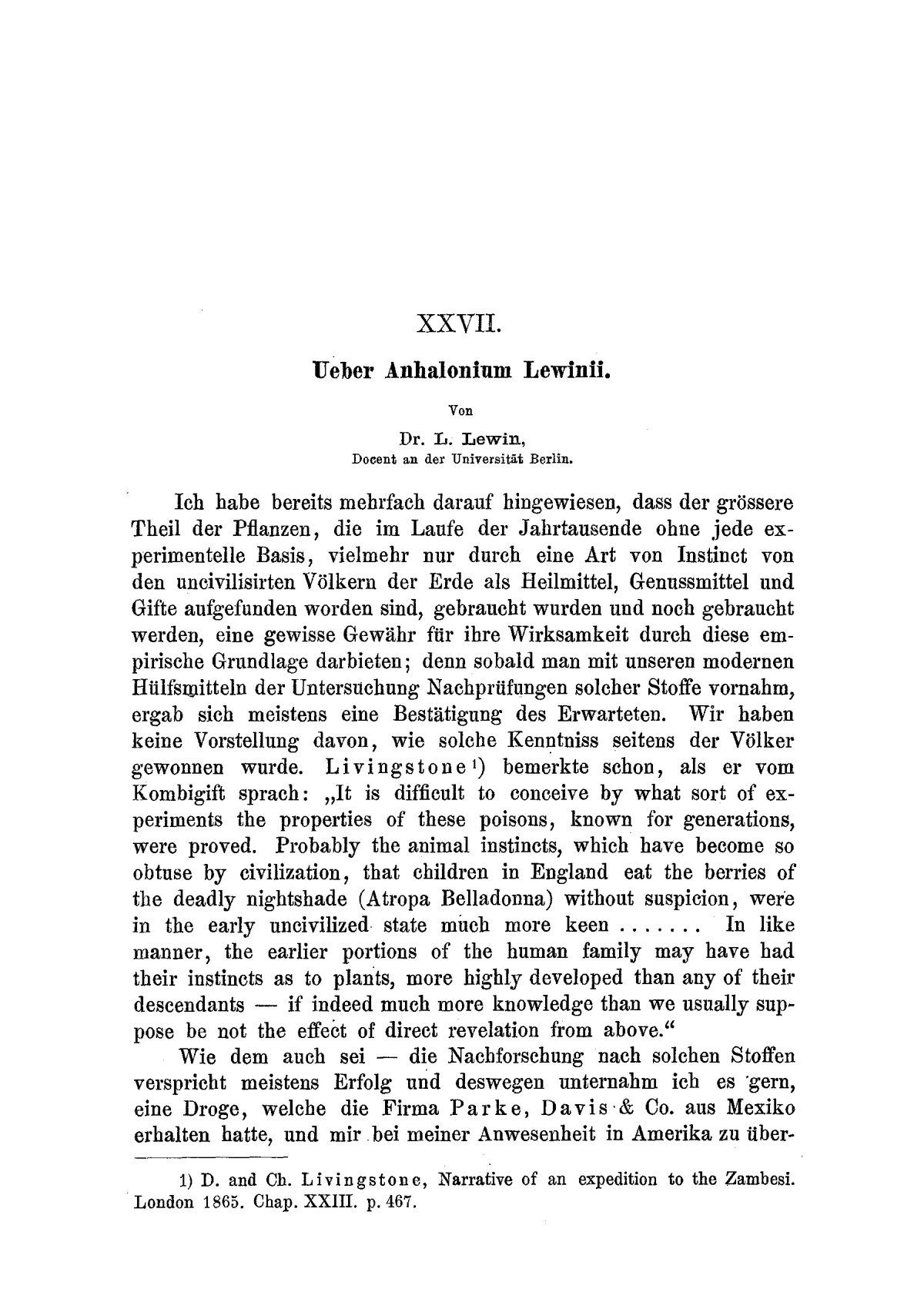
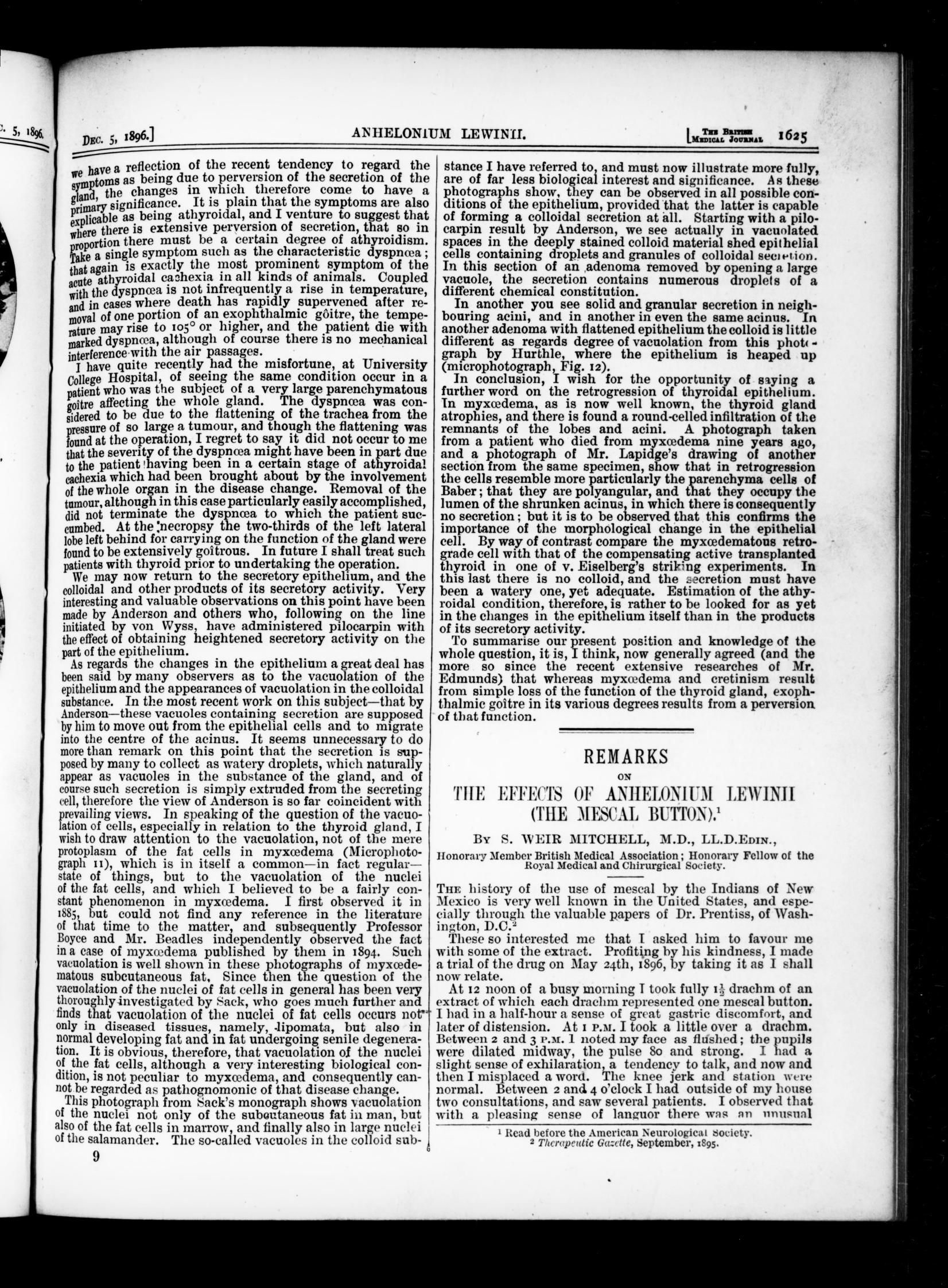
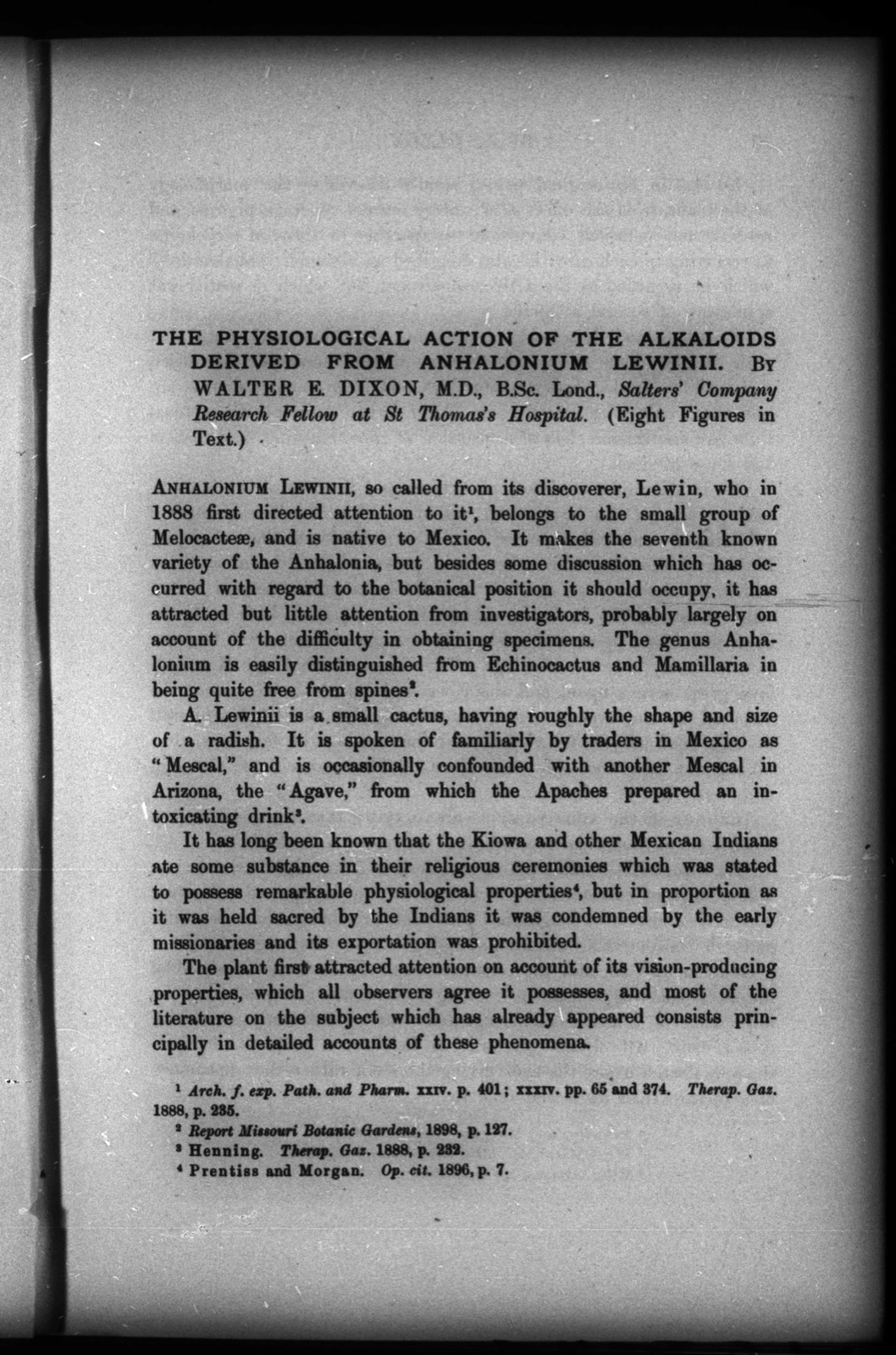
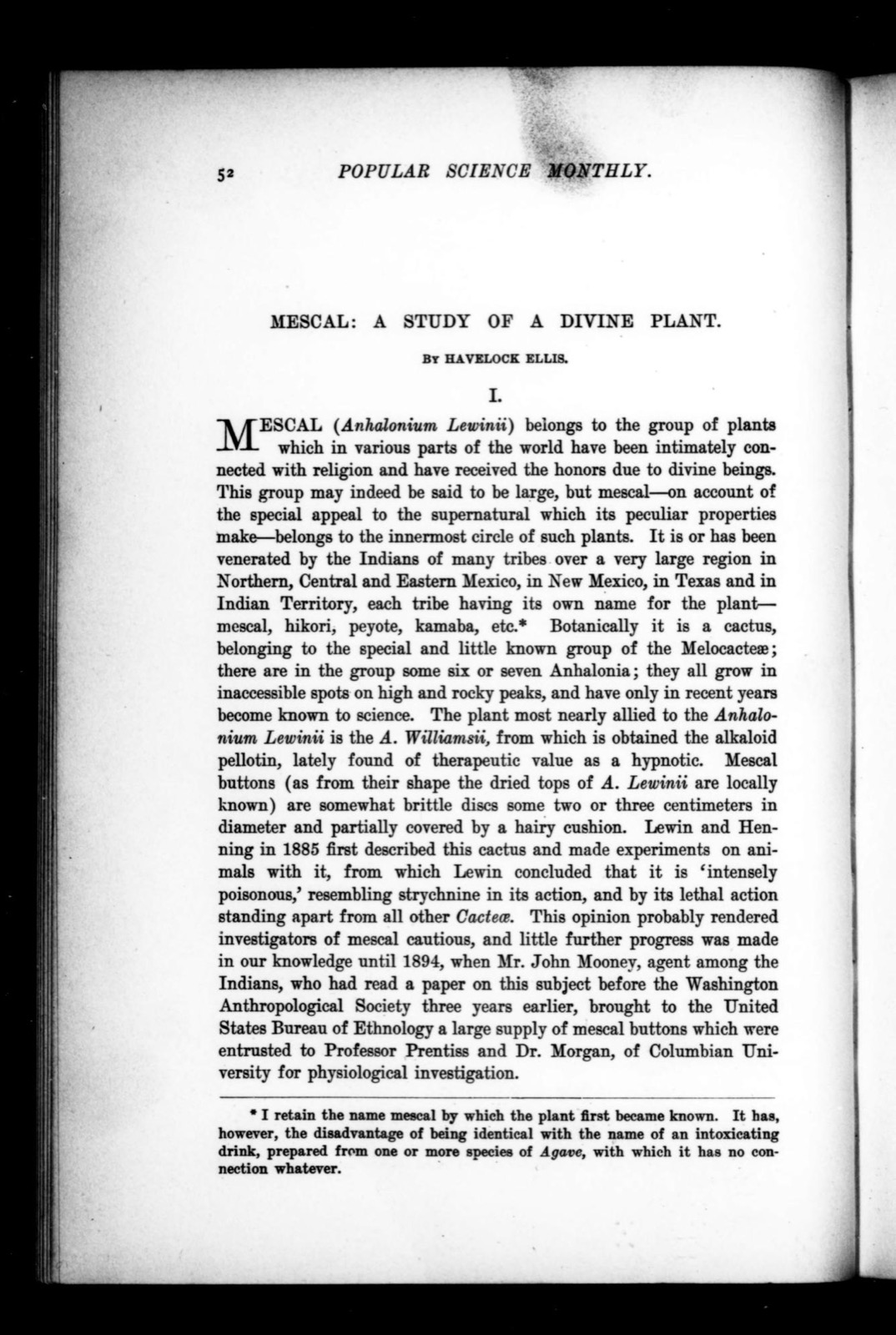
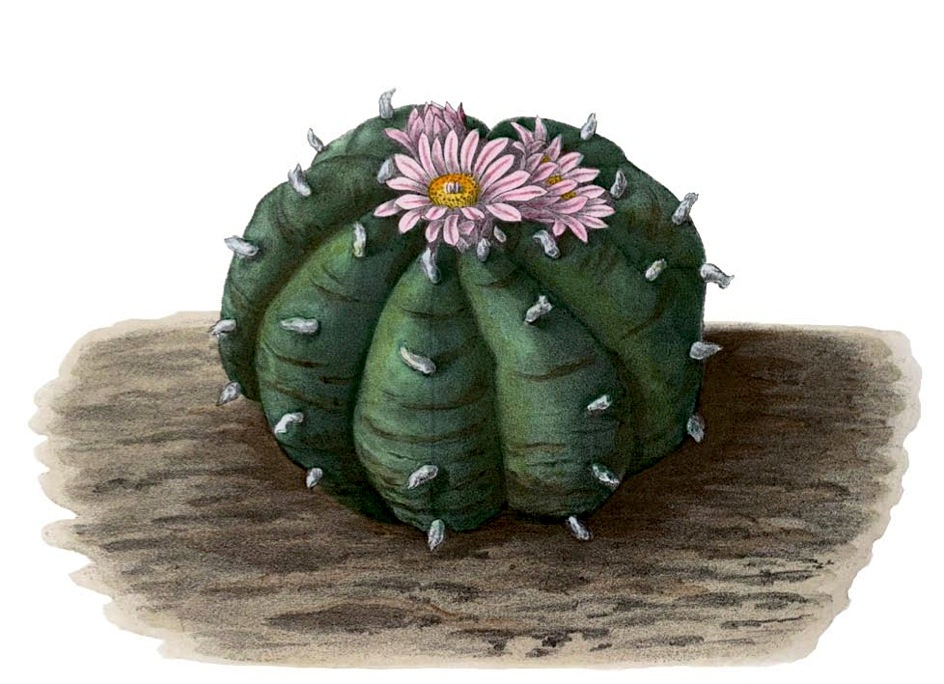
Ueber Anhalonium Lewinii

On Anhalonium Lewinii

Berlin pharmacologist Louis Lewin (1850–1929) reports on "Muscale Buttons" received from Parke, Davis & Co. during a visit to the United States in 1887. The botanist Paul Hennings identified the dried cactus as a new species and named it Anhalonium Lewinii after him, and Lewin describes a crude base he called anhalonine and its strychnine-like convulsant effects in frogs, pigeons and rabbits. Hosted here are the introduction, the preliminary chemistry, and the full section on the drug's effects, with the historical survey of cacti omitted.

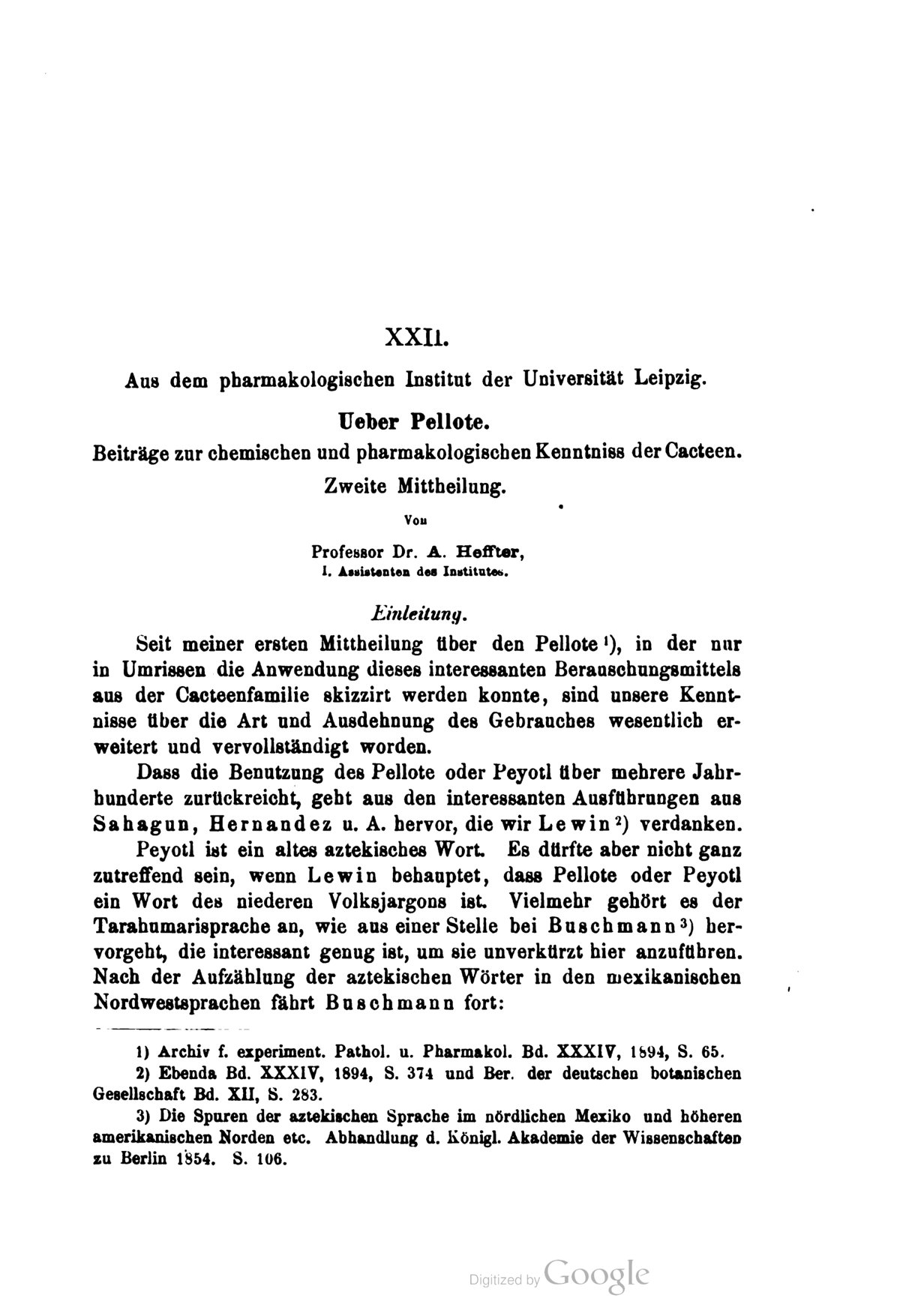
Ueber Pellote. Beiträge zur chemischen und pharmakologischen Kenntniss der Cacteen. Zweite Mittheilung

On Pellote (Second Communication)

Leipzig pharmacologist Arthur Heffter (1859–1925) reports his separation of five alkaloids from mescal buttons, among them mescaline ("Mezcalin"), and a series of self-experiments made between June and November 1897. Testing the whole drug, its resin, the mixed alkaloids and each isolated base in turn, he found that 0.15 g of mescaline hydrochloride alone reproduced the visions, slowed pulse, dilated pupils and loss of time sense produced by the cactus. Hosted here are the description of mescaline and its salts and the whole of section VI on the drug's action in humans.

Nitrous Oxide and the Anaesthetic Revelation in The Varieties of Religious Experience

Nitrous Oxide and the Anaesthetic Revelation in The Varieties of Religious Experience

From the lecture on mysticism in William James's Gifford Lectures, delivered in Edinburgh in 1901–2. James argues that nitrous oxide and ether show "our normal waking consciousness" to be only one type among many, then quotes Blood and J. A. Symonds's chloroform experience. His notes add Xenos Clark's letter on the revelation and an Englishwoman's ether dream.

Anaesthetics Antient and Modern: An Historical Sketch of Anaesthesia

Anaesthetics Antient and Modern

An Historical Sketch of Anaesthesia

An illustrated history of anaesthesia issued by the London drug firm Burroughs Wellcome & Co., which closes by advertising its own 'Wellcome' brand chloroform. Hosted here are the chapters on nitrous oxide, ether, and chloroform, covering Horace Wells's 1844 self-experiment, the ether demonstrations of William Morton and Charles Jackson, and James Young Simpson's 1847 chloroform trial.

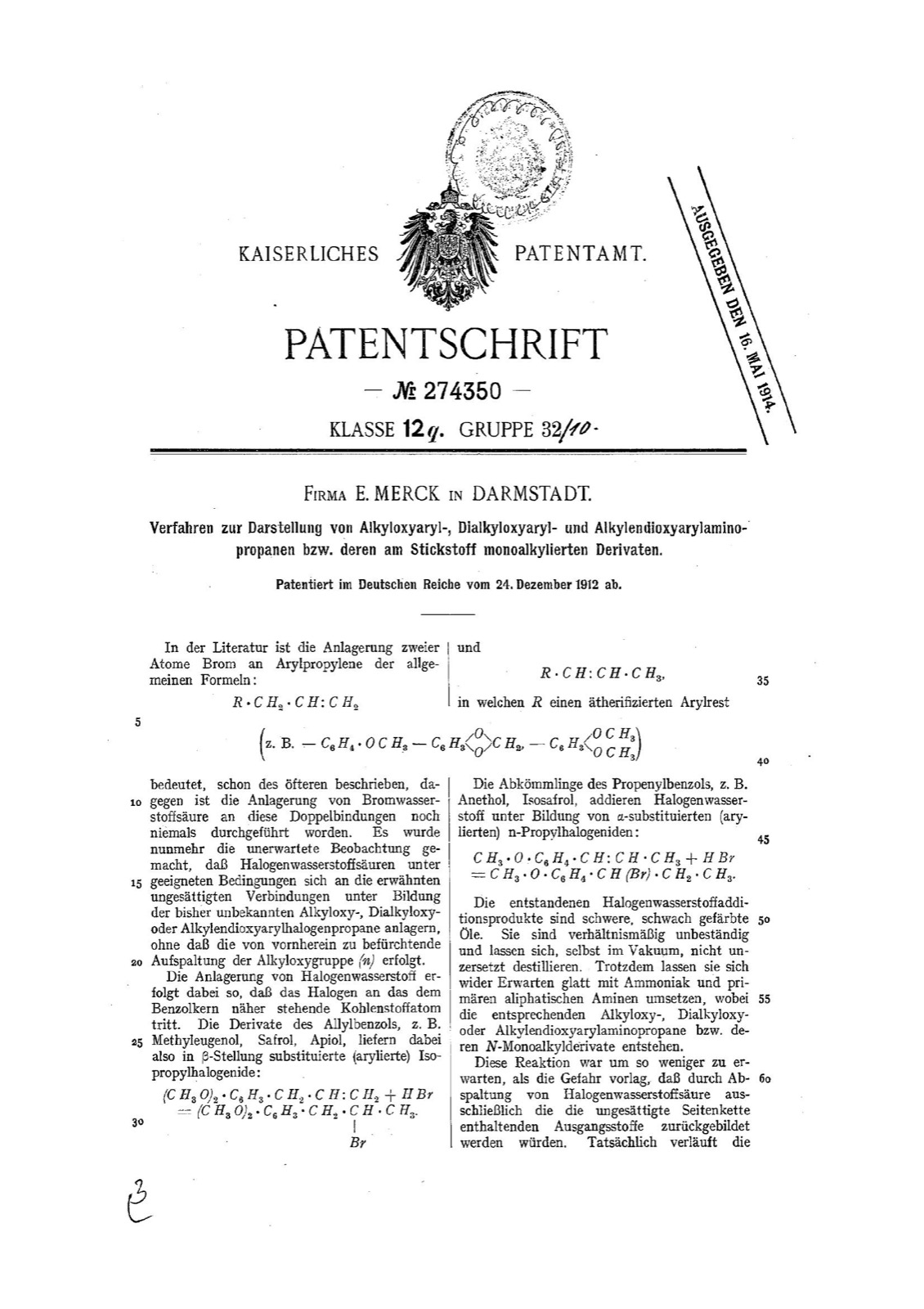
German Reich Patent No. 274350: Process for the Preparation of Alkyloxyaryl-, Dialkyloxyaryl- and Alkylenedioxyarylaminopropanes (Firm E. Merck, Darmstadt)

Merck Patent DE 274350

Process for the Preparation of Alkyloxyaryl-, Dialkyloxyaryl- and Alkylenedioxyarylaminopropanes (Firm E. Merck, Darmstadt)

German Reich Patent No. 274350 (1912) describes arylaminopropane synthesis from safrole. Example 4 yields MDMA by heating a brominated intermediate with methylamine—the earliest documented synthesis. The patent claims MDMA only as an unnamed chemical intermediate toward unspecified therapeutic compounds, not as a substance of interest itself.

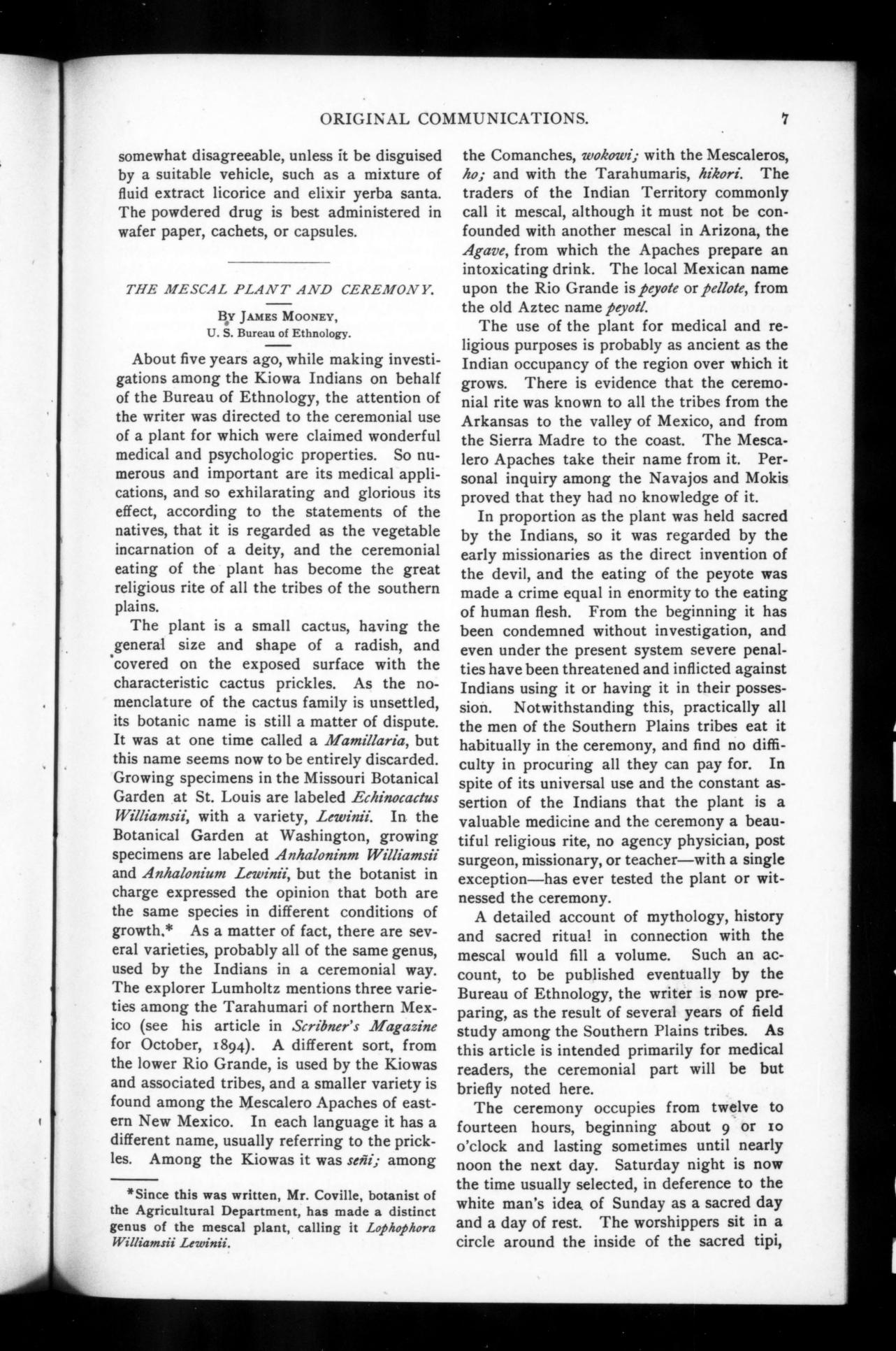
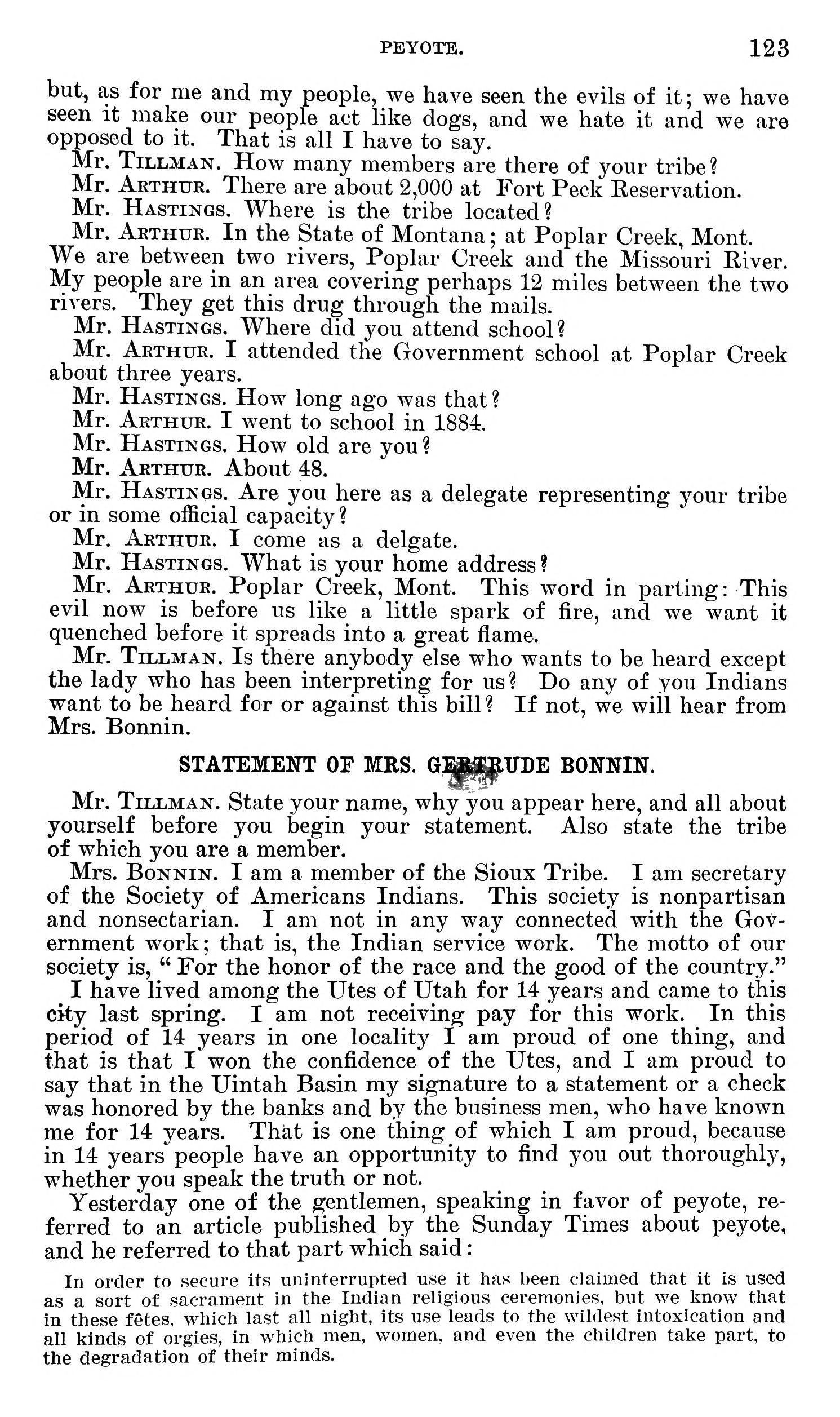
Testimony of Gertrude Bonnin (Zitkála-Šá) against Peyote, House Indian Affairs Subcommittee Hearings on H.R. 2614

Zitkála-Šá Peyote Testimony (1918)

Gertrude Simmons Bonnin (Zitkála-Šá, 1876–1938), the Yankton Dakota writer and secretary of the Society of American Indians, testified against peyote on February 22, 1918, before the House Indian Affairs subcommittee considering H.R. 2614, a bill to prohibit peyote among Indians. Drawing on her fourteen years among the Utes of the Uintah Basin, she described deaths, sexual misconduct, and fraud by the peyote missionary Peter Phelps, and she disputed the ethnologist James Mooney (1861–1921), who had ridiculed her newspaper photograph the day before. The record hosts her statement and cross-examination in full, her additional statement, the signed statements she co-authored, and the passages by Mooney and Cleaver Warden that answer her.

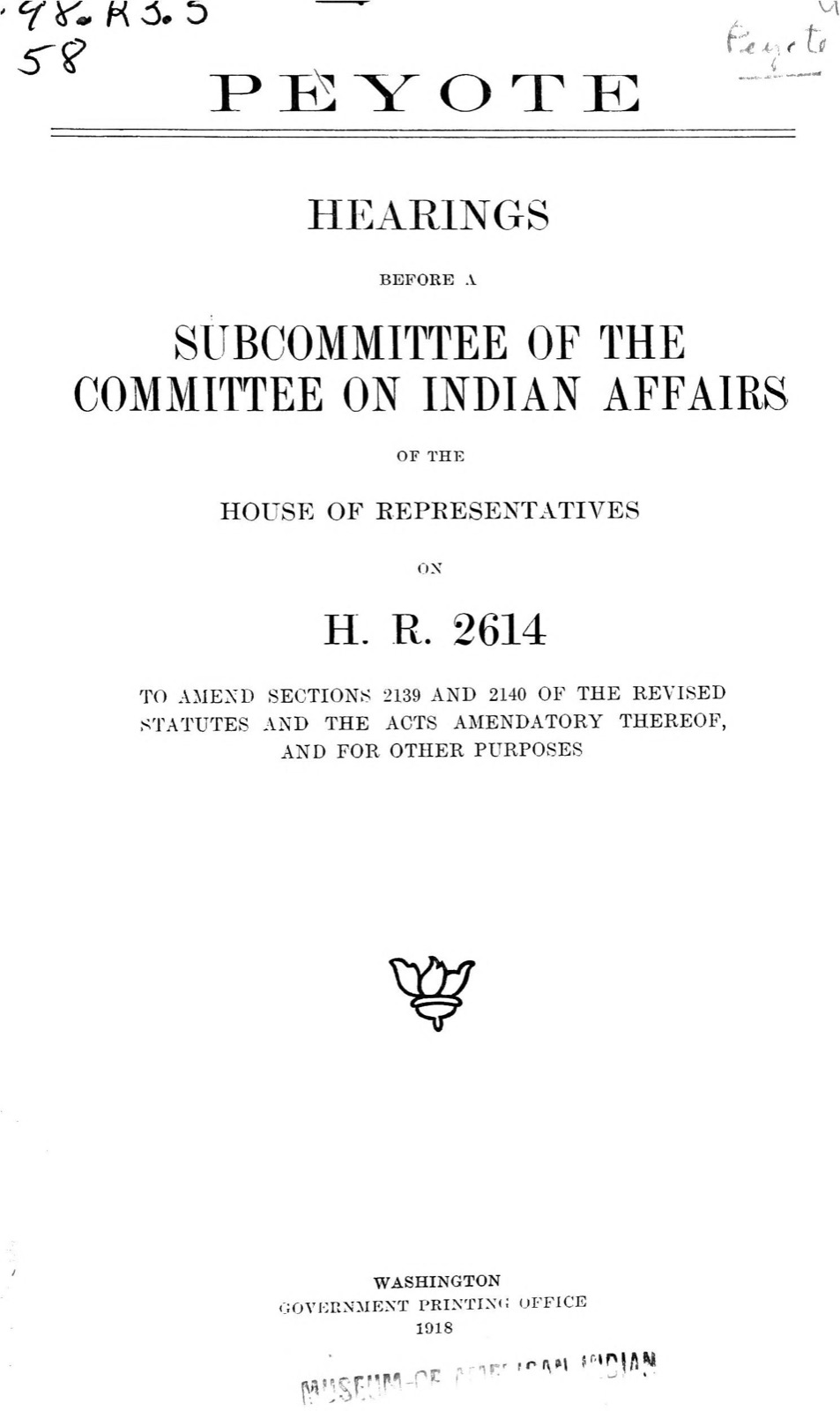
Peyote: Hearings Before a Subcommittee of the Committee on Indian Affairs, House of Representatives, on H.R. 2614

Peyote Hearings, H.R. 2614 (1918)

Hearings Before a Subcommittee of the Committee on Indian Affairs, House of Representatives, on H.R. 2614

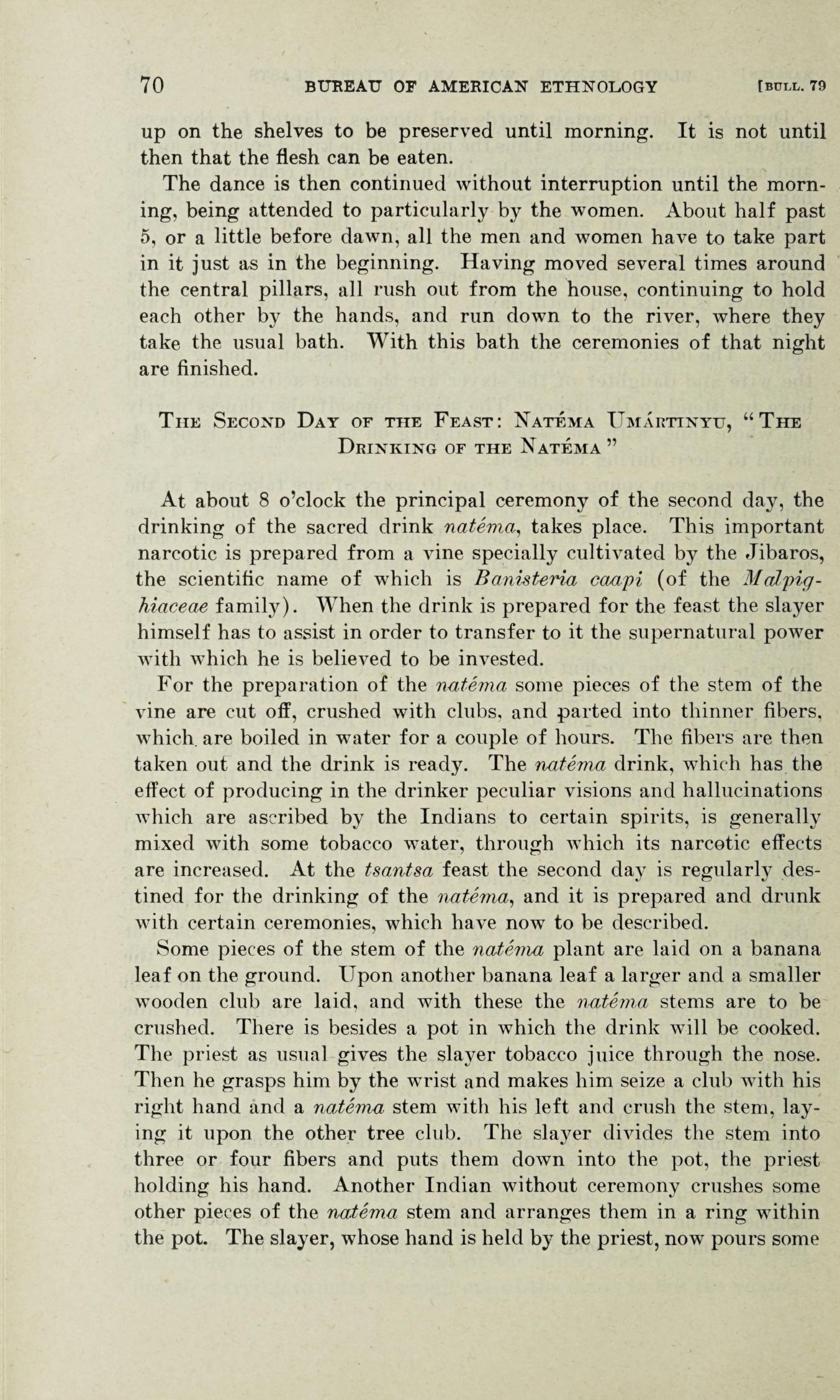
A subcommittee of the House Committee on Indian Affairs held February-March 1918 hearings on H.R. 2614, a bill to prohibit peyote use in Indian Country. Witnesses included ethnologist James Mooney, Osage chief Fred Lookout, Omaha ethnographer Francis La Flesche, Arapaho delegate Cleaver Warden, and Cheyenne-Arapaho Paul Boynton.

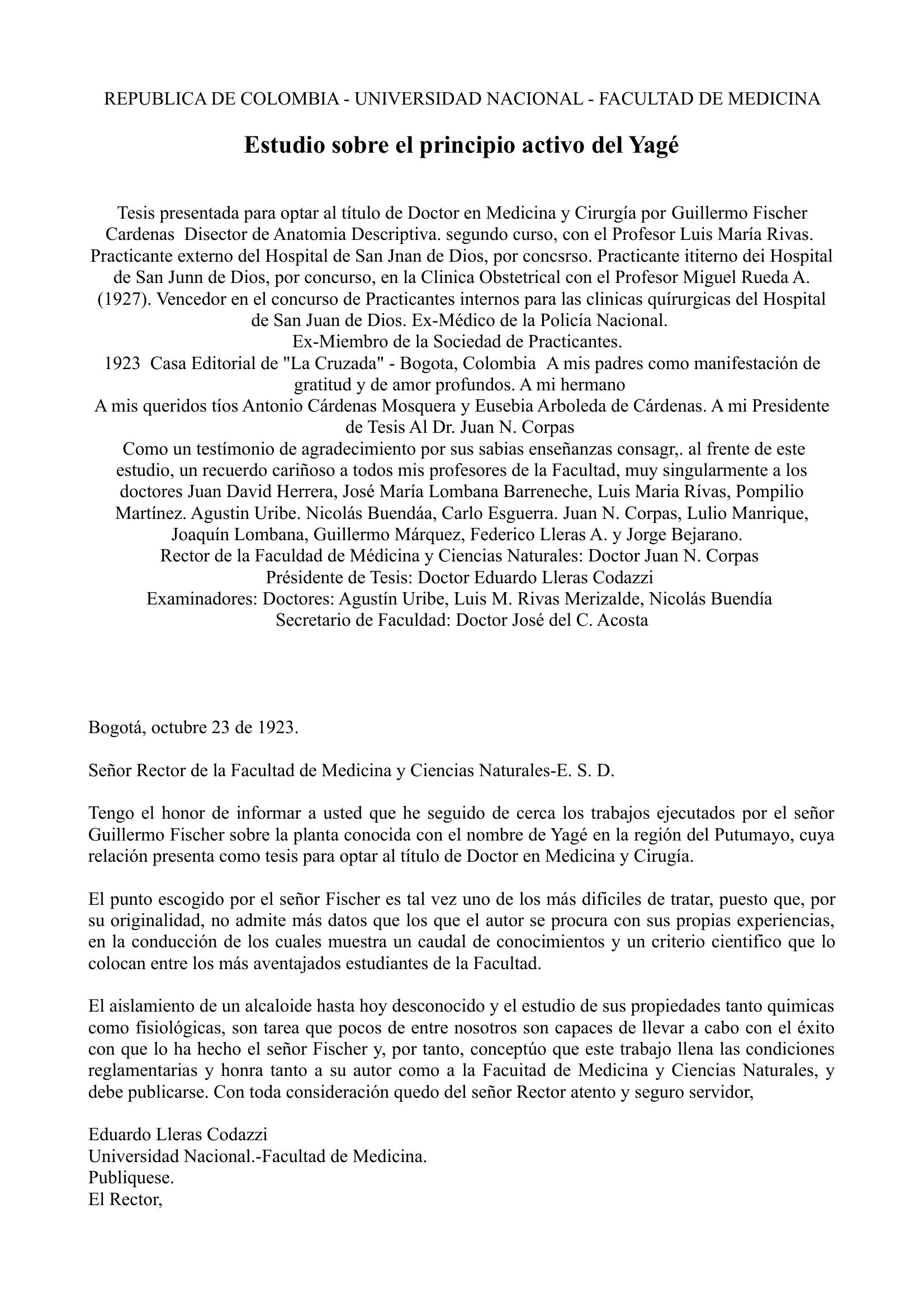
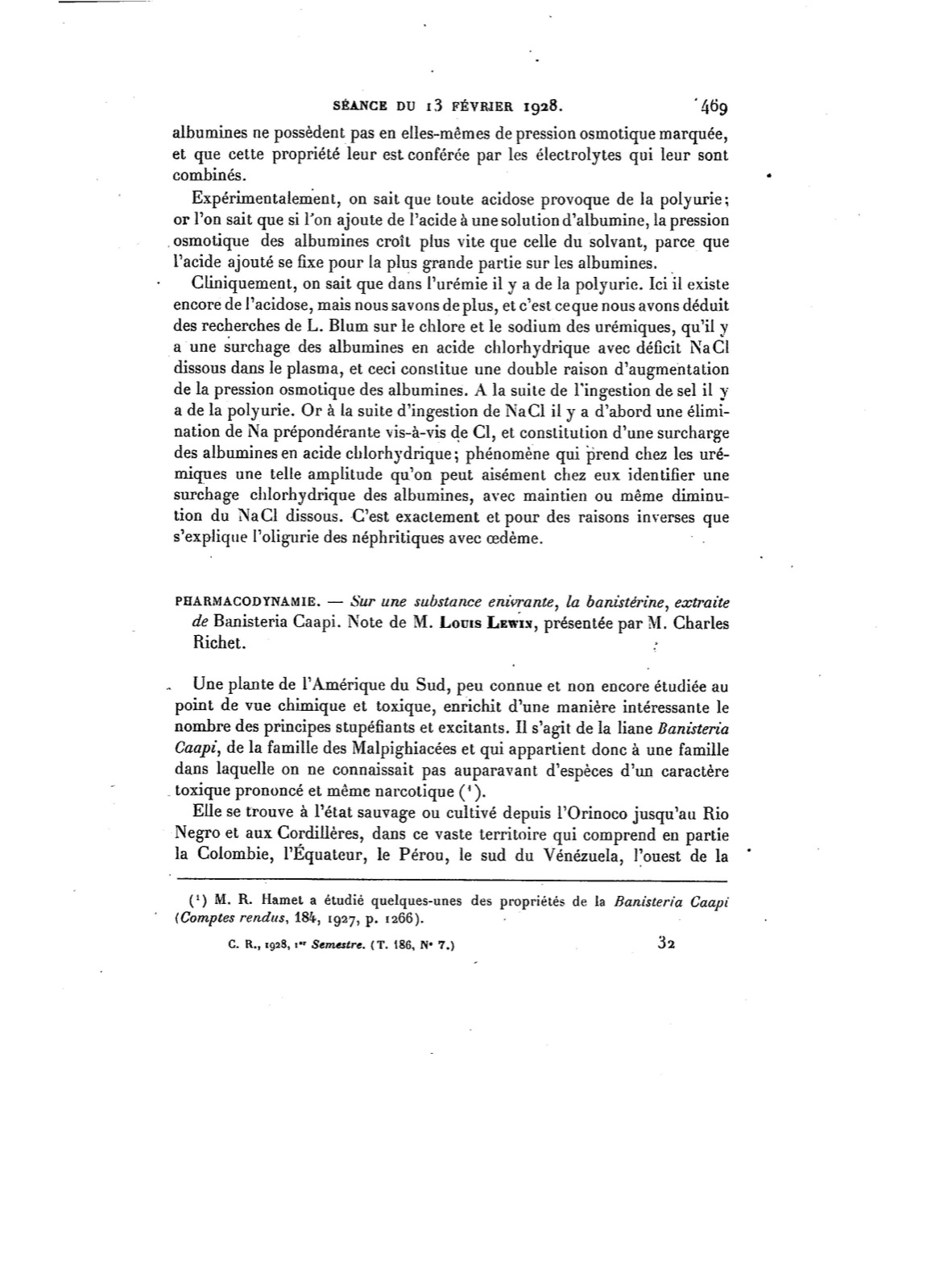
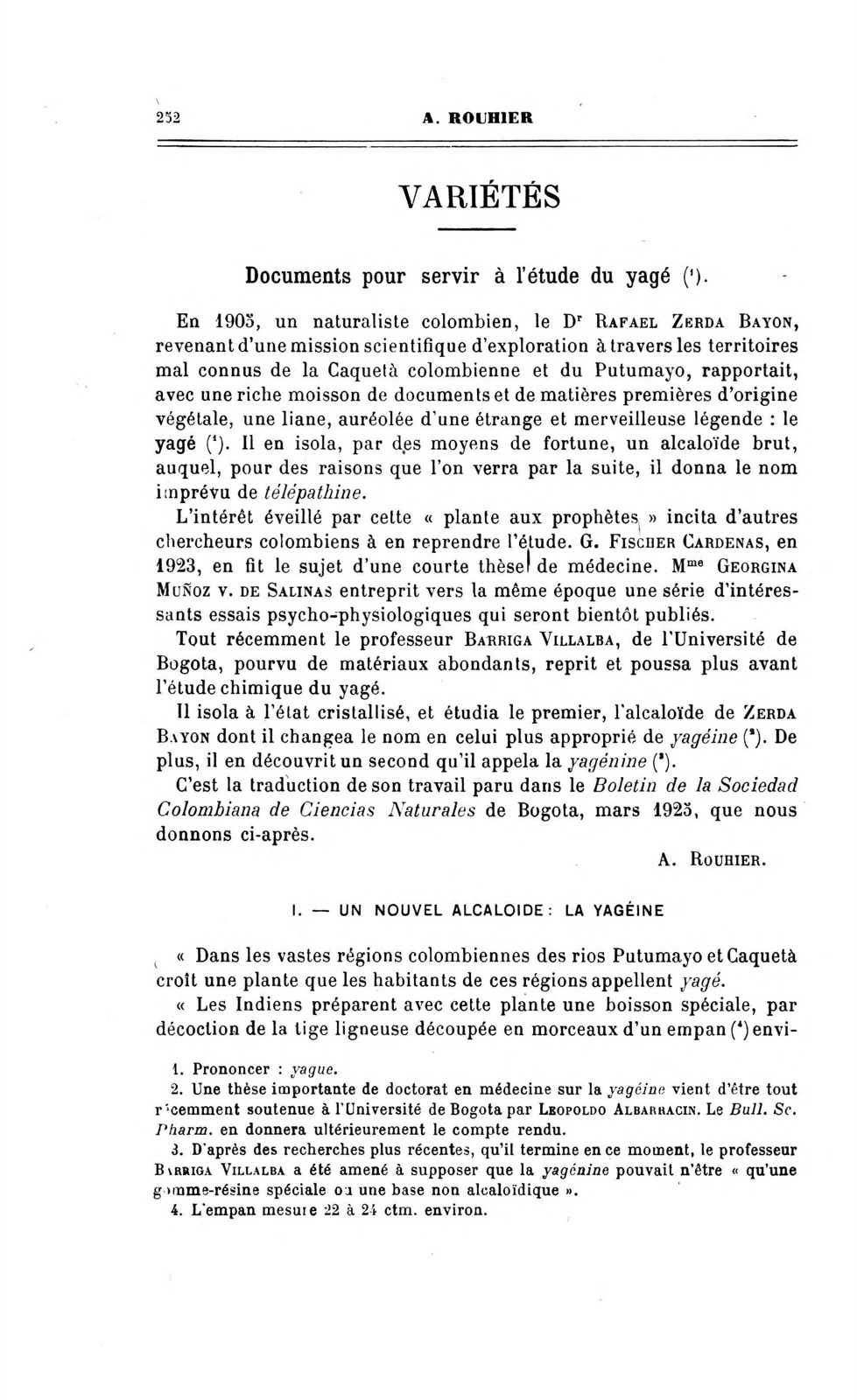
Estudio sobre el principio activo del Yagé

Study on the Active Principle of Yagé

A 1923 doctoral thesis reporting Fischer Cárdenas's isolation of the yagé alkaloid that Rafael Zerda Bayón had named telepathine (telepatina) decades earlier without isolating it. Seven case reports detail effects on human subjects, including the author's self-experiment, describing vivid dreams, visual hallucinations, and euphoria at low doses, followed by a systematic summary of physiological action.

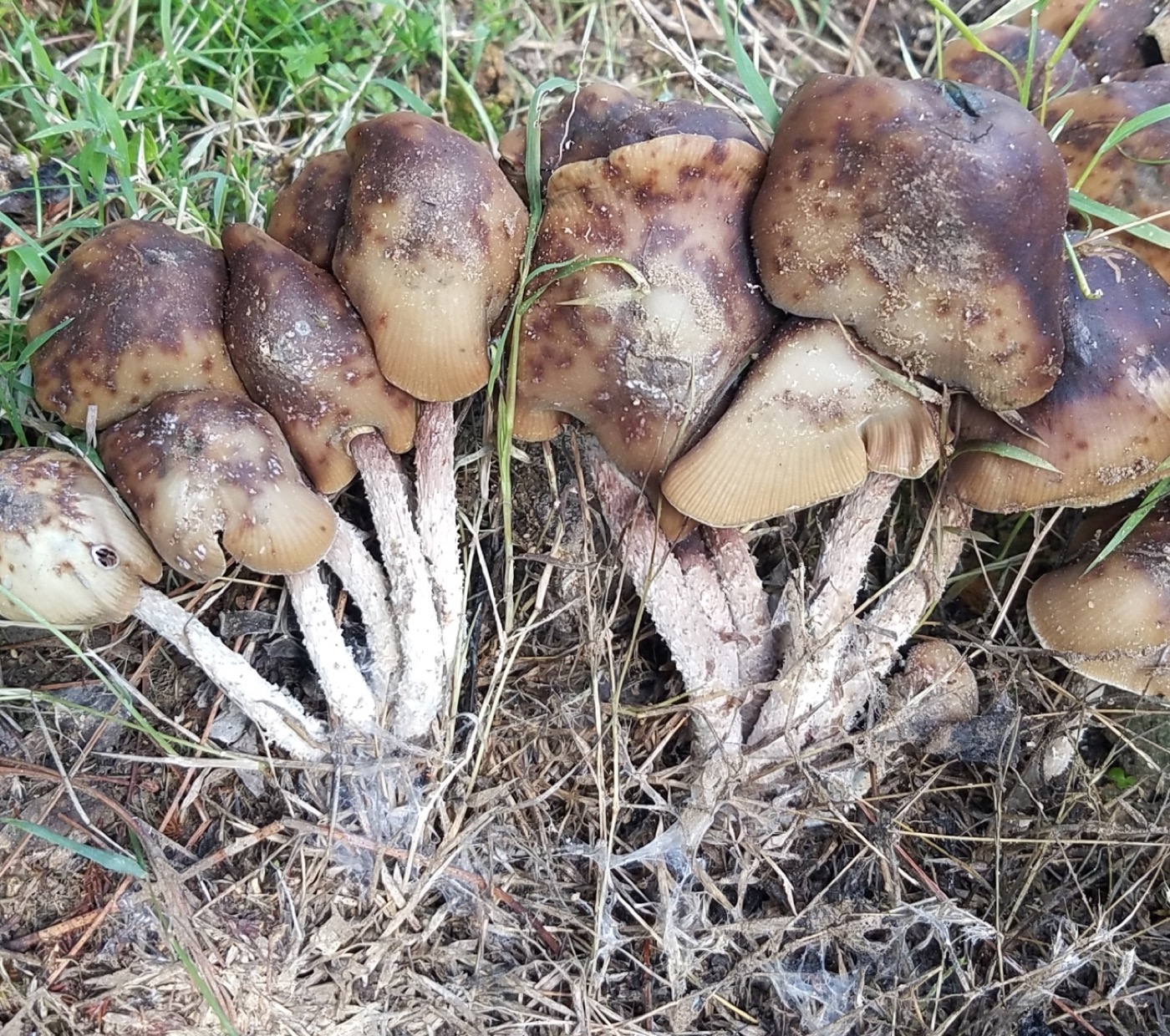
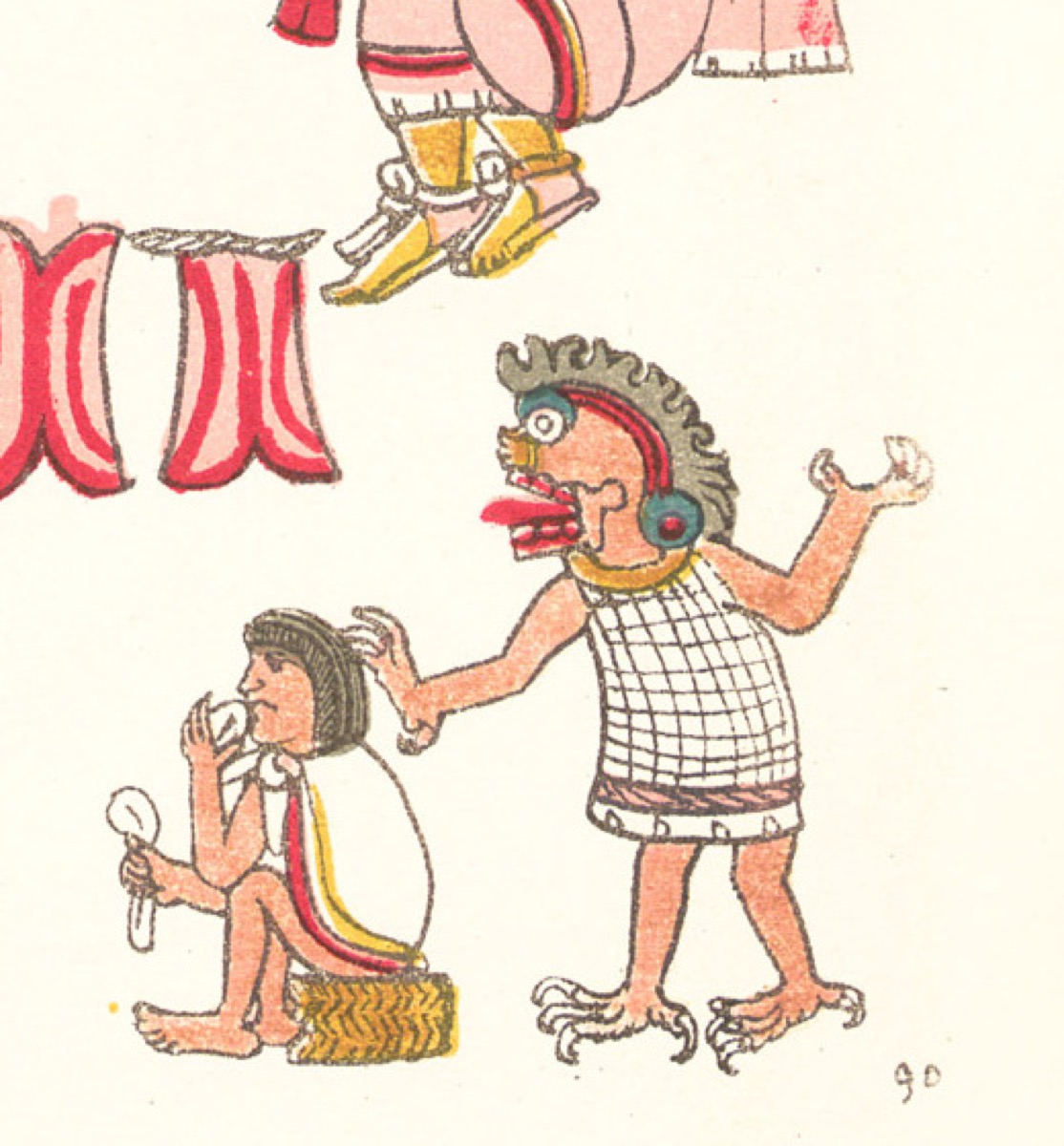
The Elements of Mazatec Witchcraft

The Elements of Mazatec Witchcraft

A Berkeley anthropologist's field survey of Mazatec witchcraft from a 1938 expedition to Huautla de Jiménez, Oaxaca. Hosted here is a fair-use excerpt: Johnson's eyewitness account of a curing ceremony he and his party attended on July 16, 1938 -- the first outsider-witnessed session involving the sacred mushrooms -- along with his description of the mushroom species and their ritual use among Mazatec brujos.

External source