1970-2000 / 1980-present

Browse filters
Active filters:1970-2000 xClear all
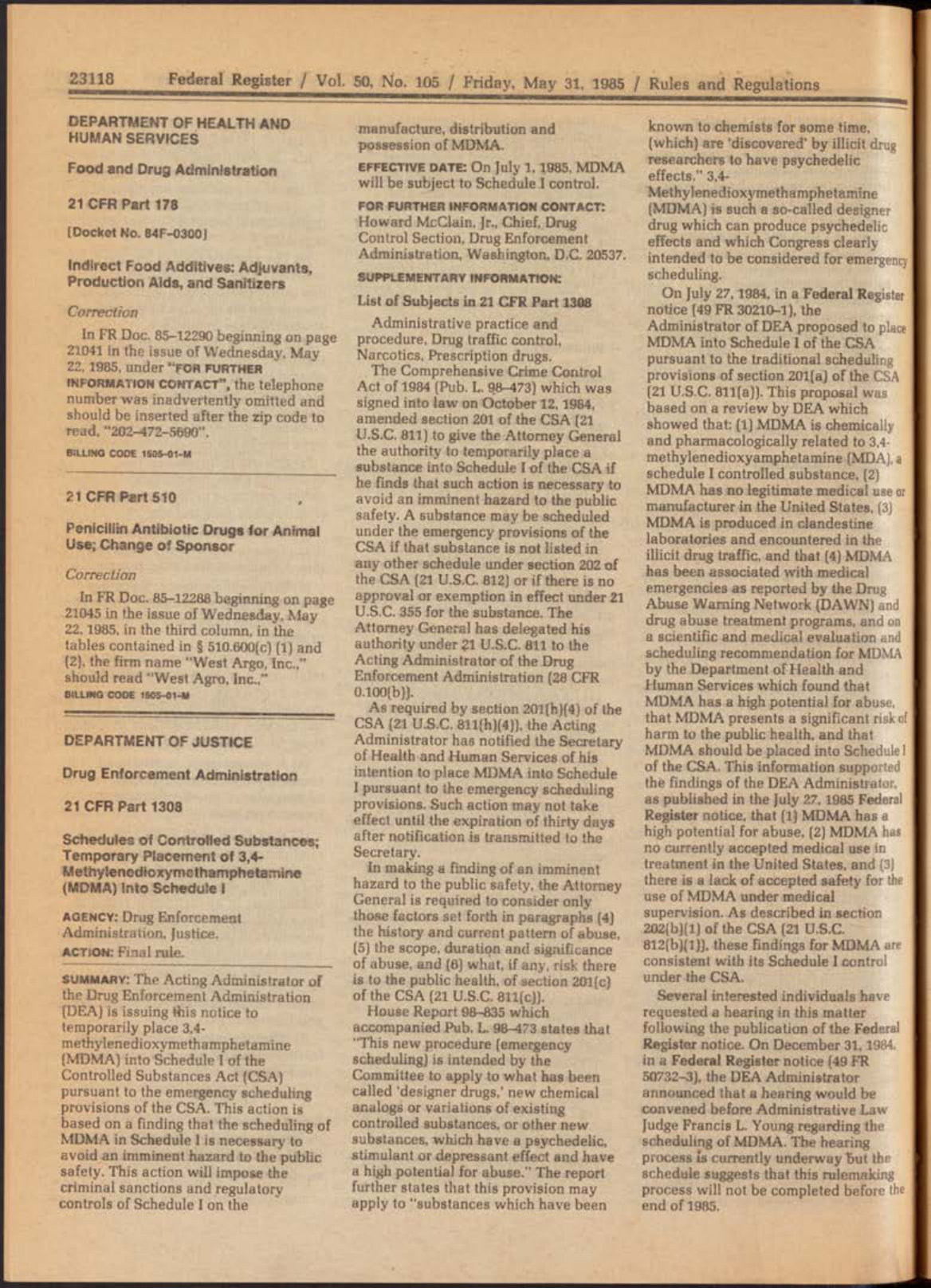
Schedules of Controlled Substances; Temporary Placement of 3,4-Methylenedioxymethamphetamine (MDMA) Into Schedule I
Source, May 31, 1985 (effective July 1, 1985)

DEA emergency scheduling of MDMA

The Drug Enforcement Administration's order placing MDMA in Schedule I on an emergency basis from July 1, 1985, using powers Congress had given it the year before for so-called designer drugs. The notice cites rising recreational use, promotional parties, and a new rat study showing that the related drug MDA destroyed serotonin nerve terminals. It was issued while Judge Francis L. Young's hearings on permanent scheduling were still under way. Full text of the notice.

Read more
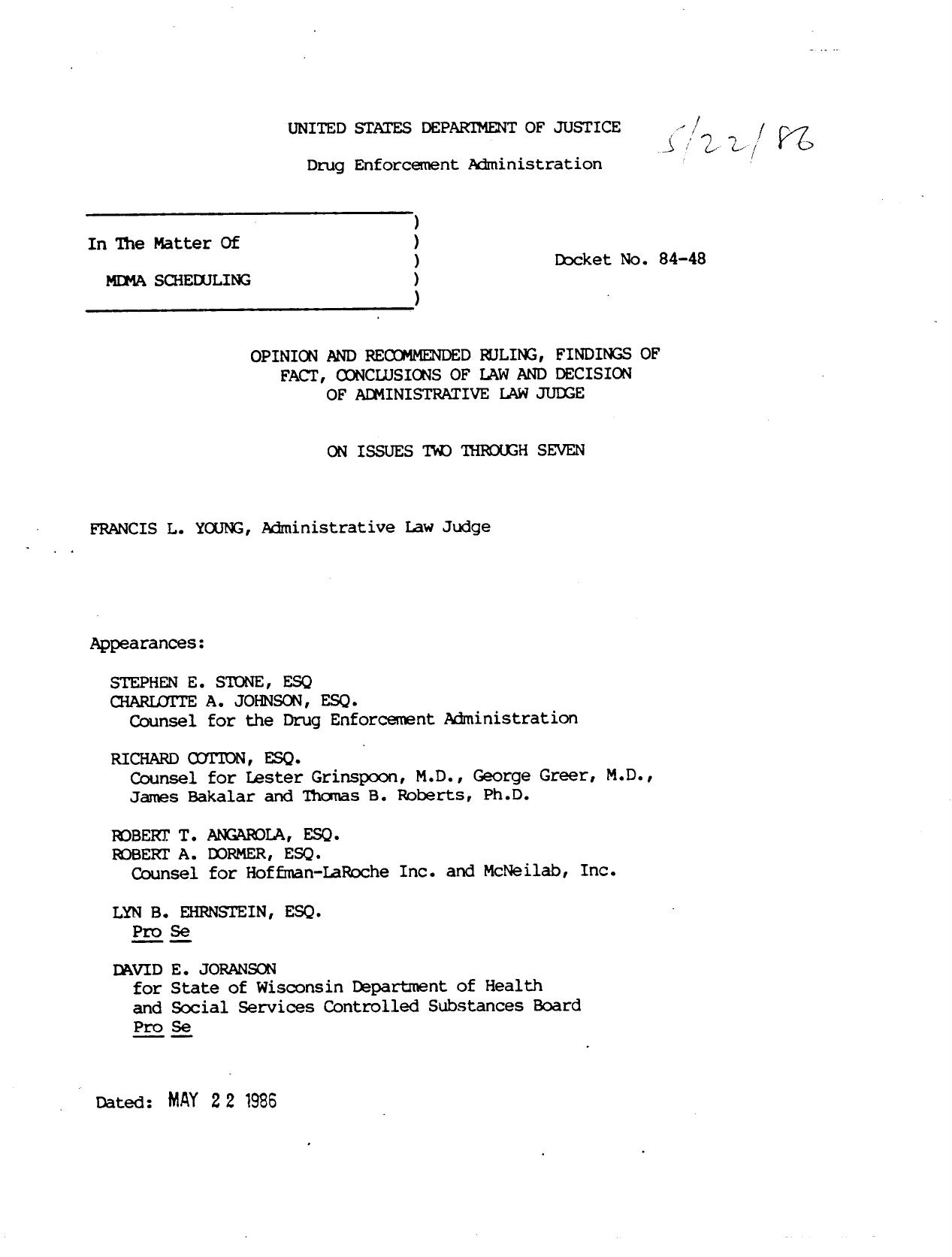

Opinion and Recommended Ruling, Findings of Fact, Conclusions of Law, and Decision of Administrative Law Judge (MDMA Scheduling)
Source, May 22, 1986

In re MDMA Scheduling (ALJ Young opinion)

After seventeen days of hearings, Administrative Law Judge Francis L. Young recommends placing MDMA in Schedule III rather than Schedule I. He finds currently accepted medical use and accepted safety for medical supervision based on psychiatrists' testimony, animal lethality studies, and clinical experience with supervised psychotherapy.

Read more
Grinspoon v. Drug Enforcement Administration
Source, September 18, 1987

Grinspoon v. DEA

The First Circuit vacates the DEA's rule placing MDMA in Schedule I, holding the Administrator's interpretation of 'accepted medical use' was contrary to Congress's intent. Dr. Grinspoon, a Harvard psychiatrist seeking to research MDMA therapeutically, brought the appeal after the Administrator overruled the ALJ's Schedule III recommendation.

Read more
Employment Division, Department of Human Resources of Oregon v. Smith
Source, April 17, 1990

Employment Division v. Smith

The Supreme Court holds that Oregon may deny unemployment benefits to two Native American Church members dismissed for sacramental peyote use, since a neutral criminal drug law requires no religious exemption. Blackmun dissents.

Read more
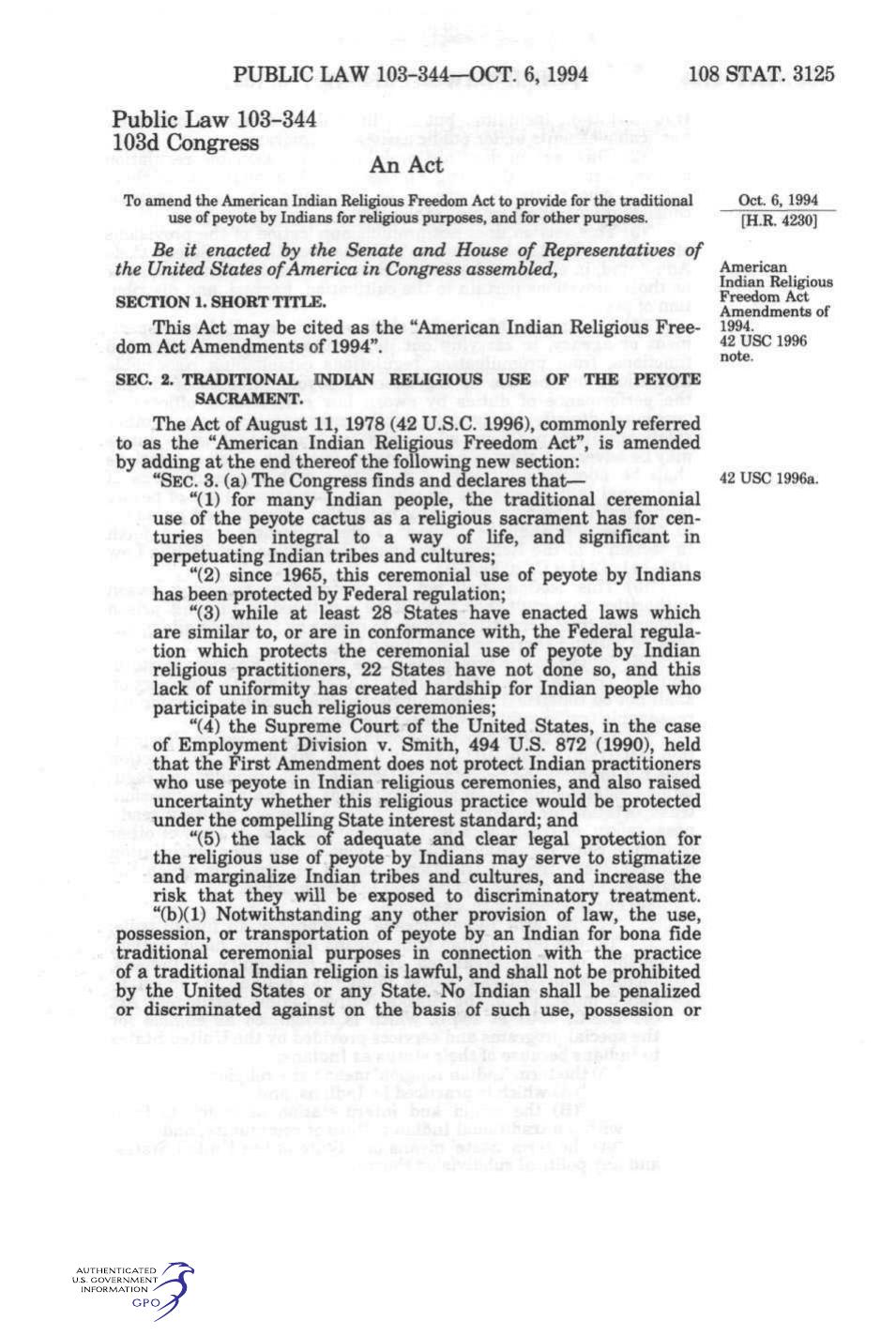
American Indian Religious Freedom Act Amendments of 1994 (Public Law 103-344)
Source, Approved October 6, 1994

AIRFA Amendments of 1994

Congress restored a nationwide exemption for the ceremonial use of peyote by Indians in connection with traditional religions. The statute carves out exceptions for prison, military, and safety-sensitive positions.

Read more
Hallucinogens: An Update (NIDA Research Monograph 146)
Academic Article, 1994

NIDA Research Monograph 146

An Update (NIDA Research Monograph 146)

Proceedings of a 1992 NIDA technical review on hallucinogen research, prompted by rising LSD use among teenagers. Includes Rick Strassman's account of the regulatory process (IRB, DEA, FDA) for his DMT study, the first human hallucinogen study approved since the early 1970s.

Read more