Texts / Book

Browse filters
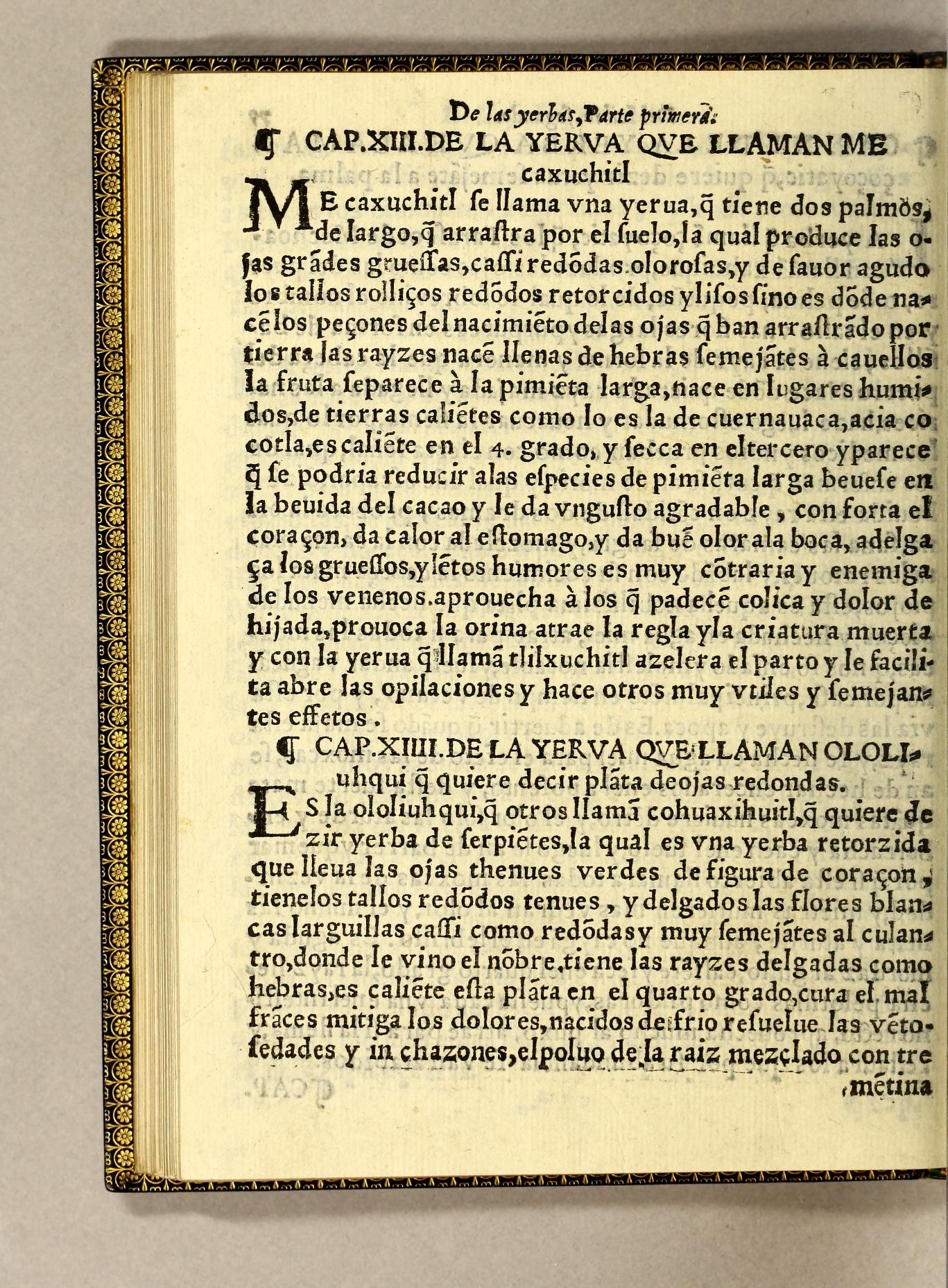
De la yerva que llaman Ololiuhqui
Book, 1615

On the Herb Called Ololiuhqui

Chapter 14 of Francisco Ximénez's 1615 Spanish redaction of Hernández's natural history, describing ololiuhqui. Ximénez gives the plant's Nahuatl name cohuaxihuitl ('serpent herb'), its medicinal uses, and records that priests ate it to commune with the devil and see a thousand phantasms.

Read more
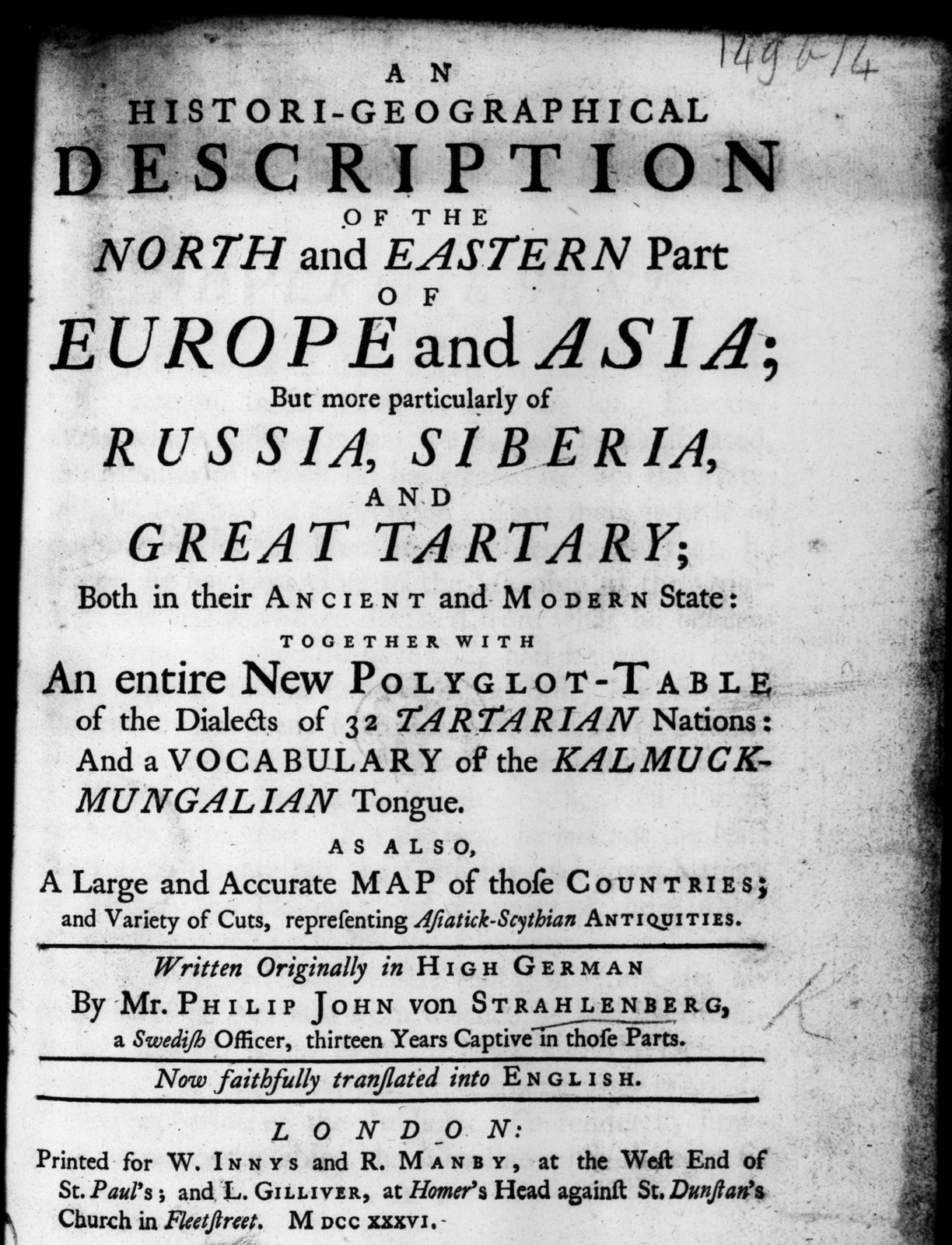
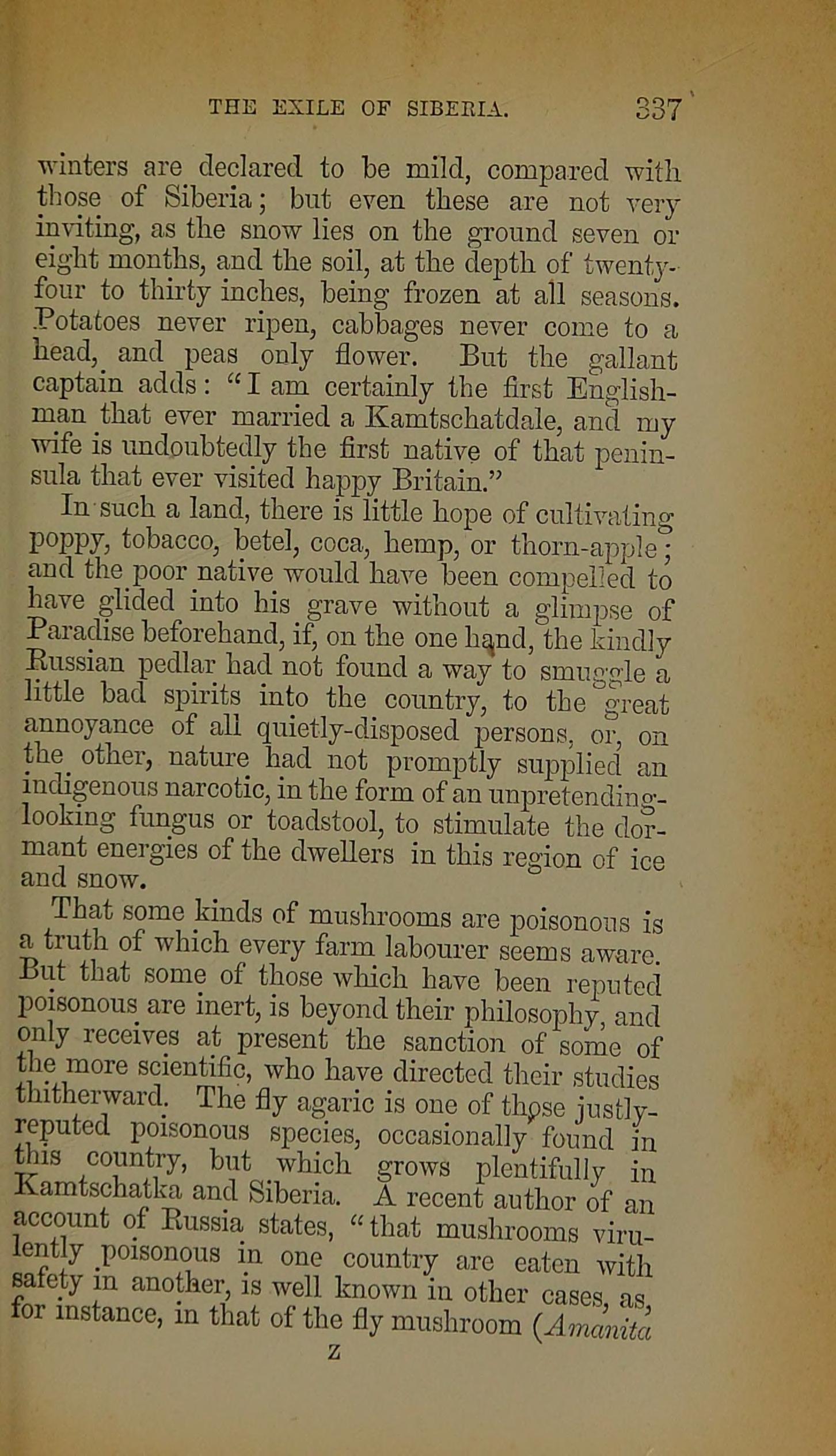
An Histori-Geographical Description of the North and Eastern Part of Europe and Asia: "Koræiki"
Book, 1736 (German original 1730)

Strahlenberg on the Koryaks and Fly-Agaric

The entry "Koræiki" from the anonymous 1736 London translation of Das Nord- und Ostliche Theil von Europa und Asia (Stockholm, 1730) by Philip Johan von Strahlenberg (1676–1747), a Swedish officer captured at Poltava who spent over a decade as a prisoner in Siberia. Strahlenberg reports that Russian traders exchanged the mushroom Muchumor for Koryak furs, that wealthy Koryaks boiled it and drank the liquor at feasts, and that the poor drank the urine of intoxicated guests to share the effect. The full entry is hosted from pp. 396–97 of the 1736 printing.

Read more
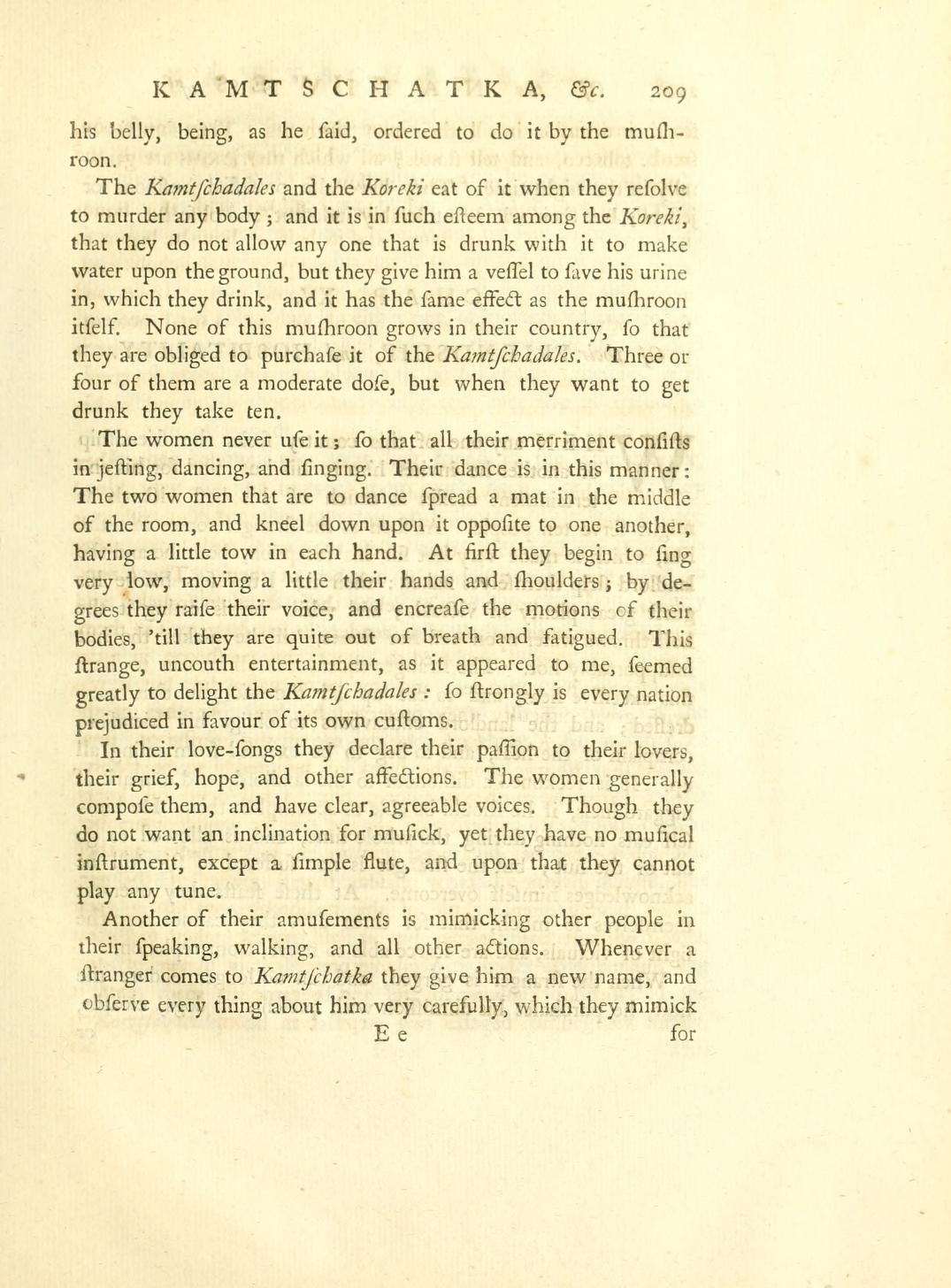
The History of Kamtschatka, and the Kurilski Islands, with the Countries Adjacent
Book, 1764 (English translation; Russian original 1755)

The History of Kamtschatka

Krasheninnikov's 1764 English translation describes fly-agaric (Amanita muscaria) intoxication in Kamchatka: its effects, use by the Koryak, and the practice of drinking an intoxicated person's urine to prolong inebriation. He covers dose-dependent effects and behavioral consequences including murderous impulses.

Read more
The Seven Sisters of Sleep: Popular History of the Seven Prevailing Narcotics of the World
Book, 1860

The Seven Sisters of Sleep (Amanita chapter)

Popular History of the Seven Prevailing Narcotics of the World

One of seven chapters in a British mycologist's popular survey of the world's narcotics, this one on Amanita muscaria. Cooke gathers the earlier Siberian accounts of Krasheninnikov, Gmelin and Pallas, and describes the preparation, the staged effects, and the urine-drinking practice.

Read more
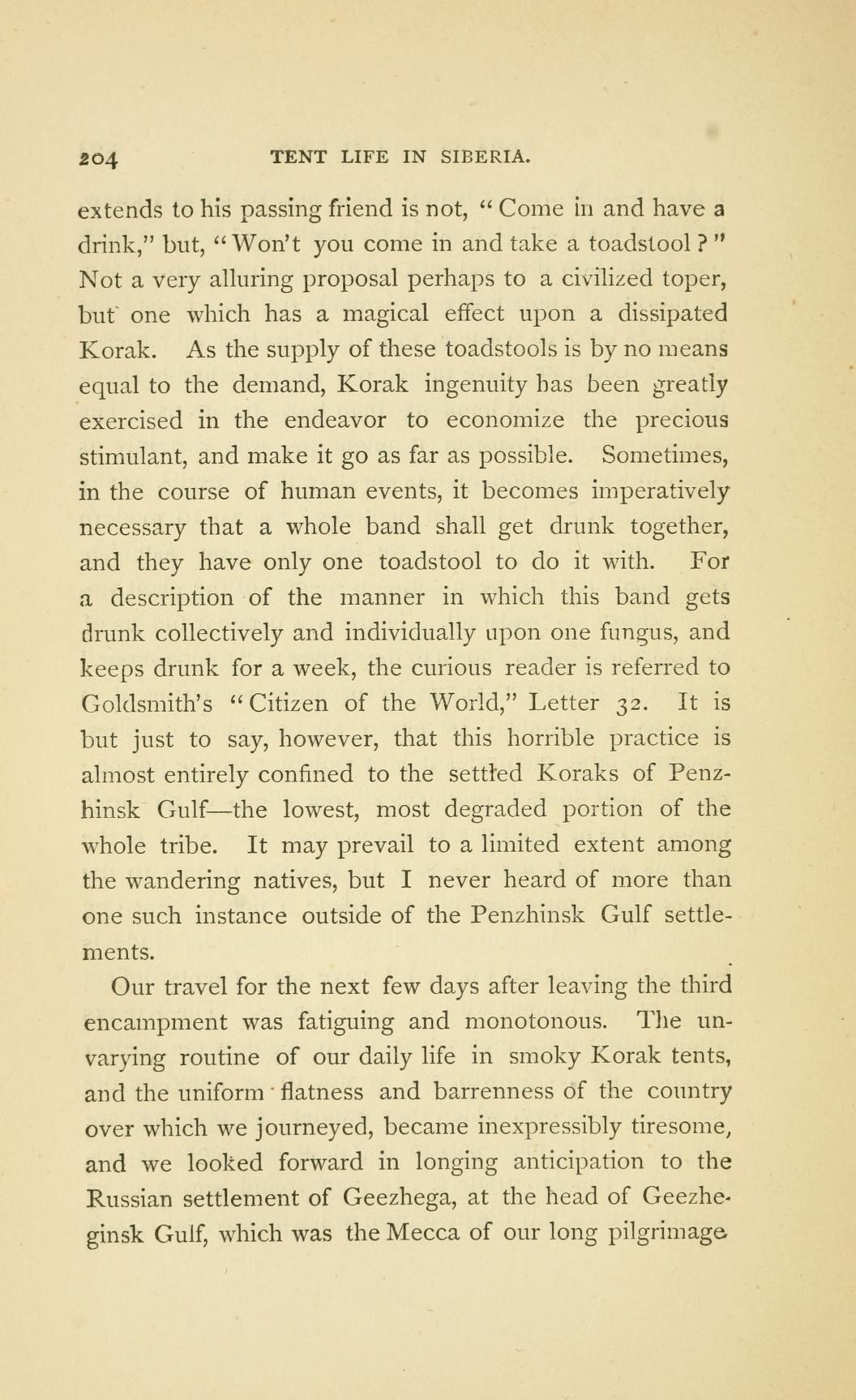
Tent Life in Siberia
Book, 1870

Tent Life in Siberia

An American telegraph surveyor's account of Koryak men intoxicated on fly-agaric at a wedding celebration in northern Kamchatka. Kennan describes the mushroom's price, preparation, etiquette of serving, and the trade dynamics between Russian merchants and Koryak consumers.

Read more
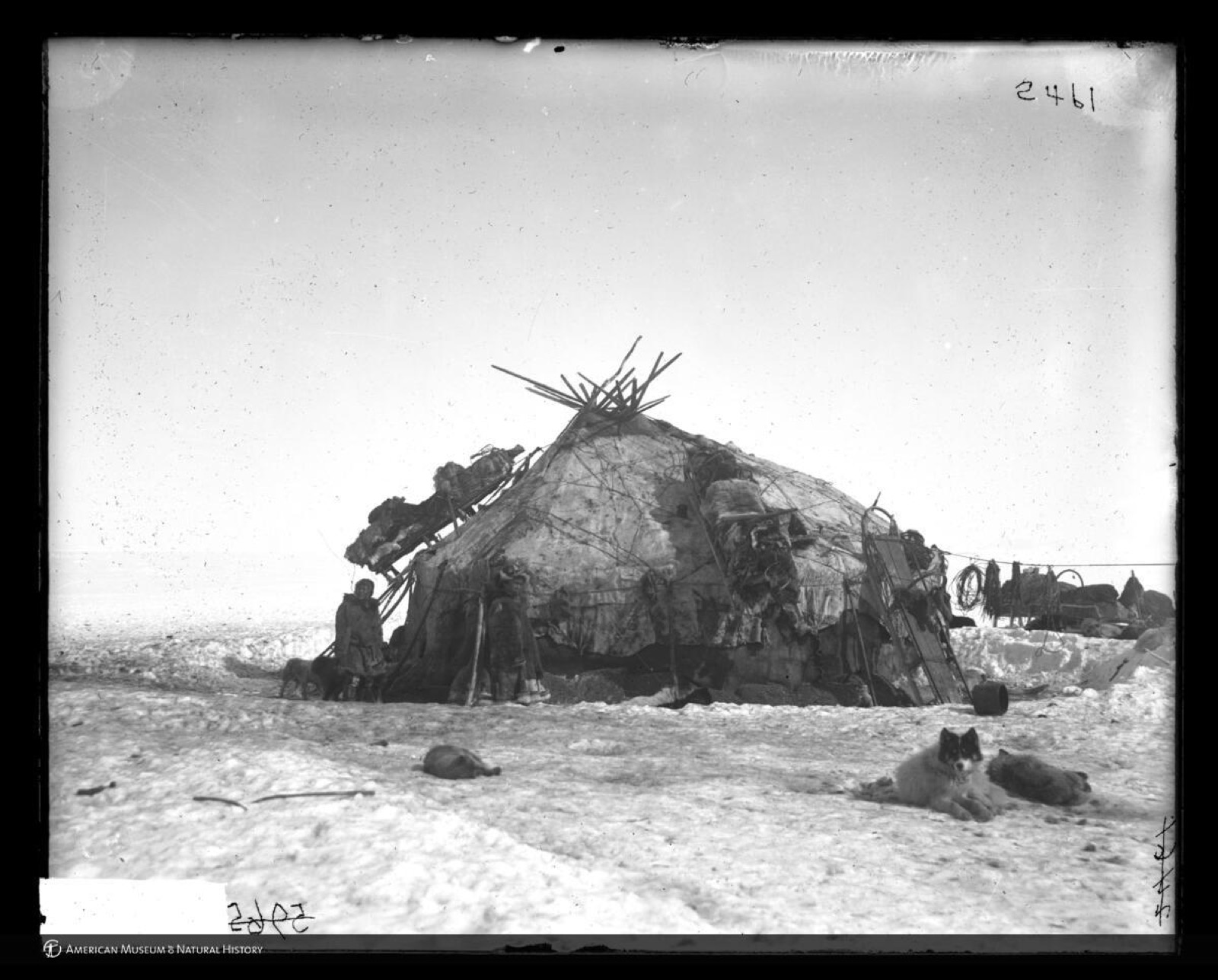
The Chukchee: Religion — Intoxicants
Book, 1907 (Religion, part 2 of The Chukchee, published 1904-1909)

The Chukchee (on fly-agaric)

Religion — Intoxicants

An ethnographer's account of fly-agaric use among the Chukchee and Koryak, including dosage, preparation, three stages of intoxication, the 'spirits of fly-agaric,' and urine-drinking to extend the effect. The text also records the mushroom's place in Chukchee myth.

Read more
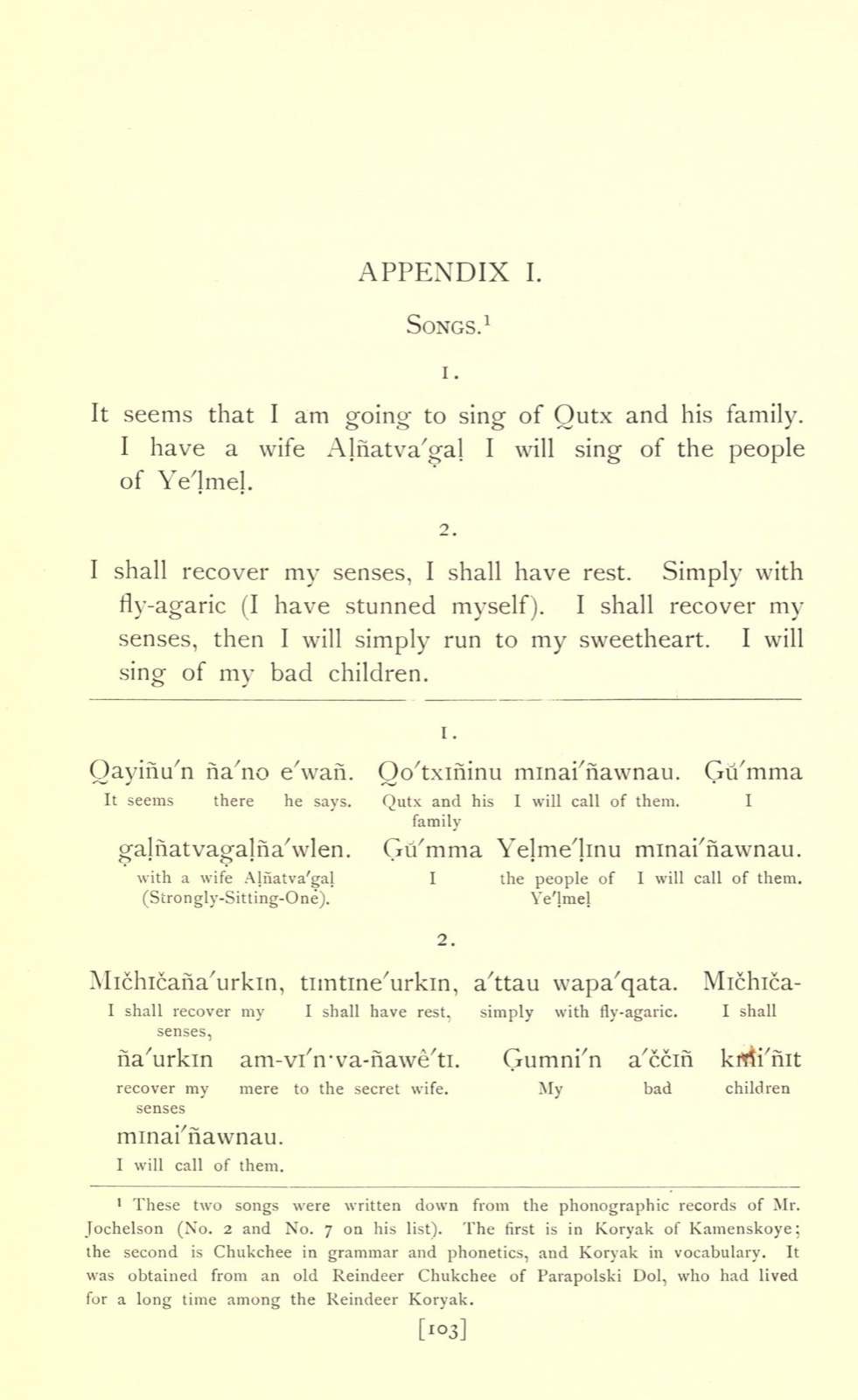
Koryak Texts
Book, 1917

Koryak Texts (Introduction and fly-agaric song)

Excerpts from Bogoras's Koryak Texts, including the introduction and two songs transcribed from phonograph recordings. The second song, sung by an elderly Chukchee man, records an Indigenous voice describing fly-agaric use for recovering consciousness.

Read more
Book, 1919

A gunner under ether, 1918

From Smashing Through "the World War" with Fighting Battery C

An American soldier who served in World War I describes being hit by a shell in July of 1918 and his subsequent experience with ether, having "peep[ed] behind the veil, which separates life from death."

Read more
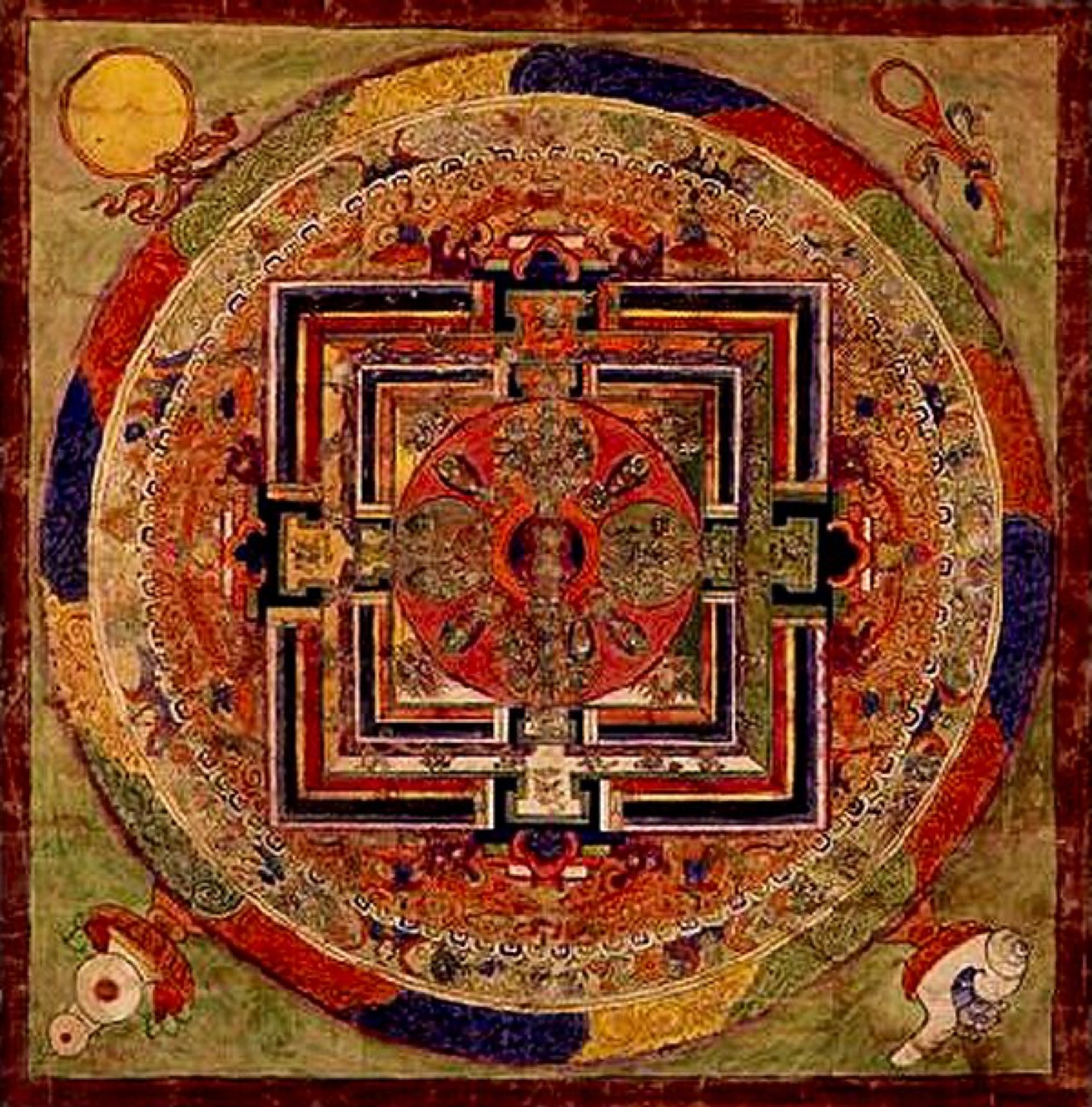
The Psychedelic Experience: A Manual Based on the Tibetan Book of the Dead
Book, 1964

The Psychedelic Experience

A Manual Based on the Tibetan Book of the Dead

Leary, Metzner and Alpert recast the Tibetan Book of the Dead as a manual for LSD, psilocybin and mescaline sessions. Hosted here is a fair-use excerpt: the book's opening definition of 'set and setting,' and the full 'Preparation' and 'The Setting' sections, which give that idea its practical, session-by-session form.

Read more