Ayahuasca

Browse filters
Active filters:Ayahuasca xClear all
Cueva del Chileno
Archaeological Site, 905-1170 CE

Cueva del Chileno

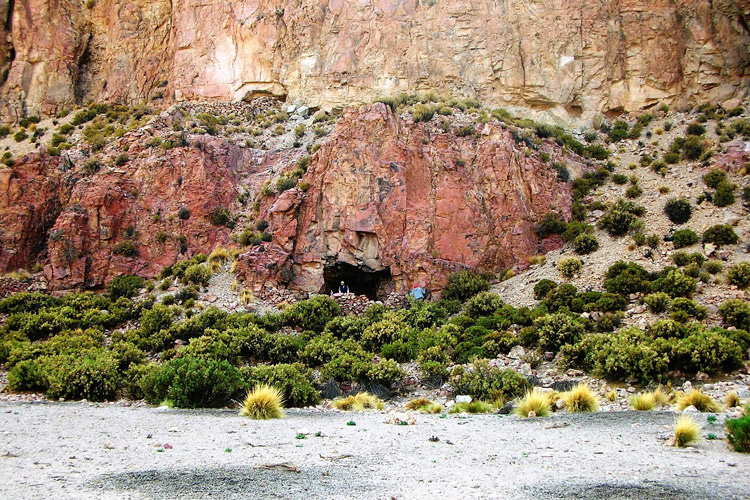
A high-Andean ritual bundle with direct chemical evidence for multiple psychoactive plants

A rock shelter in southwestern Bolivia where archaeologists found direct chemical evidence for ancient use of coca, harmine-bearing plants, DMT-bearing plants, and possibly psilocin.

Read more
Franz Xaver Veigl on Ayahuasca in Maynas
Source, c. 1768–1785 (exact date unclear)

Franz Xaver Veigl on Ayahuasca in Maynas

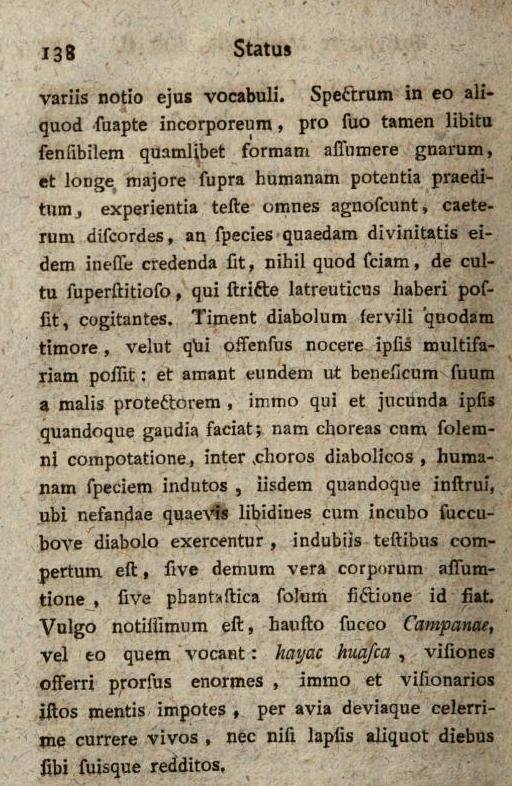
Franz Xaver Veigl, a German Jesuit who worked in the mission province of Maynas in the upper Amazon until the Jesuits were expelled in 1768, describes healers and visionary drinks there. He writes that people who drank "hayac huasca" saw "absolutely enormous visions" and seemed to travel far away, and, like other missionaries of his time, he treats this as dealings with the devil. English translation of Latin passages from his account of Maynas.

Read more
Ayahuasca in Villavicencio's Geografía de la República del Ecuador
Source, 1858

Ayahuasca in Villavicencio's Geografía de la República del Ecuador

An 1858 Ecuadorian account of ayahuasca visions and divination

Manuel Villavicencio's 1858 geography gives an early Spanish account of ayahuasca among Indigenous groups of eastern Ecuador, including divination, warfare, illness diagnosis, visionary effects, and a first-person report of his own experience.

Read more
Caapi and Niopo in “On Some Remarkable Narcotics of the Amazon Valley and Orinoco”
Source, c. 1870; published 1908

Caapi and Niopo in “On Some Remarkable Narcotics of the Amazon Valley and Orinoco”

Richard Spruce on ayahuasca, yopo/paricá, and Amazonian medicine-men

Richard Spruce's nineteenth-century account of caapi, aya-huasca, niopo, and paricá, based on field observations in the Uaupés, Orinoco, Rio Negro, Napo, and Pastasa regions. The excerpt records plant identifications, preparation methods, visual effects, ceremonial uses, and the role of payes in curing and divination.

Read more
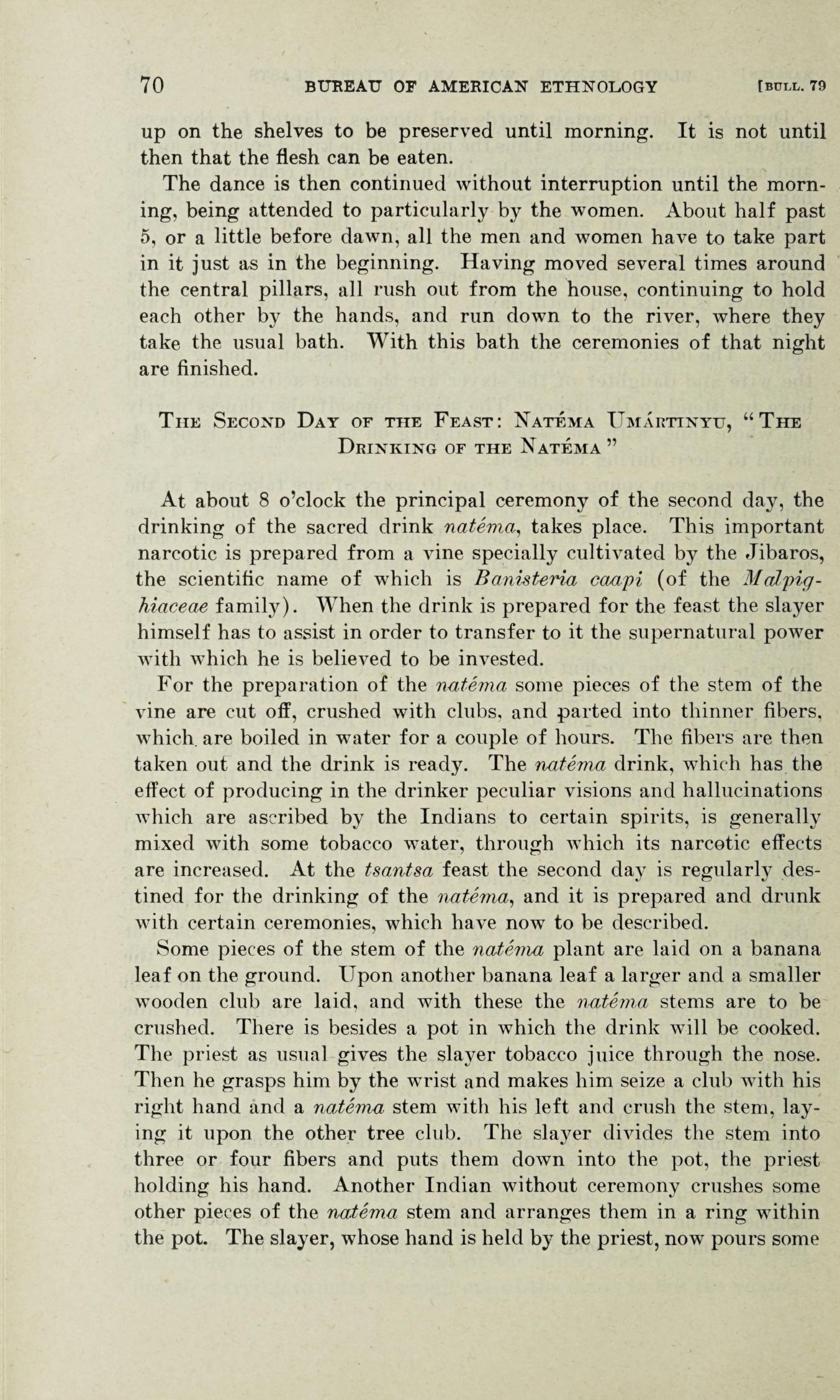
Blood Revenge, War, and Victory Feasts among the Jibaro Indians of Eastern Ecuador
Field Notes, 1923

Blood Revenge, War, and Victory Feasts among the Jibaro Indians

Anthropologist Rafael Karsten's account of a Jívaro victory feast describes the natéma ceremony, in which the vision-inducing drink made from Banisteria caapi and tobacco is prepared ritually and drunk communally. The passage covers preparation, the emetic effect, and beliefs that the visions foretell prosperity.

Read more
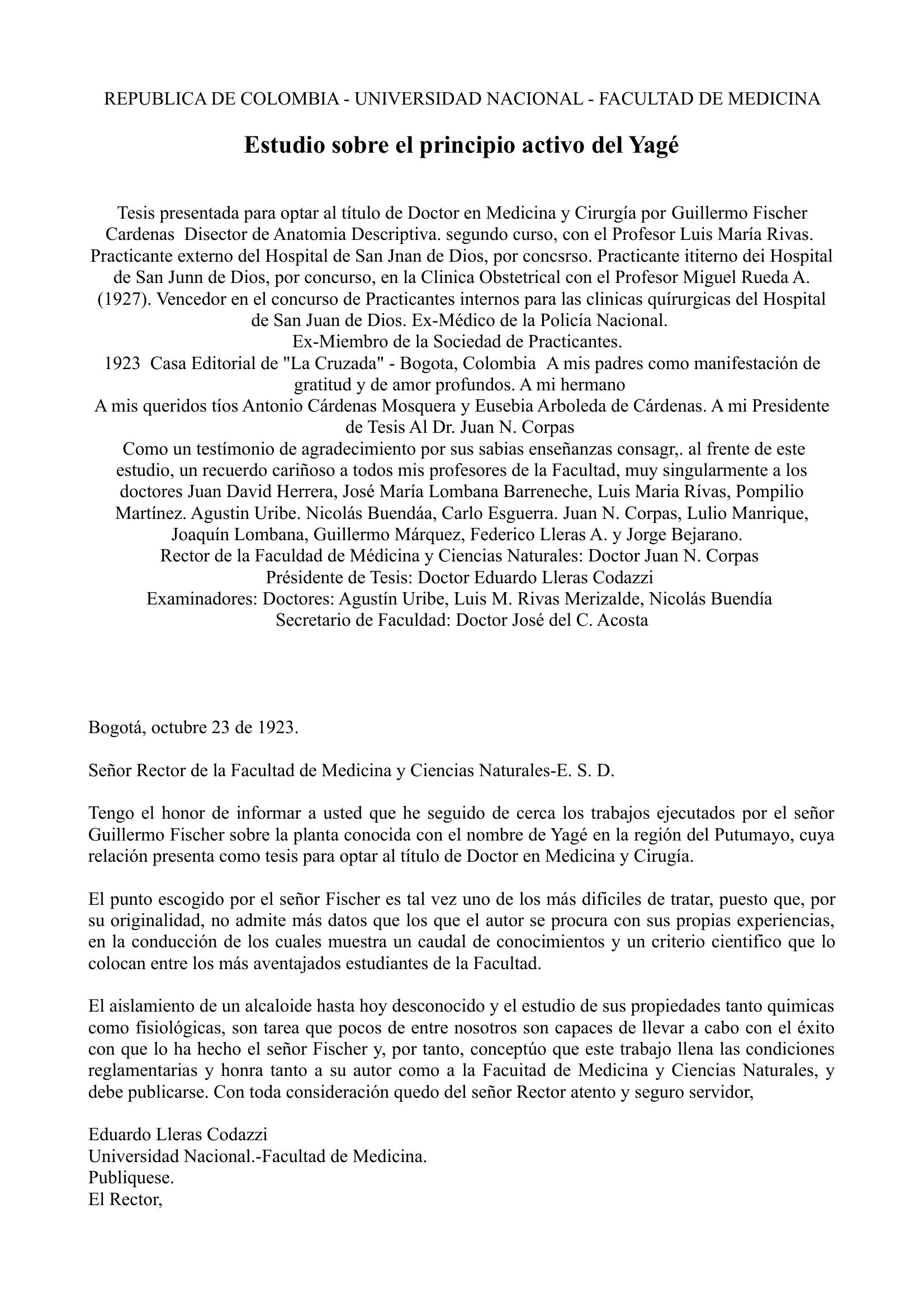
Estudio sobre el principio activo del Yagé
Academic Article, 1923

Study on the Active Principle of Yagé

A 1923 doctoral thesis reporting Fischer Cárdenas's isolation of the yagé alkaloid that Rafael Zerda Bayón had named telepathine (telepatina) decades earlier without isolating it. Seven case reports detail effects on human subjects, including the author's self-experiment, describing vivid dreams, visual hallucinations, and euphoria at low doses, followed by a systematic summary of physiological action.

Read more
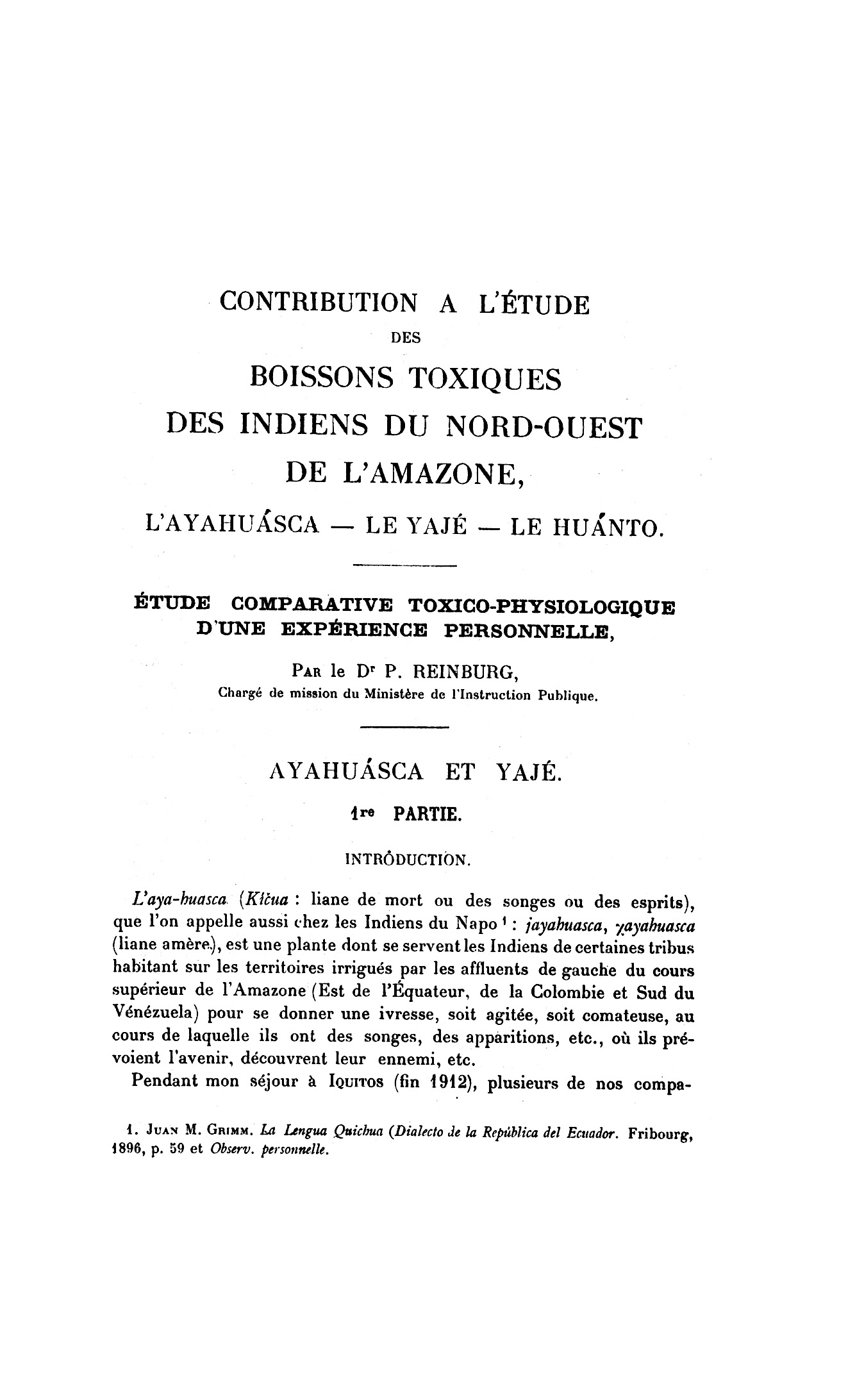
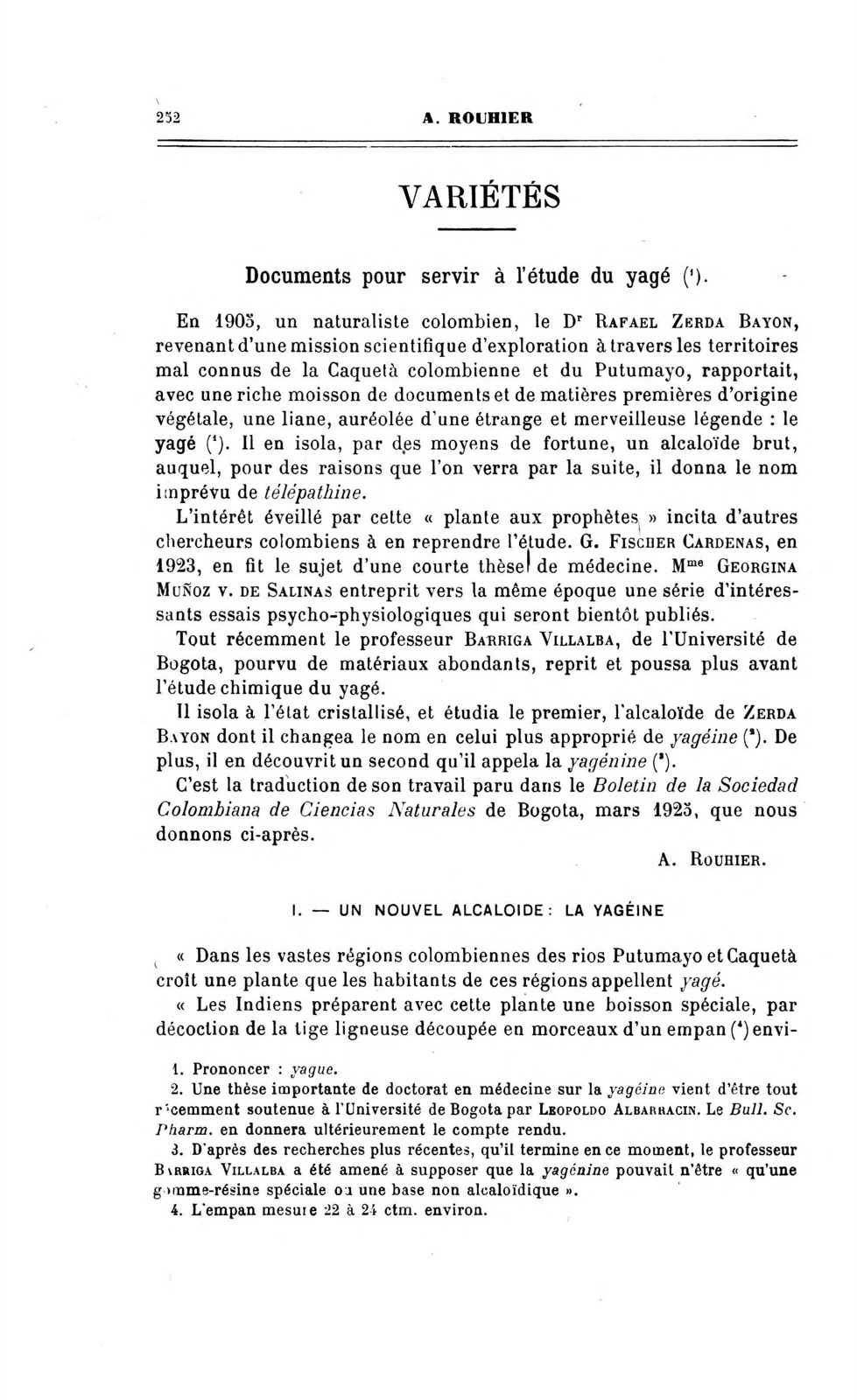
Documents pour servir à l'étude du yagé
Academic Article, April 1926

Documents Toward a Study of Yagé

Rouhier's two-part dossier for Bulletin des Sciences Pharmacologiques: a translation of Barriga Villalba's 1923 paper on alkaloid yagéine, followed by Rouhier's ethnographic and pharmacological notes. Rouhier catalogues dose-dependent effects and includes chemical analysis of a Jívaro preparation.

Read more
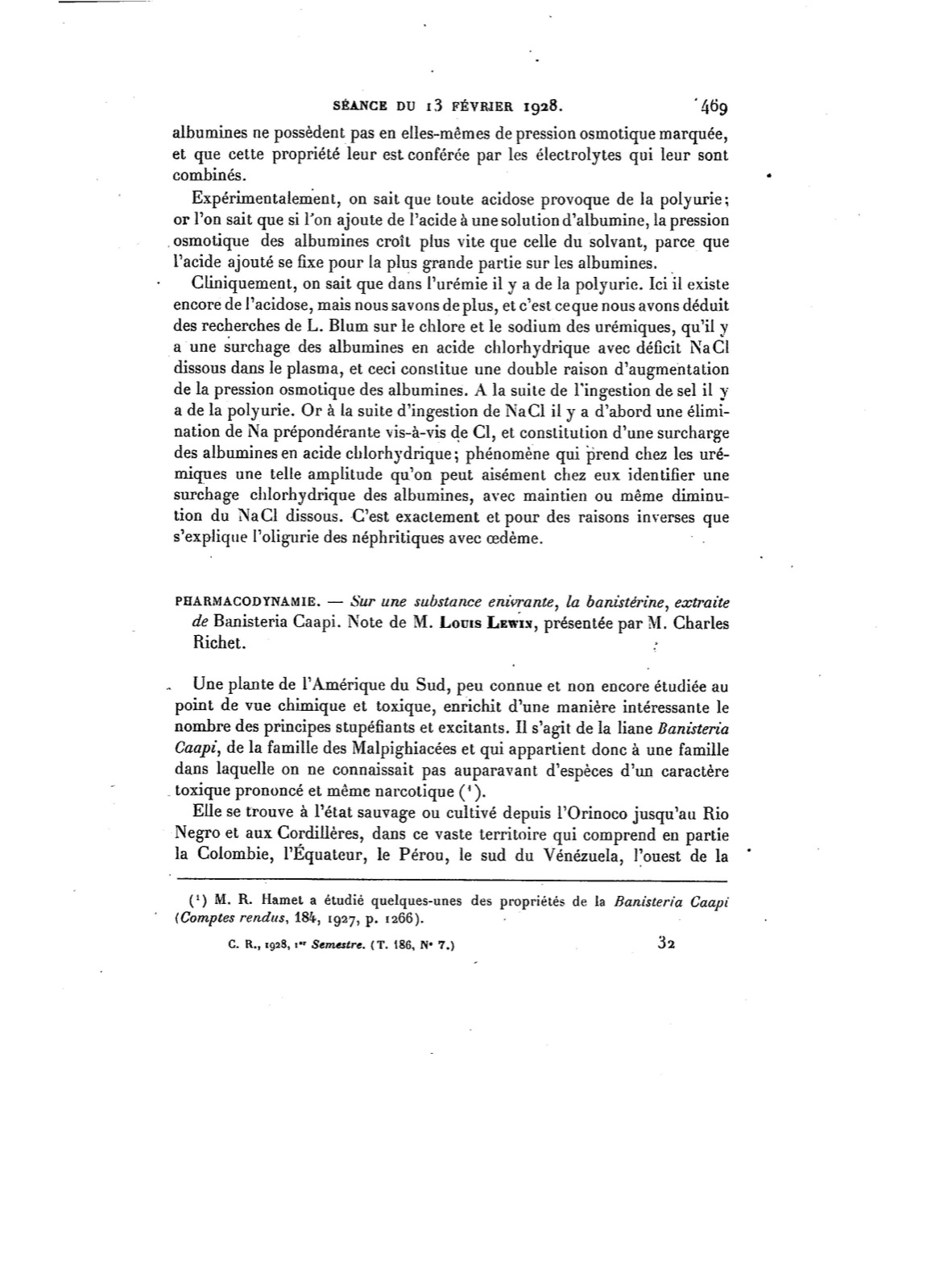
Sur une substance enivrante, la banistérine, extraite de Banisteria Caapi
Academic Article, 1928

On Banisterine, an Intoxicating Substance from Banisteria Caapi

Berlin pharmacologist Louis Lewin announces his isolation of banisterine from Banisteria caapi and its identity to harmine. He describes animal experiments and preliminary human trials showing that banisterine relieved the muscular rigidity of encephalitis lethargica (post-influenza sleeping sickness).

Read more
Testimony of Allen Ginsberg on LSD before a Special Subcommittee of the Senate Committee on the Judiciary
Testimony, June 14, 1966

Ginsberg Senate Testimony on LSD (1966)

The poet Allen Ginsberg (1926–1997) testified on June 14, 1966, before the special Senate Judiciary subcommittee holding hearings on narcotic rehabilitation and LSD on college campuses, with Quentin N. Burdick (1908–1992) presiding. He read a long prepared statement describing his visionary experience of 1948 and his use of peyote, mescaline, LSD, and ayahuasca, then argued from newspaper coverage and the medical literature that LSD's dangers had been exaggerated and that research should be expanded. The record hosts the full printed text, pp. 487–509, including his questioning by Burdick and Jacob K. Javits (1904–1986), his list of proposed research topics (Exhibit No. 76), and the references he put into the record.

Read more
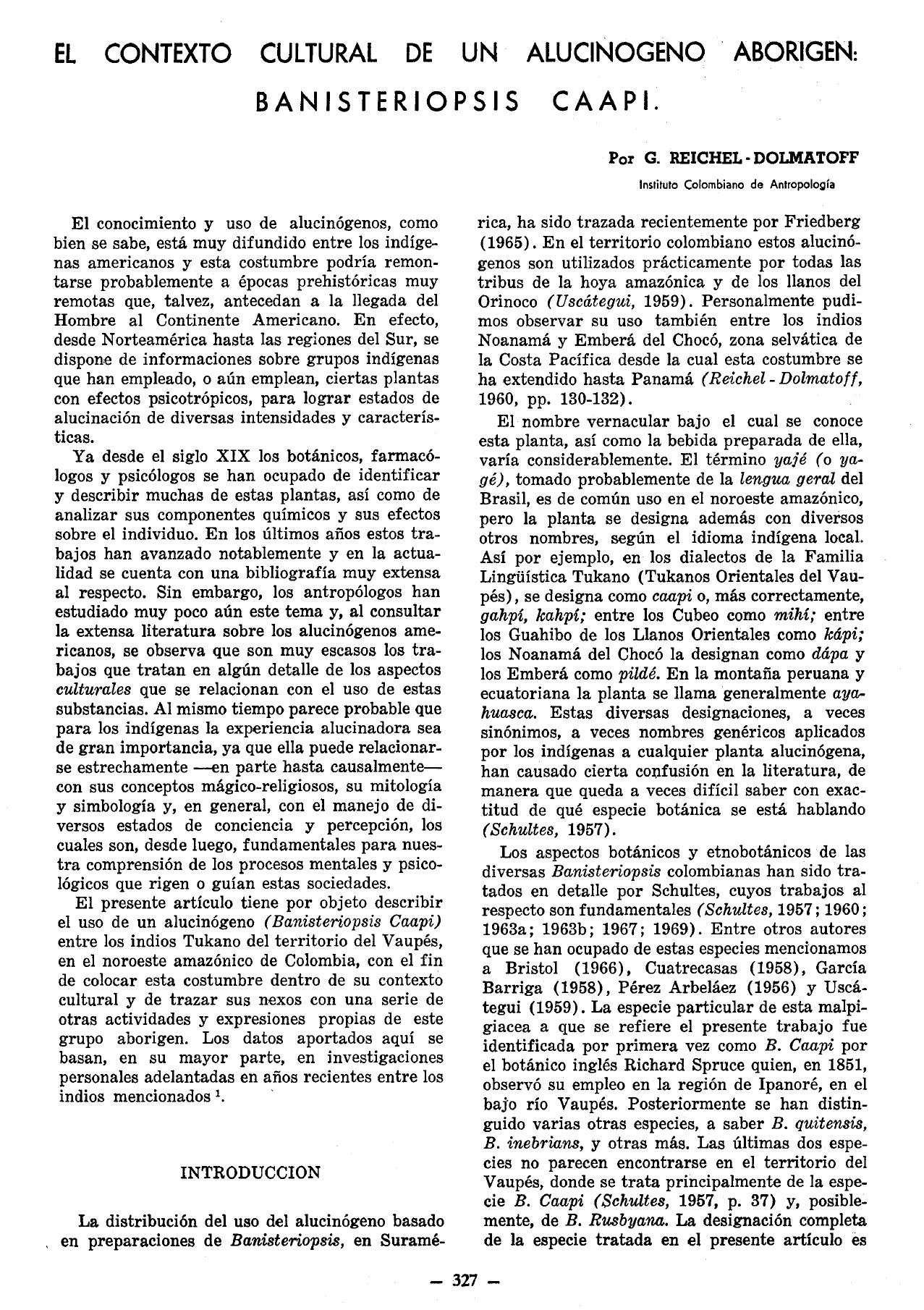
El contexto cultural de un alucinógeno aborigen: Banisteriopsis caapi
Academic Article, 1969

El contexto cultural de un alucinógeno aborigen

Banisteriopsis caapi

A Colombian Amazon ethnographic study placing Tukano use of Banisteriopsis caapi, or yajé, within a wider cultural system of mythology, ritual, symbolism, perception, and social knowledge.

Read more
Gonzales v. O Centro Espirita Beneficente Uniao do Vegetal
Source, February 21, 2006

Gonzales v. O Centro

Chief Justice Roberts holds the federal government failed to show a compelling interest justifying its ban on the Uniao do Vegetal church's sacramental use of hoasca (ayahuasca tea with DMT) under the Religious Freedom Restoration Act. The Court rejects the UN Convention argument and upholds the peyote precedent for religious exemptions to the Controlled Substances Act.

Read more
Church of the Holy Light of the Queen v. Mukasey
Source, March 18, 2009

Church of the Holy Light of the Queen v. Mukasey

A federal court ruling applying Gonzales v. O Centro to the Santo Daime church in Oregon, granting the right to import and drink ayahuasca under RFRA. Judge Panner's findings describe the religion's origins, ritual, physiological effects, and the government's health and diversion evidence.

Read more