Texts / Ethnobotany

Browse filters
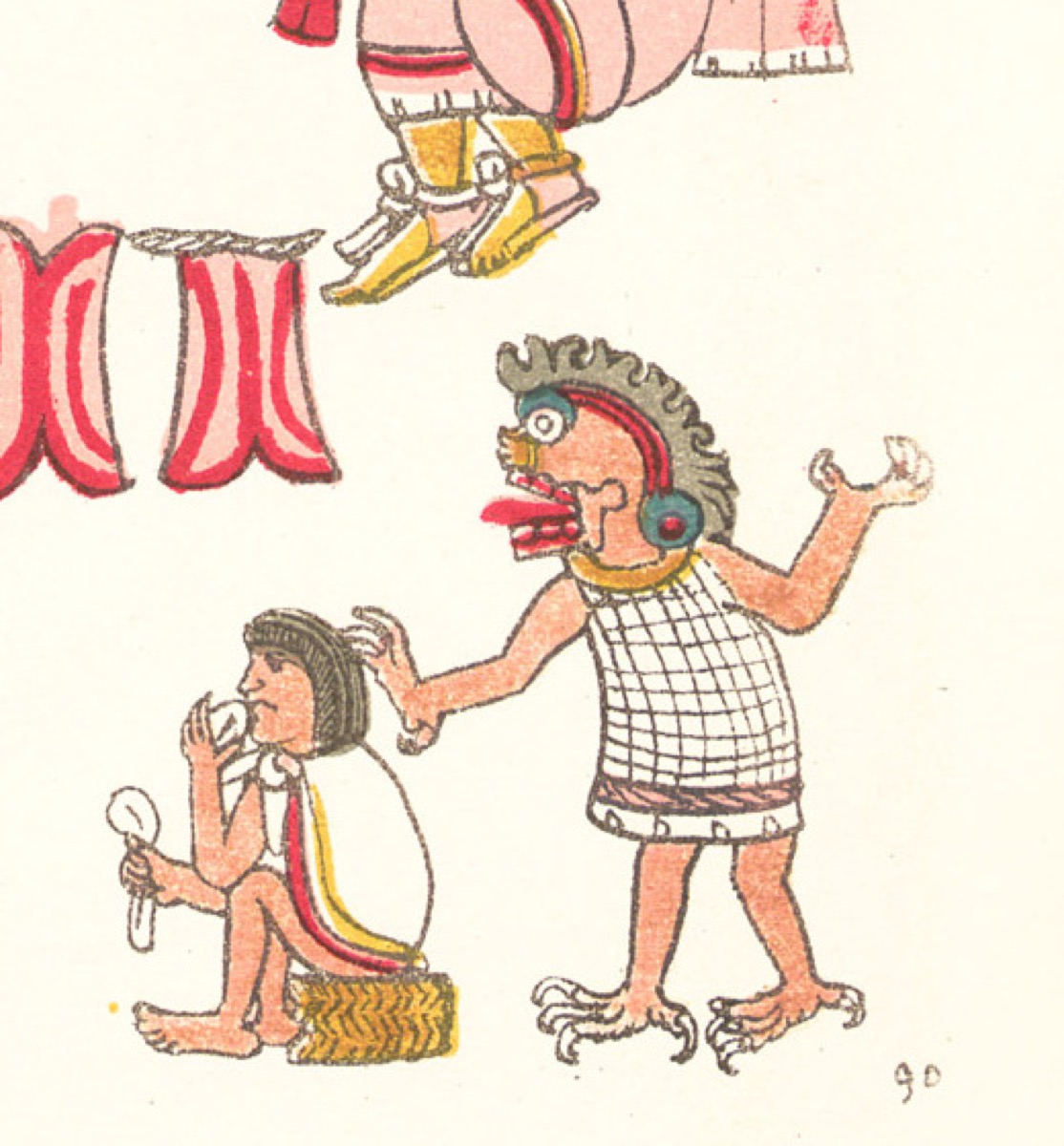
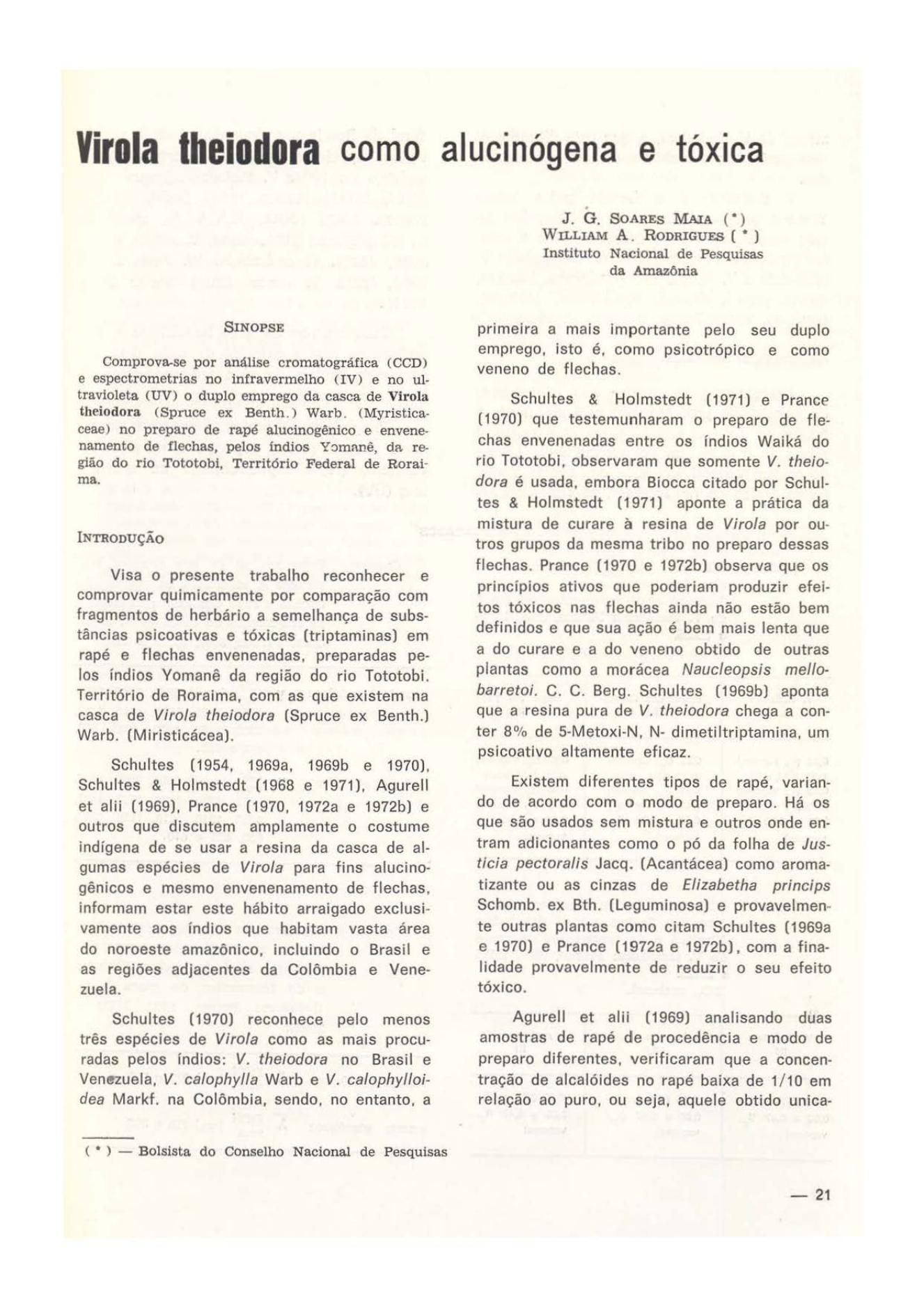
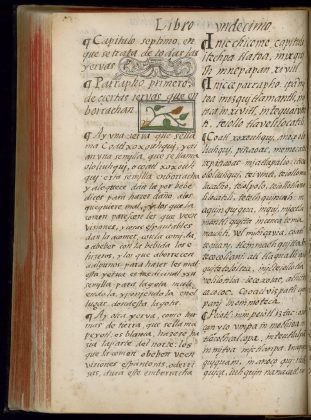
Ololiuhqui, Peyotl, and Teonanácatl in the Florentine Codex
Source, c. 1577

Ololiuhqui, Peyotl, and Teonanácatl in the Florentine Codex

Sahagún’s Book 11 on herbs that intoxicate

Spanish entries from Book 11 of the Florentine Codex, the encyclopedia of Nahua life compiled by Bernardino de Sahagún and Nahua scholars at Tlatelolco around 1577. They describe ololiuhqui, peyotl, tlapatl, mixitl, and teonanácatl, plants and mushrooms that cause intoxication or visions, with an English translation made for the archive.

Read more
Hongos monteses in Durán's Historia de las Indias de Nueva España
Source, c. 1581; published 1867

Hongos monteses in Durán's Historia de las Indias de Nueva España

Mushrooms, coronations, and the feast of revelations

Three passages from Diego Durán's Historia describing raw mountain mushrooms in Mexica royal ceremonial life: a coronation feast, Durán's note that mushrooms rather than wine appear as the chronicle's intoxicant, and Motecuhzoma's feast of revelations.

Read more
Ololiuhqui and Peyote in Idolatrías y supersticiones de los indios
Source, 1629-1656; published 1892

Ololiuhqui and Peyote in Idolatrías y supersticiones de los indios

Colonial anti-idolatry texts on divination, healing, and visionary plants

A set of Spanish colonial anti-idolatry excerpts describing ololiuhqui and peyote as oracular substances used in healing, theft investigation, divination, and diagnosis of sorcery. The source preserves rare early descriptions of visionary plant practice while also showing how clerical authorities criminalized and demonized Indigenous ritual knowledge.

Read more
Paricá among the Mura in Spix and Martius's Reise in Brasilien
Source, 1831

Paricá among the Mura in Spix and Martius's Reise in Brasilien

A German travel account of Amazonian snuff, ceremony, and intoxication

Spix and Martius's 1831 German travel narrative describes paricá among the Mura, including preparation from dried seeds, ceremonial use, insufflation through tubes, and comparison with fly agaric intoxication.

Read more
Ayahuasca in Villavicencio's Geografía de la República del Ecuador
Source, 1858

Ayahuasca in Villavicencio's Geografía de la República del Ecuador

An 1858 Ecuadorian account of ayahuasca visions and divination

Manuel Villavicencio's 1858 geography gives an early Spanish account of ayahuasca among Indigenous groups of eastern Ecuador, including divination, warfare, illness diagnosis, visionary effects, and a first-person report of his own experience.

Read more
Le Gabon (Deuxième partie)
Source, 1865

Le Gabon

A French naval physician's 1865 travel account surveys Gabon's food plants and condiments, describing iboga as a stimulant and aphrodisiac used by paddlers on long canoe trips. He gives it the genus name 'taberna-ventricosa,' later corrected by Baillon.

Read more
Caapi and Niopo in “On Some Remarkable Narcotics of the Amazon Valley and Orinoco”
Source, c. 1870; published 1908

Caapi and Niopo in “On Some Remarkable Narcotics of the Amazon Valley and Orinoco”

Richard Spruce on ayahuasca, yopo/paricá, and Amazonian medicine-men

Richard Spruce's nineteenth-century account of caapi, aya-huasca, niopo, and paricá, based on field observations in the Uaupés, Orinoco, Rio Negro, Napo, and Pastasa regions. The excerpt records plant identifications, preparation methods, visual effects, ceremonial uses, and the role of payes in curing and divination.

Read more
Teonanacatl: The Narcotic Mushroom of the Aztecs
Academic Article, July-September 1940

Teonanacatl

The Narcotic Mushroom of the Aztecs

Schultes's botanical account of his 1938-39 fieldwork with Blas Pablo Reko among the Mazatec, tracing the teonanácatl rediscovery from Reko's 1923 letter through Robert Weitlaner's 1936 visit to Huautla de Jiménez. Schultes identifies the mushroom as Paneolus campanulatus var. sphinctrinus.

Read more
A New Mexican Psychotropic Drug from the Mint Family
Academic Article, 1962

A New Mexican Psychotropic Drug

The first scientific identification of Salvia divinorum, published in Harvard's Botanical Museum Leaflets. Wasson reports ingesting the Mazatec 'leaves of the Shepherdess' at two ceremonies in Oaxaca in 1961-62, attended on the second occasion by Albert Hofmann and his wife.

Read more
The Narcotic Pepper: The Chemistry and Pharmacology of Piper methysticum and Related Species
Academic Article, 1973

The Narcotic Pepper

The Chemistry and Pharmacology of Piper methysticum and Related Species

Alexander Shulgin's review of kava, Piper methysticum, covering Pacific preparation practices, pharmacological classification, and the chemistry of kavalactones and related Piper species.

Read more
Virola theiodora como alucinógena e tóxica
Academic Article, 1974

Virola theiodora como alucinógena e tóxica

A short Brazilian natural-products chemistry article confirming the double use of Virola theiodora bark in Yomanê hallucinogenic snuff and arrow poison from the Tototobi River region of Roraima.

Read more