Psychoactive Plants

Browse filters
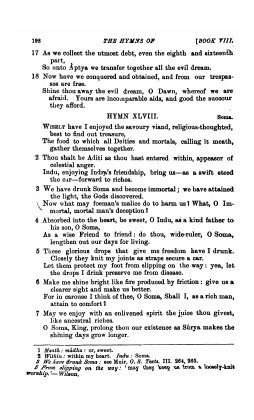
Soma Hymns in the Rigveda
Source, c. 1500-1000 BCE; translation 1897

Soma Hymns in the Rigveda

RV 8.48 and 9.113 on soma, immortality, and light

Two selected Rigvedic hymns to Soma: RV 8.48, the famous hymn of drinking soma and becoming immortal, and RV 9.113, a Soma Pavamana hymn asking to be placed in deathless worlds of light, delight, and fulfilled desire.

Read more
Chavin de Huantar
Archaeological Site, ca. 1200-500 BCE

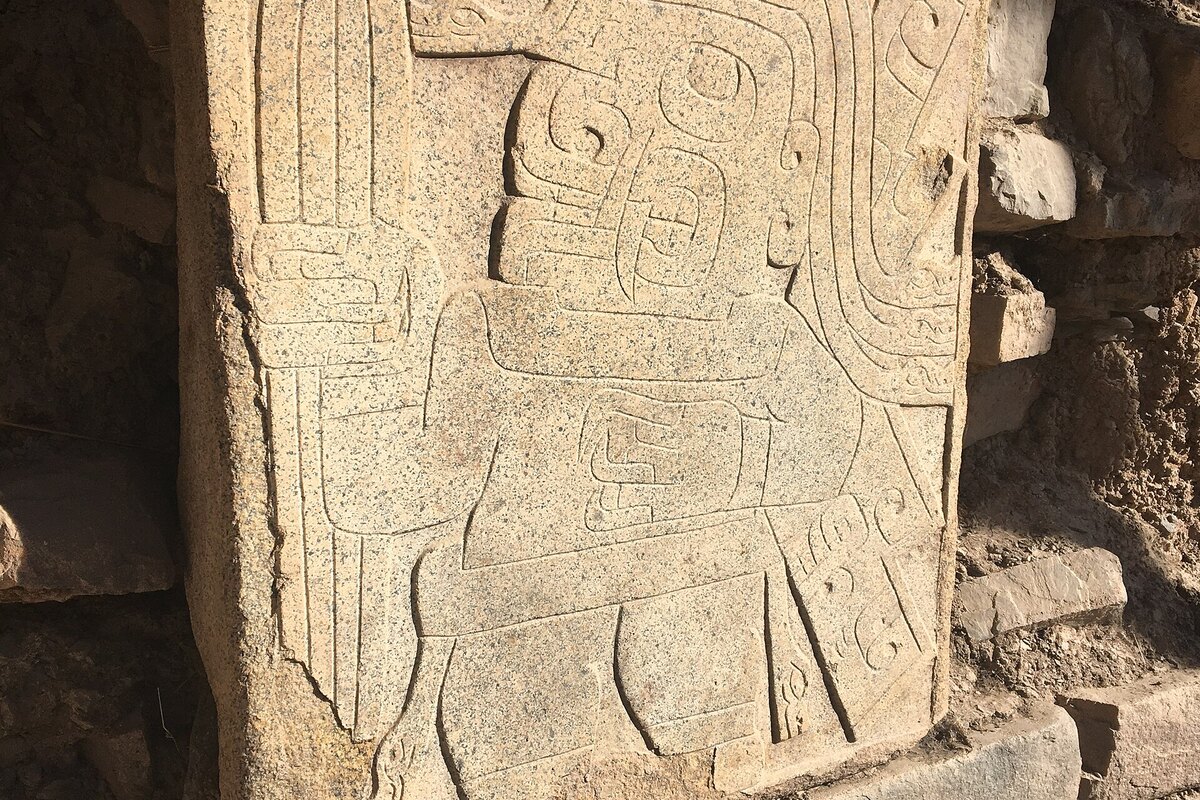
Chavin de Huantar

Ritual architecture, psychoactive plants, sound, and authority in the Early Horizon Andes

A concise archaeological site entry on Chavin de Huantar as a ceremonial center where architecture, controlled movement, sound, San Pedro imagery, and direct evidence for vilca and Nicotiana snuff formed part of institutionalized ritual practice.

Read more
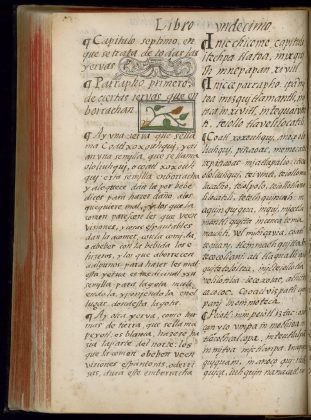
Ololiuhqui, Peyotl, and Teonanácatl in the Florentine Codex
Source, c. 1577

Ololiuhqui, Peyotl, and Teonanácatl in the Florentine Codex

Sahagún’s Book 11 on herbs that intoxicate

Spanish entries from Book 11 of the Florentine Codex, the encyclopedia of Nahua life compiled by Bernardino de Sahagún and Nahua scholars at Tlatelolco around 1577. They describe ololiuhqui, peyotl, tlapatl, mixitl, and teonanácatl, plants and mushrooms that cause intoxication or visions, with an English translation made for the archive.

Read more
Hongos monteses in Durán's Historia de las Indias de Nueva España
Source, c. 1581; published 1867

Hongos monteses in Durán's Historia de las Indias de Nueva España

Mushrooms, coronations, and the feast of revelations

Three passages from Diego Durán's Historia describing raw mountain mushrooms in Mexica royal ceremonial life: a coronation feast, Durán's note that mushrooms rather than wine appear as the chronicle's intoxicant, and Motecuhzoma's feast of revelations.

Read more
Ololiuhqui and Peyote in Idolatrías y supersticiones de los indios
Source, 1629-1656; published 1892

Ololiuhqui and Peyote in Idolatrías y supersticiones de los indios

Colonial anti-idolatry texts on divination, healing, and visionary plants

A set of Spanish colonial anti-idolatry excerpts describing ololiuhqui and peyote as oracular substances used in healing, theft investigation, divination, and diagnosis of sorcery. The source preserves rare early descriptions of visionary plant practice while also showing how clerical authorities criminalized and demonized Indigenous ritual knowledge.

Read more
Fly Agaric among the Koryaks in Langsdorff's Bemerkungen
Source, 1812

Fly Agaric among the Koryaks in Langsdorff's Bemerkungen

A Kamchatka note on mushroom trade and intoxication

Langsdorff's 1812 German voyage account records fly agaric in Koryak trade with Russians and Kamchadals, noting in a footnote that Koryaks preferred it to brandy as a stupefying or intoxicating substance.

Read more
Paricá among the Mura in Spix and Martius's Reise in Brasilien
Source, 1831

Paricá among the Mura in Spix and Martius's Reise in Brasilien

A German travel account of Amazonian snuff, ceremony, and intoxication

Spix and Martius's 1831 German travel narrative describes paricá among the Mura, including preparation from dried seeds, ceremonial use, insufflation through tubes, and comparison with fly agaric intoxication.

Read more
Hashish and Mental Alienation
Source, 1845

Hashish and Mental Alienation

Moreau de Tours on dawamesc, self-experiment, and experimental psychiatry

Selected passages from Moreau de Tours's 1845 psychiatric treatise on hashish, including his insistence on personal experience, description of dawamesc preparation and dosing, and claim that hashish offered a unique experimental route into the psychology of madness.

Read more
Fly Agaric and Hashish in Die narkotischen Genussmittel
Source, 1855

Fly Agaric and Hashish in Die narkotischen Genussmittel

Ernst von Bibra's German comparative account of Amanita and Cannabis

Selective excerpts from Ernst von Bibra's 1855 German survey of narcotic Genussmittel, focused on fly agaric and hashish. The passages show a mid-century comparative framework linking Amanita, Cannabis, opium, alcohol, travel accounts, chemistry, and differential effects across persons and places.

Read more
Ayahuasca in Villavicencio's Geografía de la República del Ecuador
Source, 1858

Ayahuasca in Villavicencio's Geografía de la República del Ecuador

An 1858 Ecuadorian account of ayahuasca visions and divination

Manuel Villavicencio's 1858 geography gives an early Spanish account of ayahuasca among Indigenous groups of eastern Ecuador, including divination, warfare, illness diagnosis, visionary effects, and a first-person report of his own experience.

Read more
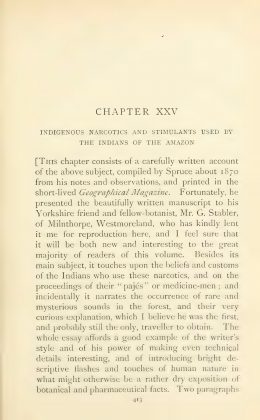
Caapi and Niopo in “On Some Remarkable Narcotics of the Amazon Valley and Orinoco”
Source, c. 1870; published 1908

Caapi and Niopo in “On Some Remarkable Narcotics of the Amazon Valley and Orinoco”

Richard Spruce on ayahuasca, yopo/paricá, and Amazonian medicine-men

Richard Spruce's nineteenth-century account of caapi, aya-huasca, niopo, and paricá, based on field observations in the Uaupés, Orinoco, Rio Negro, Napo, and Pastasa regions. The excerpt records plant identifications, preparation methods, visual effects, ceremonial uses, and the role of payes in curing and divination.

Read more