Source

Browse filters
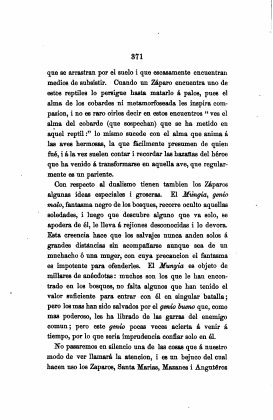
Ololiuhqui, Peyotl, and Teonanácatl in the Florentine Codex

Ololiuhqui, Peyotl, and Teonanácatl in the Florentine Codex

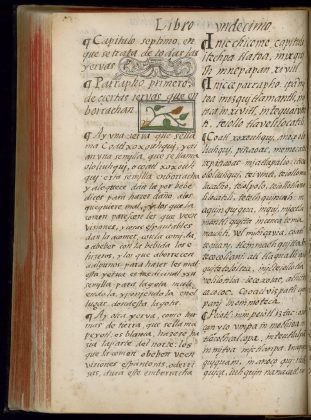
Sahagún’s Book 11 on herbs that intoxicate

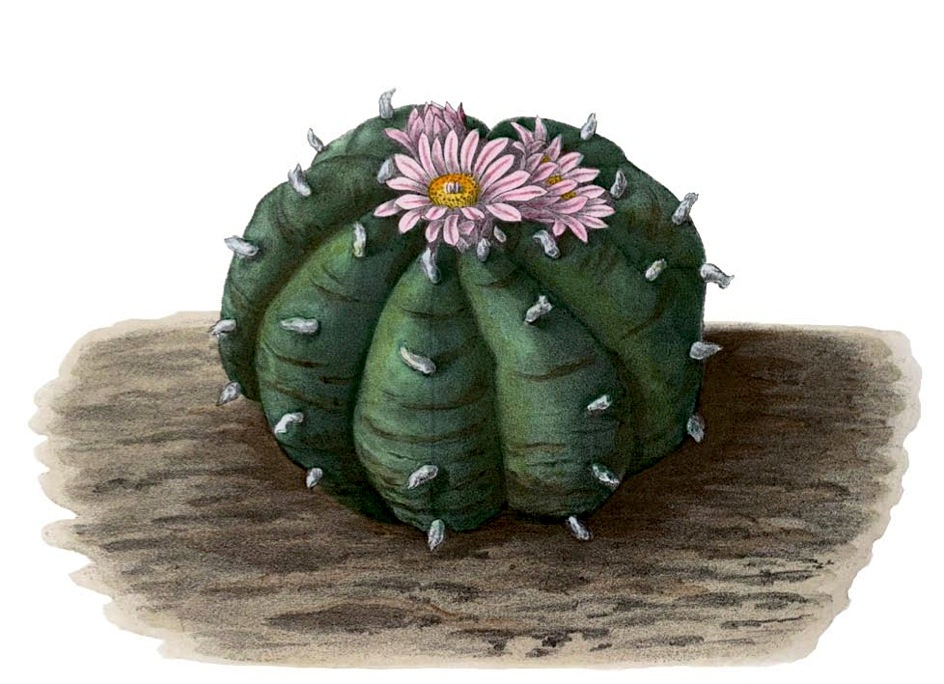
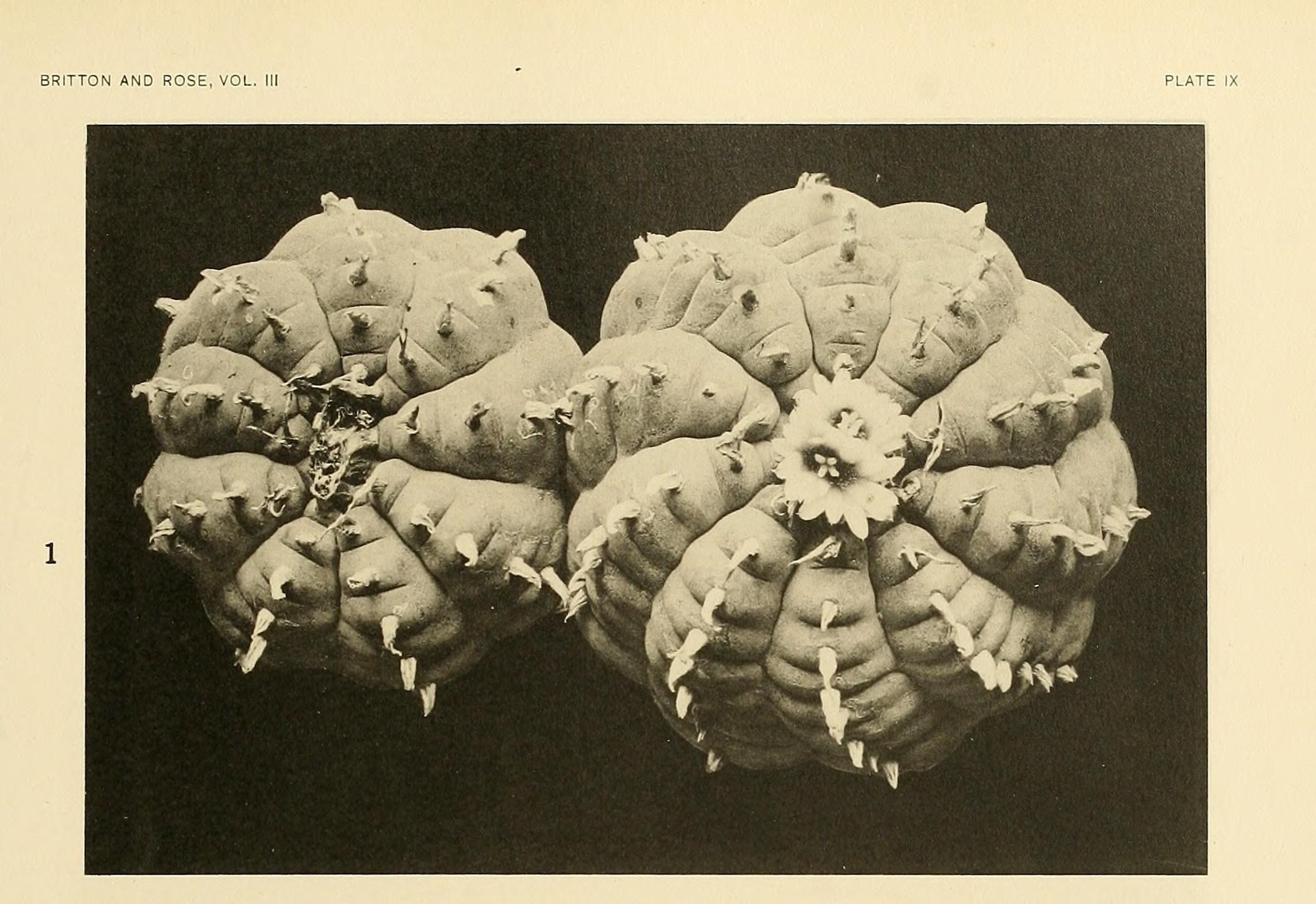
Spanish entries from Book 11 of the Florentine Codex, the encyclopedia of Nahua life compiled by Bernardino de Sahagún and Nahua scholars at Tlatelolco around 1577. They describe ololiuhqui, peyotl, tlapatl, mixitl, and teonanácatl, plants and mushrooms that cause intoxication or visions, with an English translation made for the archive.
Edict of the Mexican Inquisition Prohibiting the Use of Peyote (1620)

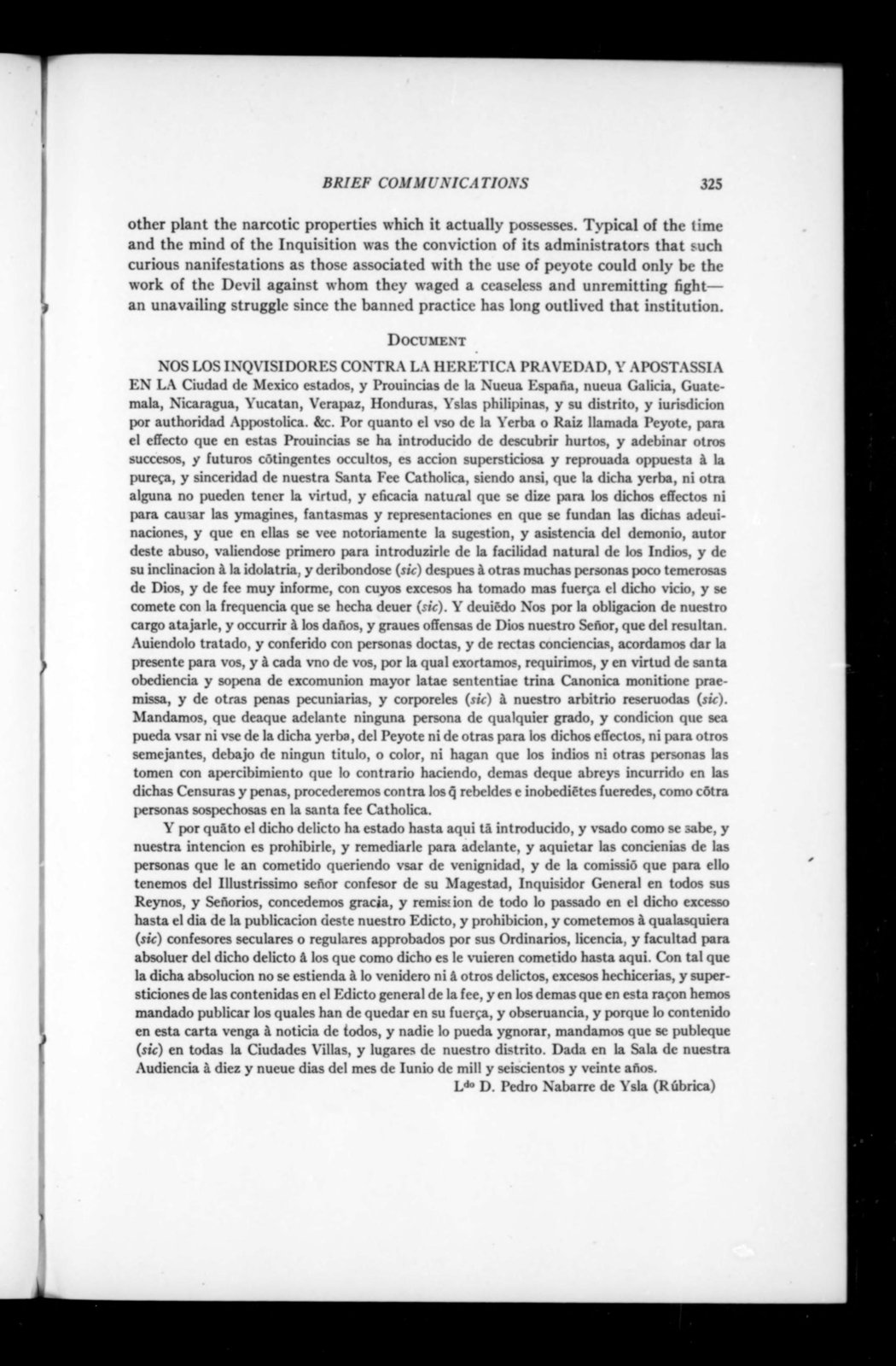
Inquisition Edict against Peyote

An edict of the Mexican tribunal of the Holy Office, issued in Mexico City on 19 June 1620 over the signature of Licenciado Pedro Nabarre de Isla, prohibiting the use of peyote to discover thefts and divine hidden or future events. The inquisitors deny the plant any natural power to produce visions, attribute them to the devil, threaten users with excommunication and proceedings as suspects in the faith, and pardon use before the edict's publication. The Spanish text is hosted as printed by Irving A. Leonard (1896–1996) in American Anthropologist in 1942, with a new English translation.
Ololiuhqui and Peyote in Idolatrías y supersticiones de los indios

Ololiuhqui and Peyote in Idolatrías y supersticiones de los indios

Colonial anti-idolatry texts on divination, healing, and visionary plants

A set of Spanish colonial anti-idolatry excerpts describing ololiuhqui and peyote as oracular substances used in healing, theft investigation, divination, and diagnosis of sorcery. The source preserves rare early descriptions of visionary plant practice while also showing how clerical authorities criminalized and demonized Indigenous ritual knowledge.

Franz Xaver Veigl on Ayahuasca in Maynas

Franz Xaver Veigl on Ayahuasca in Maynas

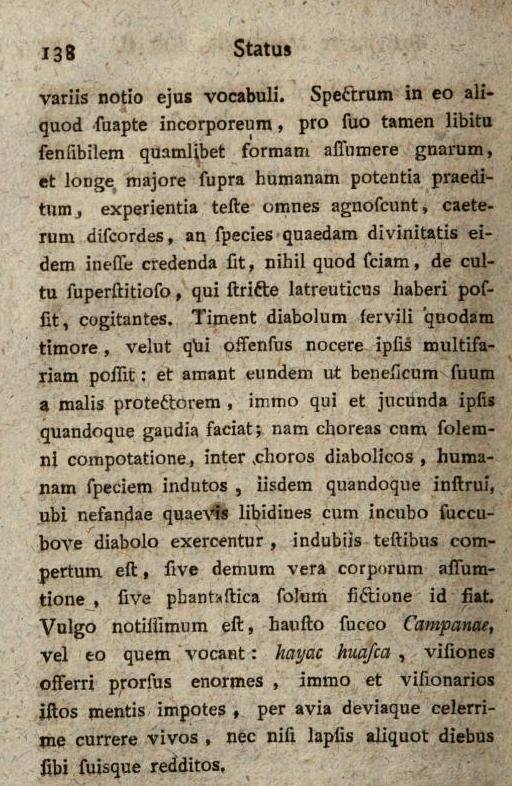
Franz Xaver Veigl, a German Jesuit who worked in the mission province of Maynas in the upper Amazon until the Jesuits were expelled in 1768, describes healers and visionary drinks there. He writes that people who drank "hayac huasca" saw "absolutely enormous visions" and seemed to travel far away, and, like other missionaries of his time, he treats this as dealings with the devil. English translation of Latin passages from his account of Maynas.

Researches, Chemical and Philosophical; Chiefly Concerning Nitrous Oxide

Researches, Chemical and Philosophical; Chiefly Concerning Nitrous Oxide

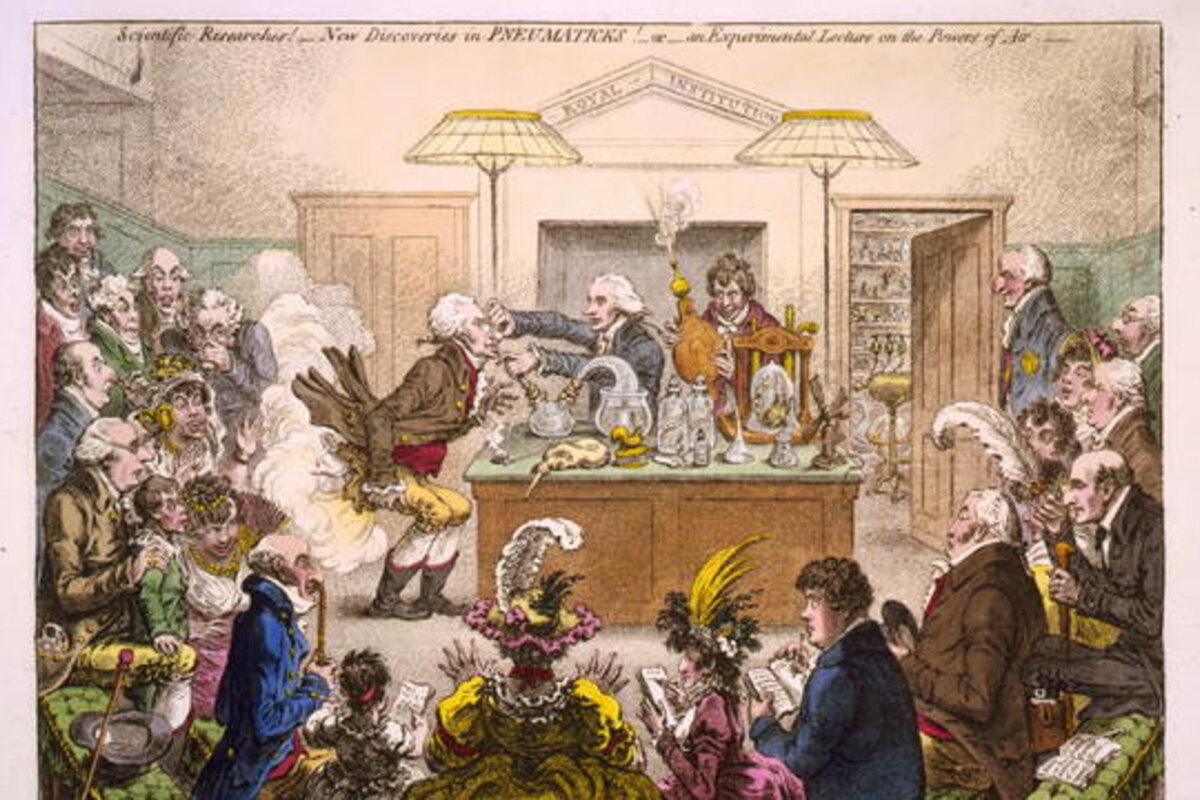
Humphry Davy's account of breathing nitrous oxide at Thomas Beddoes's Pneumatic Institution in Bristol in 1799, from the fourth part of his Researches. The excerpt gives Davy's own experiments, including the session that ended with "Nothing exists but thoughts!", and the reports he collected from Robert Southey, Peter Roget, Samuel Taylor Coleridge, and Thomas Wedgwood.

Caapi and Niopo in “On Some Remarkable Narcotics of the Amazon Valley and Orinoco”

Caapi and Niopo in “On Some Remarkable Narcotics of the Amazon Valley and Orinoco”

Richard Spruce on ayahuasca, yopo/paricá, and Amazonian medicine-men

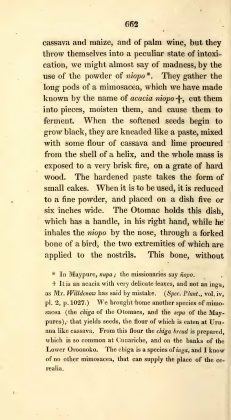
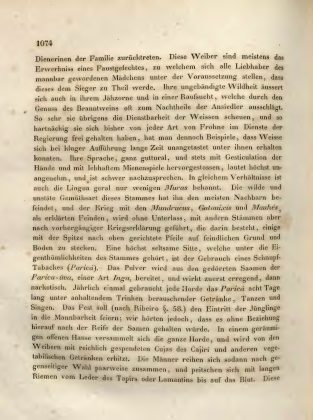
Richard Spruce's nineteenth-century account of caapi, aya-huasca, niopo, and paricá, based on field observations in the Uaupés, Orinoco, Rio Negro, Napo, and Pastasa regions. The excerpt records plant identifications, preparation methods, visual effects, ceremonial uses, and the role of payes in curing and divination.

Nitrous Oxide and the Anaesthetic Revelation in The Varieties of Religious Experience

Nitrous Oxide and the Anaesthetic Revelation in The Varieties of Religious Experience

From the lecture on mysticism in William James's Gifford Lectures, delivered in Edinburgh in 1901–2. James argues that nitrous oxide and ether show "our normal waking consciousness" to be only one type among many, then quotes Blood and J. A. Symonds's chloroform experience. His notes add Xenos Clark's letter on the revelation and an Englishwoman's ether dream.

Anaesthetics Antient and Modern: An Historical Sketch of Anaesthesia

Anaesthetics Antient and Modern

An Historical Sketch of Anaesthesia

An illustrated history of anaesthesia issued by the London drug firm Burroughs Wellcome & Co., which closes by advertising its own 'Wellcome' brand chloroform. Hosted here are the chapters on nitrous oxide, ether, and chloroform, covering Horace Wells's 1844 self-experiment, the ether demonstrations of William Morton and Charles Jackson, and James Young Simpson's 1847 chloroform trial.

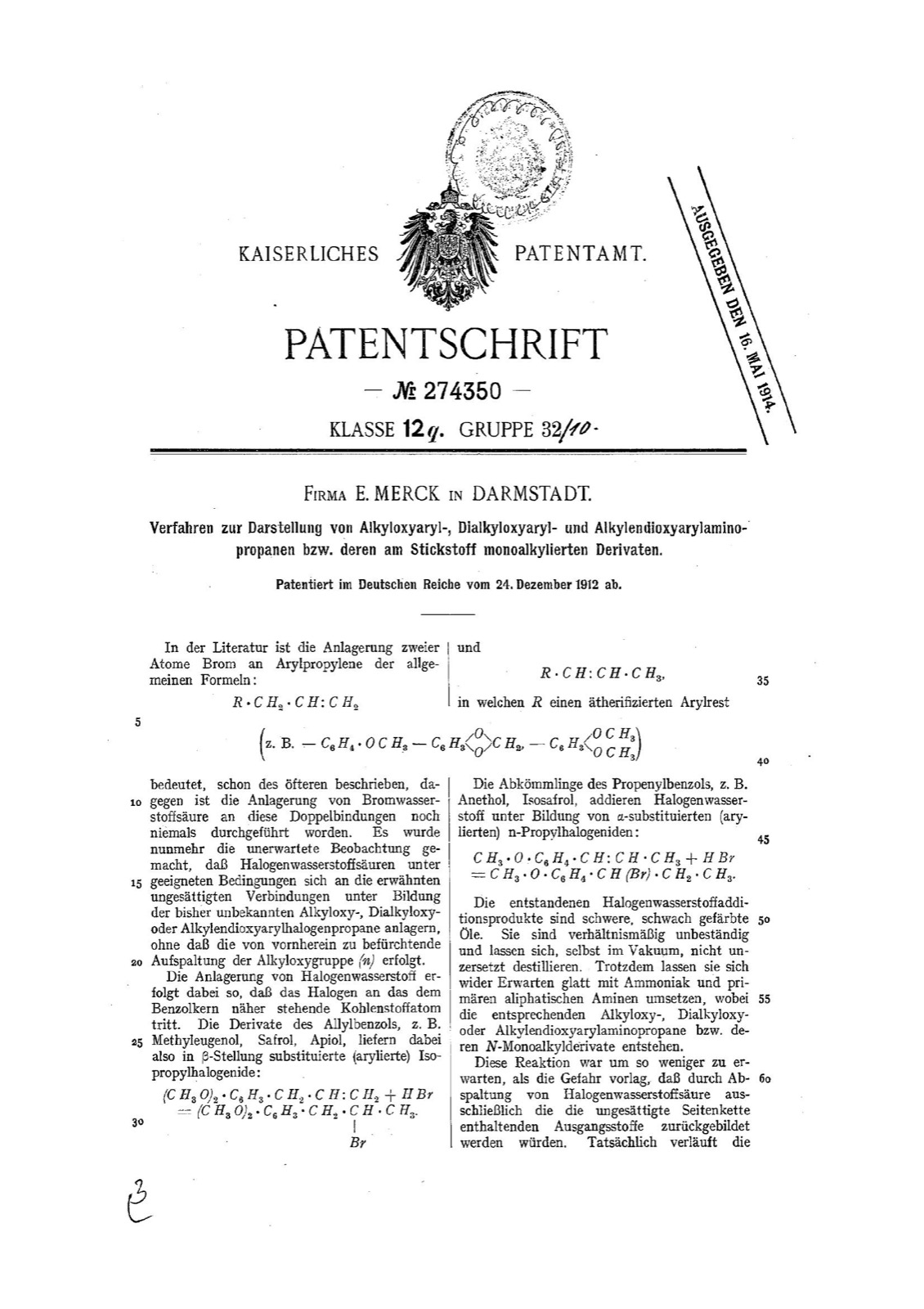
German Reich Patent No. 274350: Process for the Preparation of Alkyloxyaryl-, Dialkyloxyaryl- and Alkylenedioxyarylaminopropanes (Firm E. Merck, Darmstadt)

Merck Patent DE 274350

Process for the Preparation of Alkyloxyaryl-, Dialkyloxyaryl- and Alkylenedioxyarylaminopropanes (Firm E. Merck, Darmstadt)

German Reich Patent No. 274350 (1912) describes arylaminopropane synthesis from safrole. Example 4 yields MDMA by heating a brominated intermediate with methylamine—the earliest documented synthesis. The patent claims MDMA only as an unnamed chemical intermediate toward unspecified therapeutic compounds, not as a substance of interest itself.

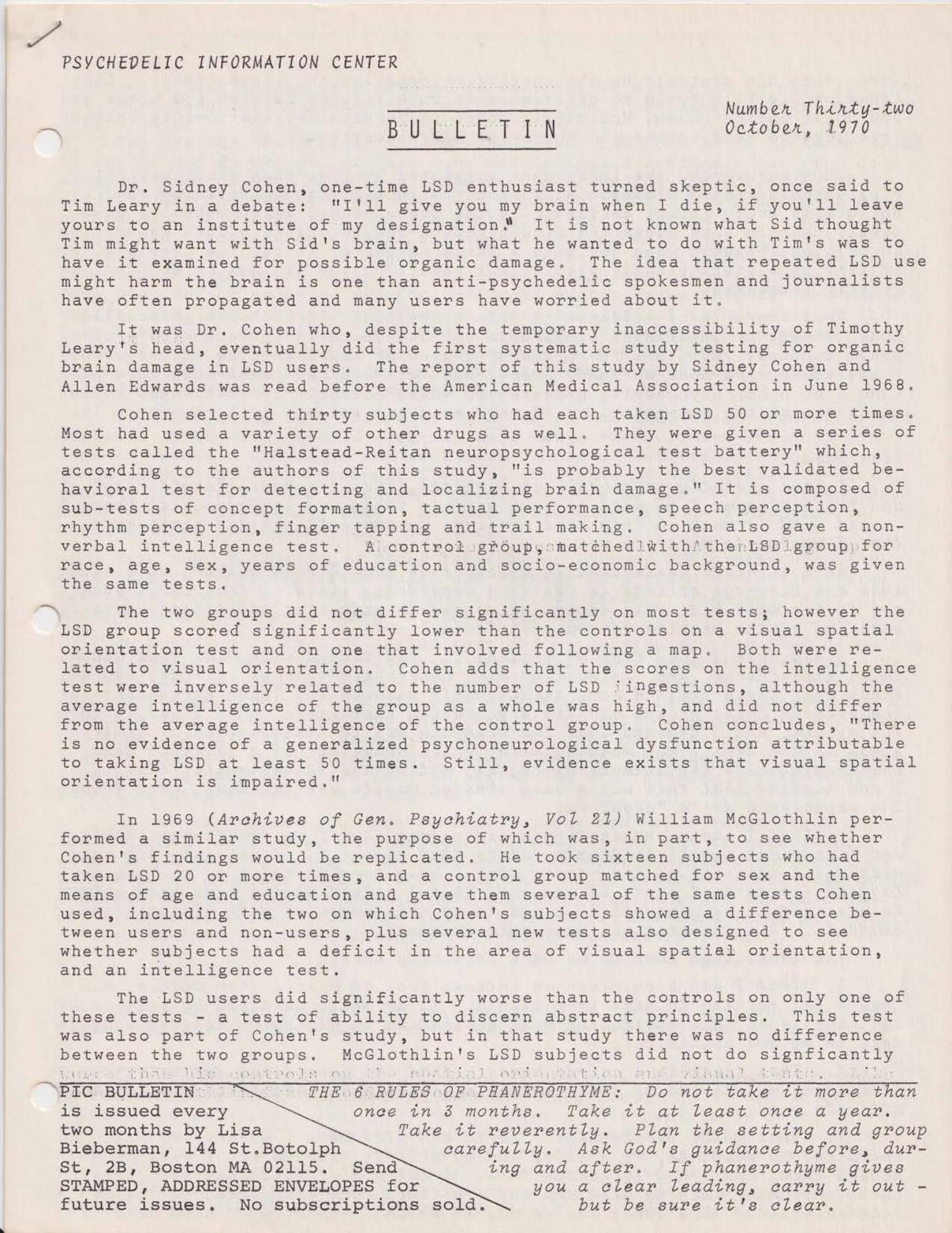
PIC Bulletin 32

No. 32

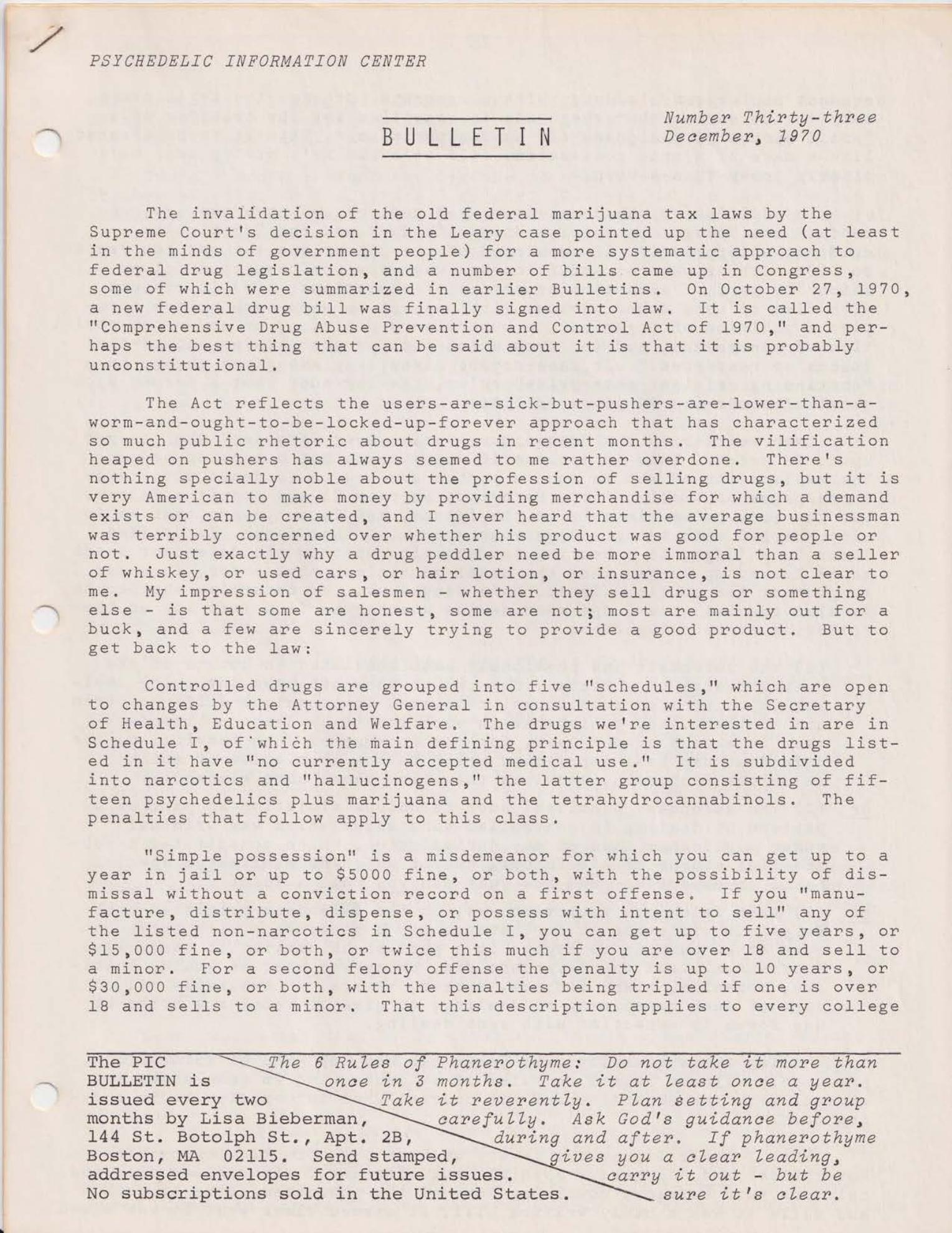
Lisa Bieberman's October 1970 bulletin reviews the two studies then available on whether heavy LSD use damages the brain: Sidney Cohen and Allen Edwards's 1968 neuropsychological tests of thirty users, and William McGlothlin's 1969 attempt to replicate them. Because their results disagree, she concludes there is no evidence of general brain damage. The issue also prints a social worker's letter about how taking LSD changed his work with drug-using teenagers.

Report to the President by the Commission on CIA Activities within the United States

Report to the President by the Commission on CIA Activities within the United States

Rockefeller Commission findings on CIA drug testing and domestic activities

The Rockefeller Commission's 1975 report was the first major presidential inquiry to put CIA drug experiments, including LSD-related episodes and the death of Frank Olson, into an official public account. It became a bridge between the commission investigation, the Church Committee, and the later Senate MKULTRA hearing.

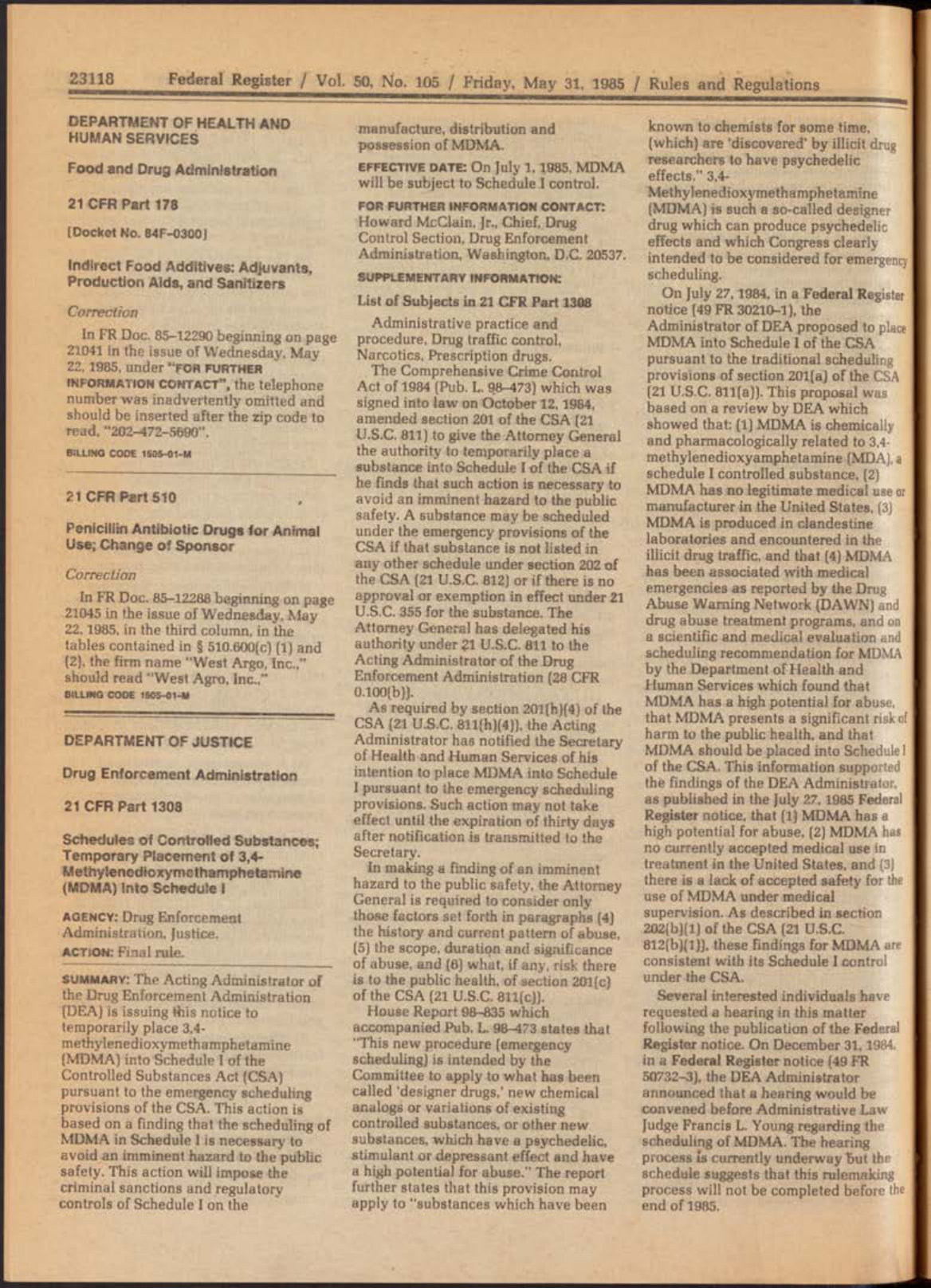
Schedules of Controlled Substances; Temporary Placement of 3,4-Methylenedioxymethamphetamine (MDMA) Into Schedule I

DEA emergency scheduling of MDMA

The Drug Enforcement Administration's order placing MDMA in Schedule I on an emergency basis from July 1, 1985, using powers Congress had given it the year before for so-called designer drugs. The notice cites rising recreational use, promotional parties, and a new rat study showing that the related drug MDA destroyed serotonin nerve terminals. It was issued while Judge Francis L. Young's hearings on permanent scheduling were still under way. Full text of the notice.

Psychedelic Drugs: Considerations for Clinical Investigations (Guidance for Industry)

FDA Psychedelic Drugs Guidance

Considerations for Clinical Investigations (Guidance for Industry)

FDA guidance (July 2026) for sponsors developing psychedelics—5-HT2A agonists including psilocybin and LSD, plus MDMA—as approved medicines. It addresses the regulatory pathway for Schedule I drugs in clinical trials and identifies methodological challenges: perceptual effects complicate blinding ('functional unblinding'), and the independent contribution of psychotherapy paired with dosing remains uncharacterized.