Testimony

Browse filters
Testimony of Gertrude Bonnin (Zitkála-Šá) against Peyote, House Indian Affairs Subcommittee Hearings on H.R. 2614

Zitkála-Šá Peyote Testimony (1918)

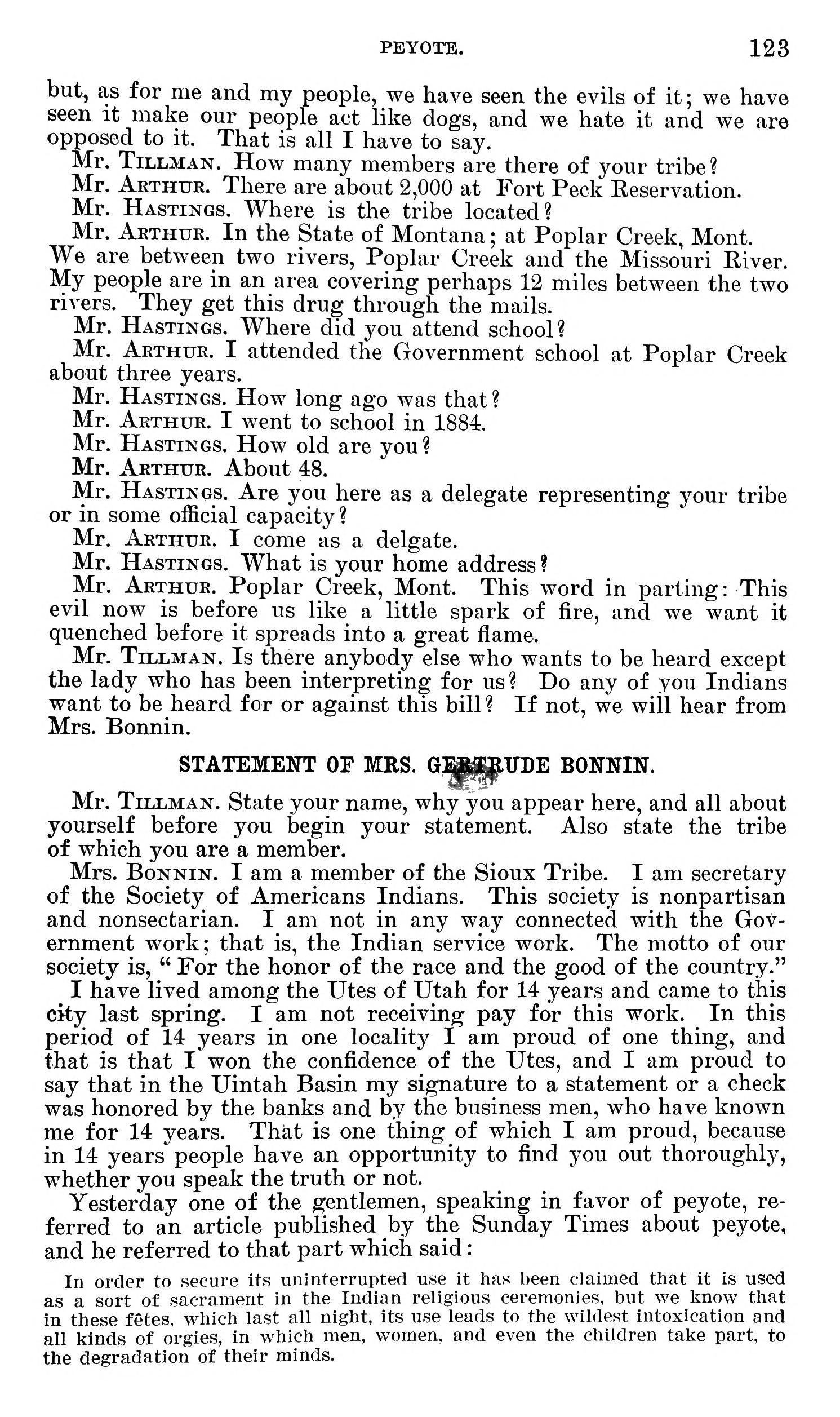
Gertrude Simmons Bonnin (Zitkála-Šá, 1876–1938), the Yankton Dakota writer and secretary of the Society of American Indians, testified against peyote on February 22, 1918, before the House Indian Affairs subcommittee considering H.R. 2614, a bill to prohibit peyote among Indians. Drawing on her fourteen years among the Utes of the Uintah Basin, she described deaths, sexual misconduct, and fraud by the peyote missionary Peter Phelps, and she disputed the ethnologist James Mooney (1861–1921), who had ridiculed her newspaper photograph the day before. The record hosts her statement and cross-examination in full, her additional statement, the signed statements she co-authored, and the passages by Mooney and Cleaver Warden that answer her.

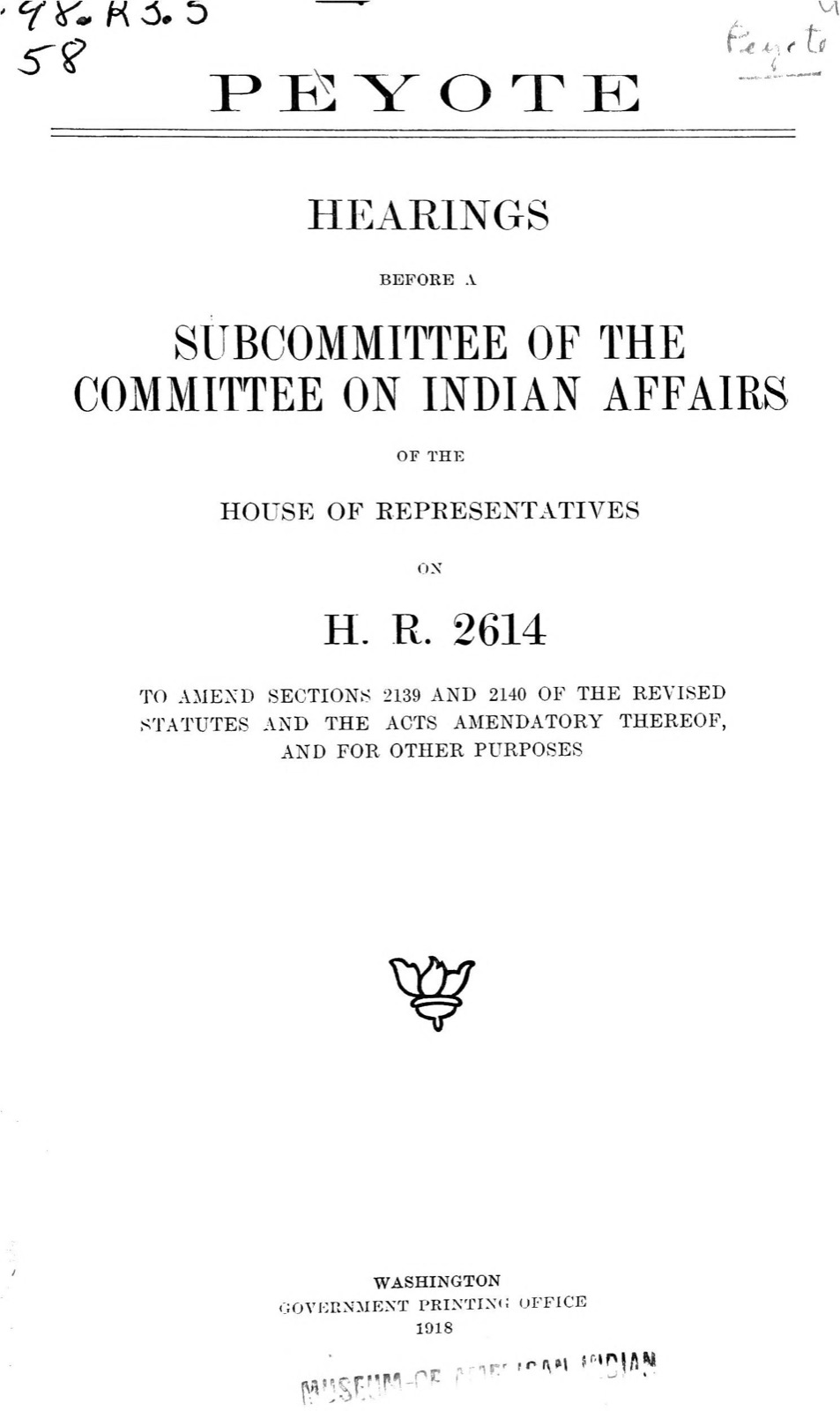
Peyote: Hearings Before a Subcommittee of the Committee on Indian Affairs, House of Representatives, on H.R. 2614

Peyote Hearings, H.R. 2614 (1918)

Hearings Before a Subcommittee of the Committee on Indian Affairs, House of Representatives, on H.R. 2614

A subcommittee of the House Committee on Indian Affairs held February-March 1918 hearings on H.R. 2614, a bill to prohibit peyote use in Indian Country. Witnesses included ethnologist James Mooney, Osage chief Fred Lookout, Omaha ethnographer Francis La Flesche, Arapaho delegate Cleaver Warden, and Cheyenne-Arapaho Paul Boynton.

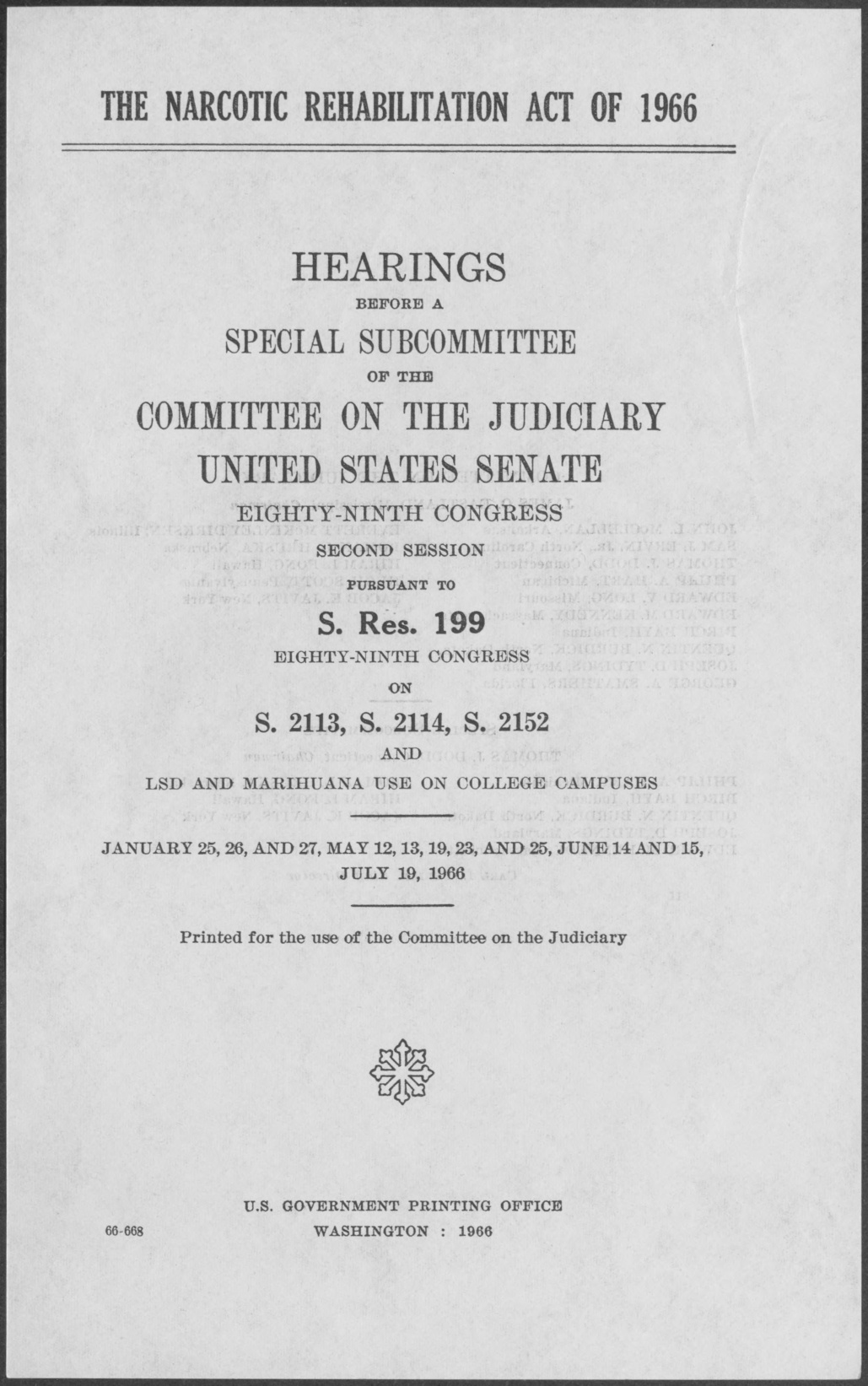
Testimony of Allen Ginsberg on LSD before a Special Subcommittee of the Senate Committee on the Judiciary

Ginsberg Senate Testimony on LSD (1966)

The poet Allen Ginsberg (1926–1997) testified on June 14, 1966, before the special Senate Judiciary subcommittee holding hearings on narcotic rehabilitation and LSD on college campuses, with Quentin N. Burdick (1908–1992) presiding. He read a long prepared statement describing his visionary experience of 1948 and his use of peyote, mescaline, LSD, and ayahuasca, then argued from newspaper coverage and the medical literature that LSD's dangers had been exaggerated and that research should be expanded. The record hosts the full printed text, pp. 487–509, including his questioning by Burdick and Jacob K. Javits (1904–1986), his list of proposed research topics (Exhibit No. 76), and the references he put into the record.

Testimony of Timothy Leary on LSD before a Special Subcommittee of the Senate Committee on the Judiciary

Leary Senate Testimony on LSD (1966)

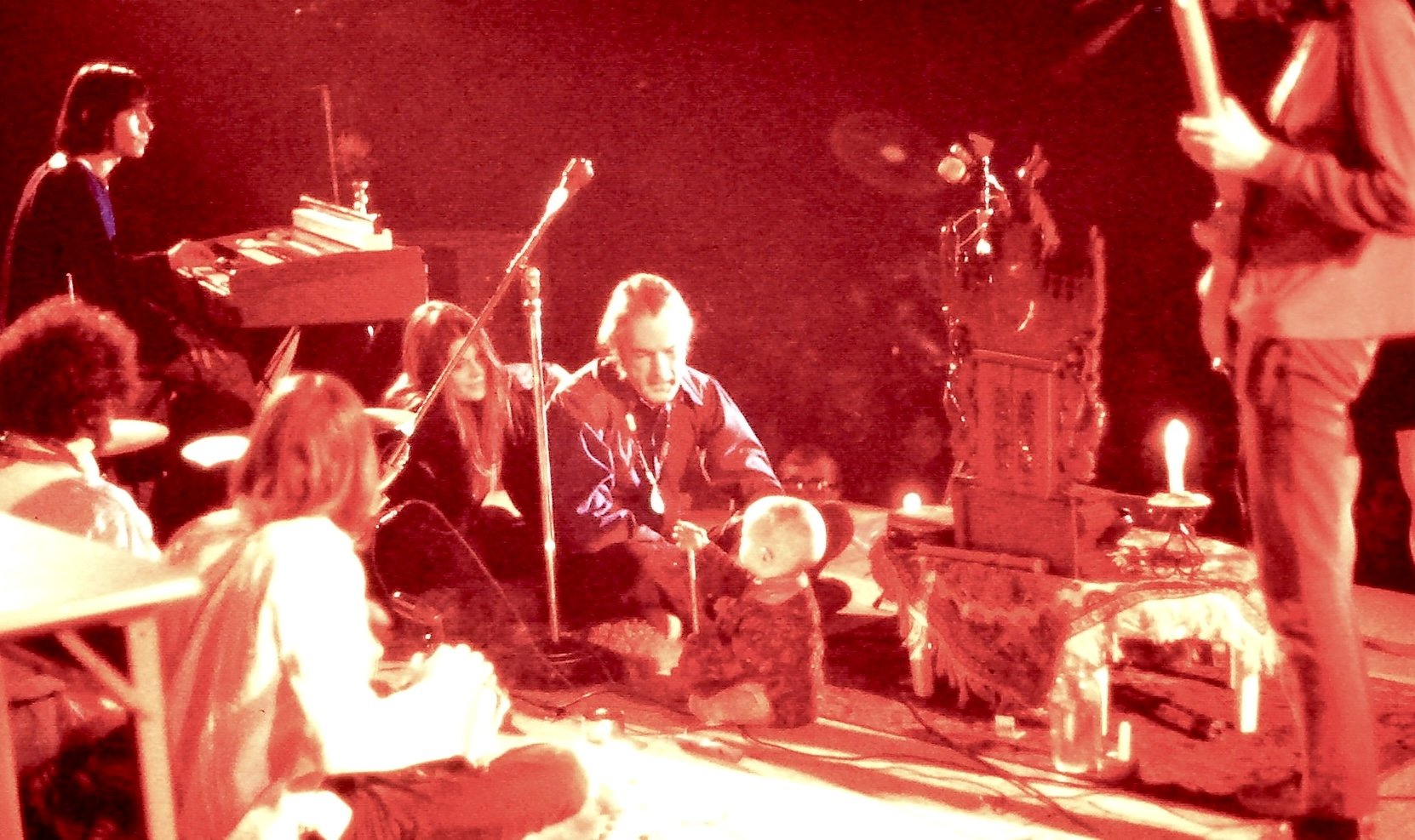
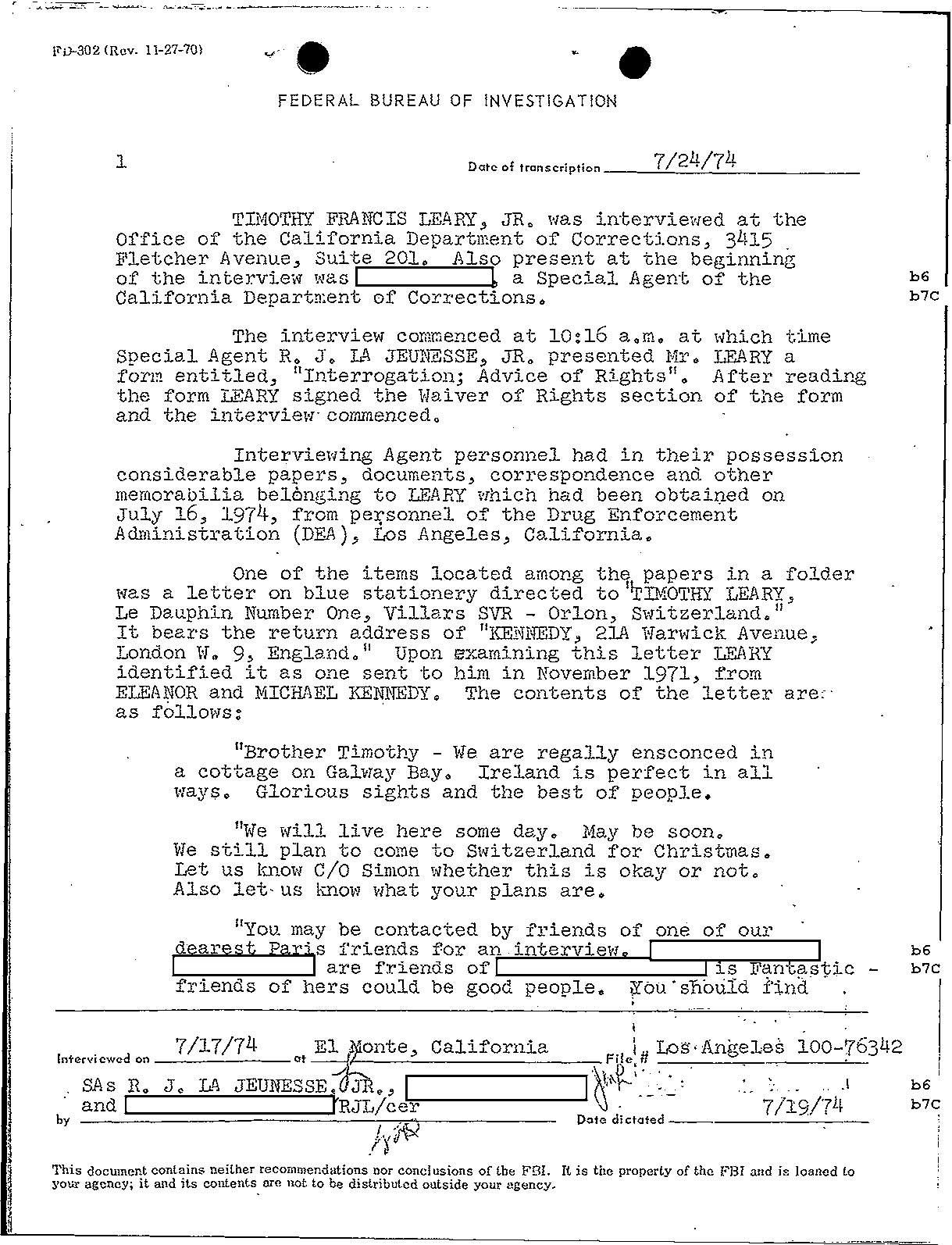
Timothy Leary (1920–1996), then president of the Castalia Foundation at Millbrook, New York, testified on May 13, 1966, before the special Senate Judiciary subcommittee chaired by Thomas J. Dodd (1907–1971) that was holding hearings on narcotic addict rehabilitation and on LSD use on college campuses. Leary proposed licensing adults to use psychedelics and offering supervised university courses, and he sparred at length with Senator Edward M. Kennedy (1932–2009) over control, possession, and danger. The record hosts the full printed exchange, pp. 238–258, from Dodd's introduction to the recess.

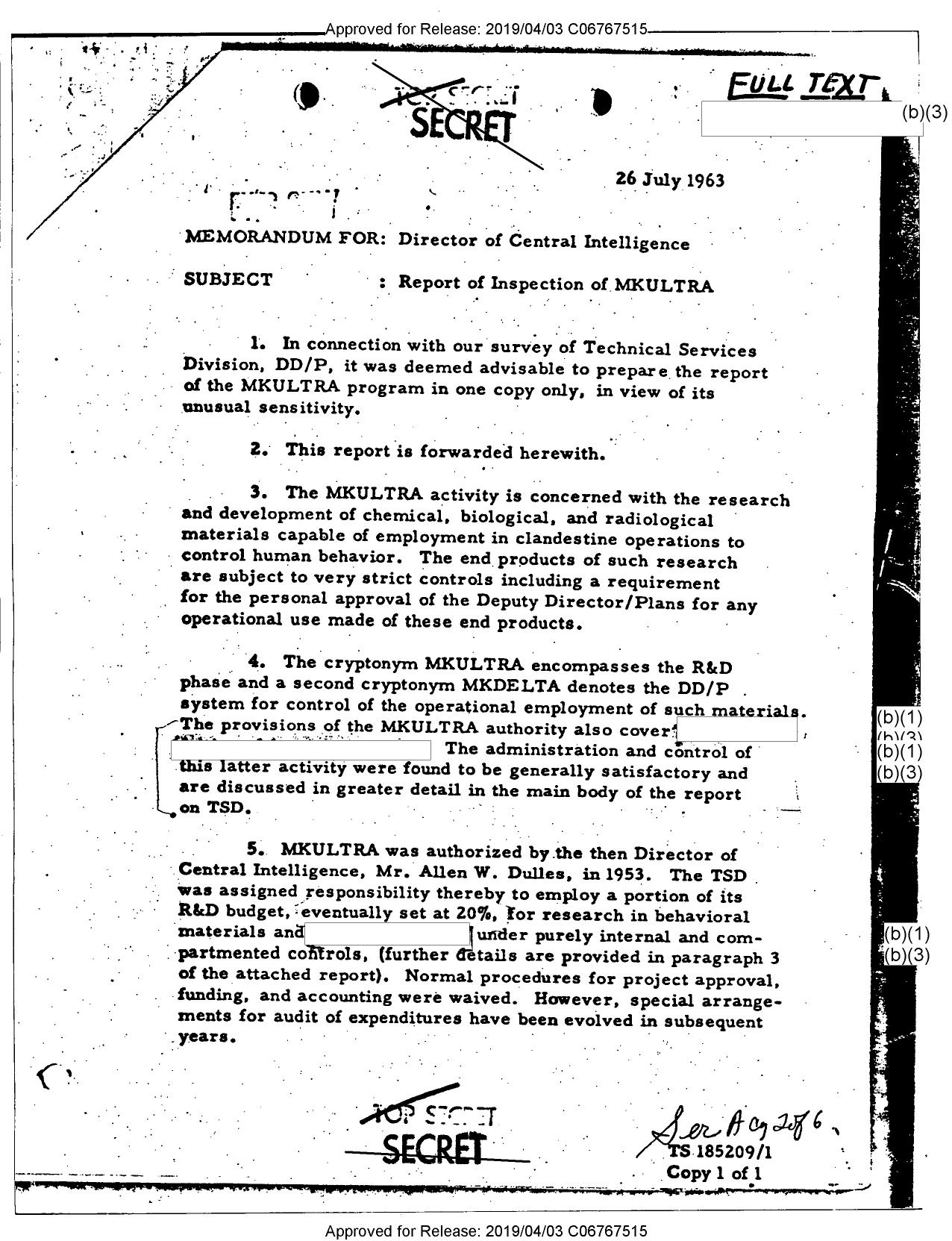
Project MKULTRA, the CIA's Program of Research in Behavioral Modification

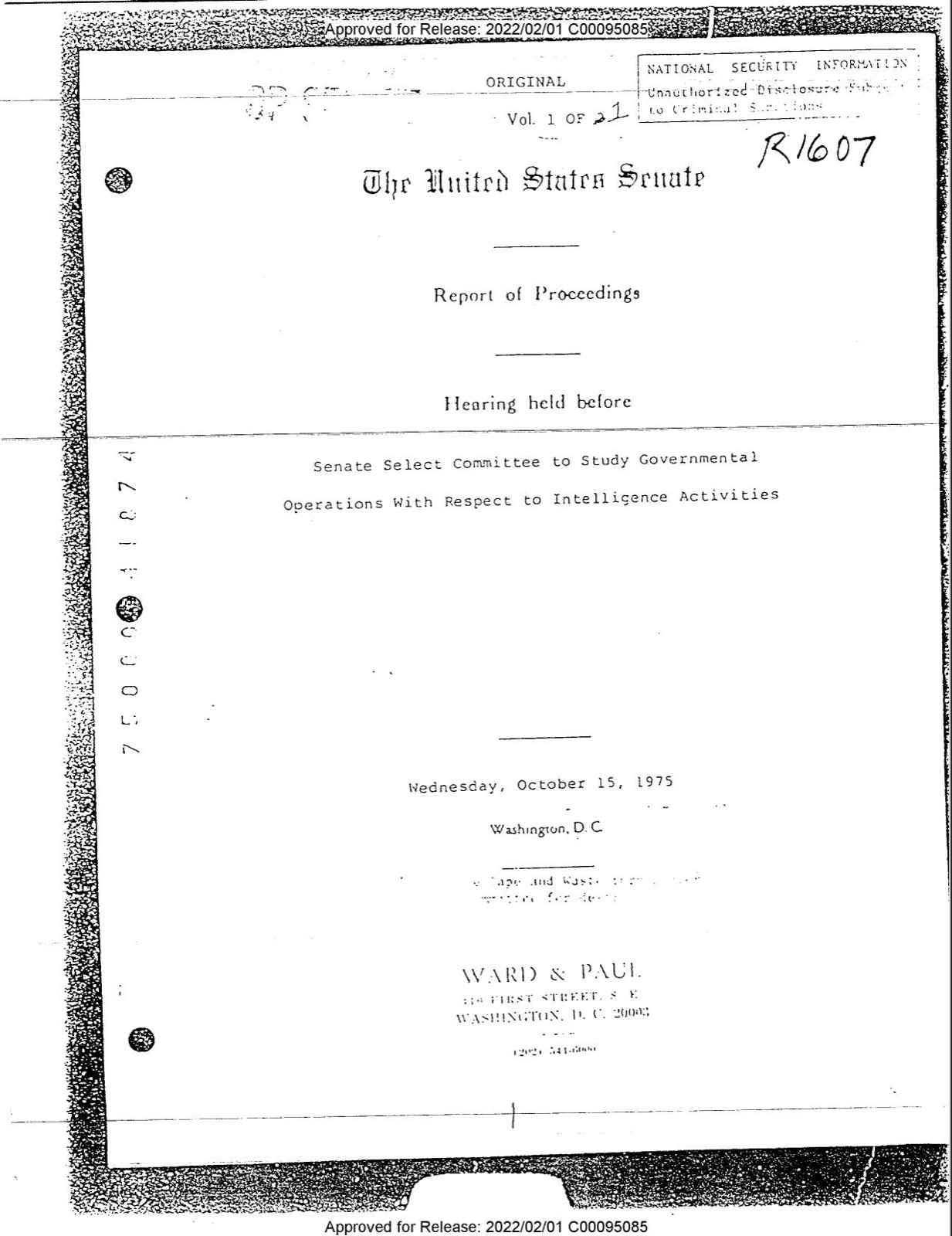
Project MKULTRA, the CIA's Program of Research in Behavioral Modification

1977 Senate joint hearing on LSD, behavioral research, and CIA records

A joint Senate hearing on Project MKULTRA after CIA director Stansfield Turner informed Congress that financial records had surfaced for previously destroyed behavioral-research files. The hearing and appendices document LSD-related projects, agency recordkeeping, and congressional oversight of CIA human-subjects research.

Psychopharmacologic Drugs Advisory Committee Meeting on Midomafetamine (MDMA) for PTSD: Discussion and Votes

FDA advisory committee on MDMA, 2024

The transcript of the FDA advisory committee that reviewed Lykos Therapeutics' application for MDMA-assisted therapy for post-traumatic stress disorder. Hosted here are the chair's opening of the committee questions and the two votes: 2 to 9 against finding the drug effective, and 1 to 10 against finding that its benefits outweighed its risks, with each member's stated reasons. Members cited functional unblinding, expectation bias, the many trial participants who had used MDMA before, and reports of misconduct. The FDA declined to approve the application in August 2024.