All eras

Browse filters
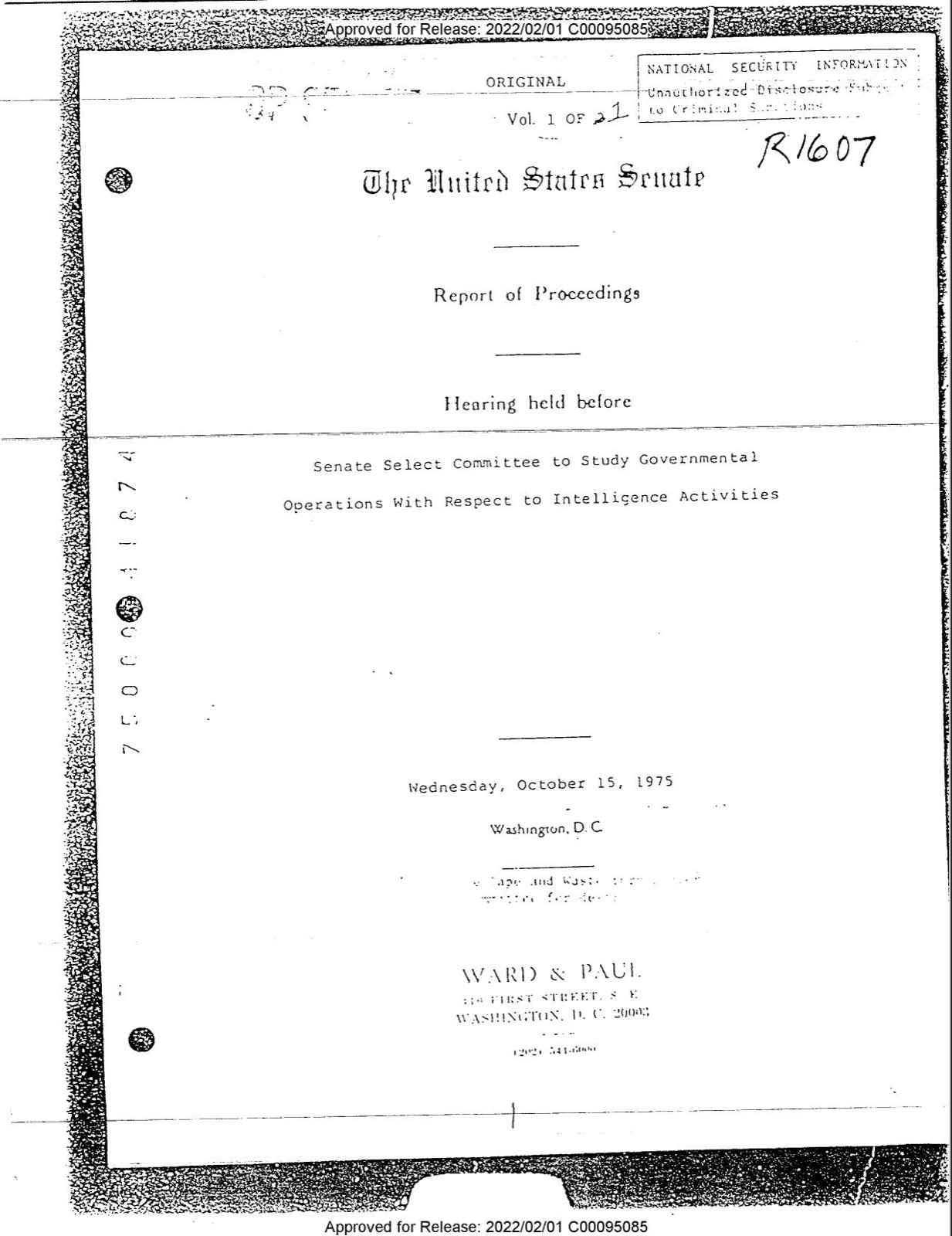
Report to the President by the Commission on CIA Activities within the United States

Report to the President by the Commission on CIA Activities within the United States

Rockefeller Commission findings on CIA drug testing and domestic activities

The Rockefeller Commission's 1975 report was the first major presidential inquiry to put CIA drug experiments, including LSD-related episodes and the death of Frank Olson, into an official public account. It became a bridge between the commission investigation, the Church Committee, and the later Senate MKULTRA hearing.

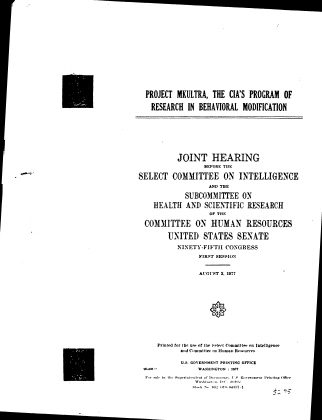
Project MKULTRA, the CIA's Program of Research in Behavioral Modification

Project MKULTRA, the CIA's Program of Research in Behavioral Modification

1977 Senate joint hearing on LSD, behavioral research, and CIA records

A joint Senate hearing on Project MKULTRA after CIA director Stansfield Turner informed Congress that financial records had surfaced for previously destroyed behavioral-research files. The hearing and appendices document LSD-related projects, agency recordkeeping, and congressional oversight of CIA human-subjects research.

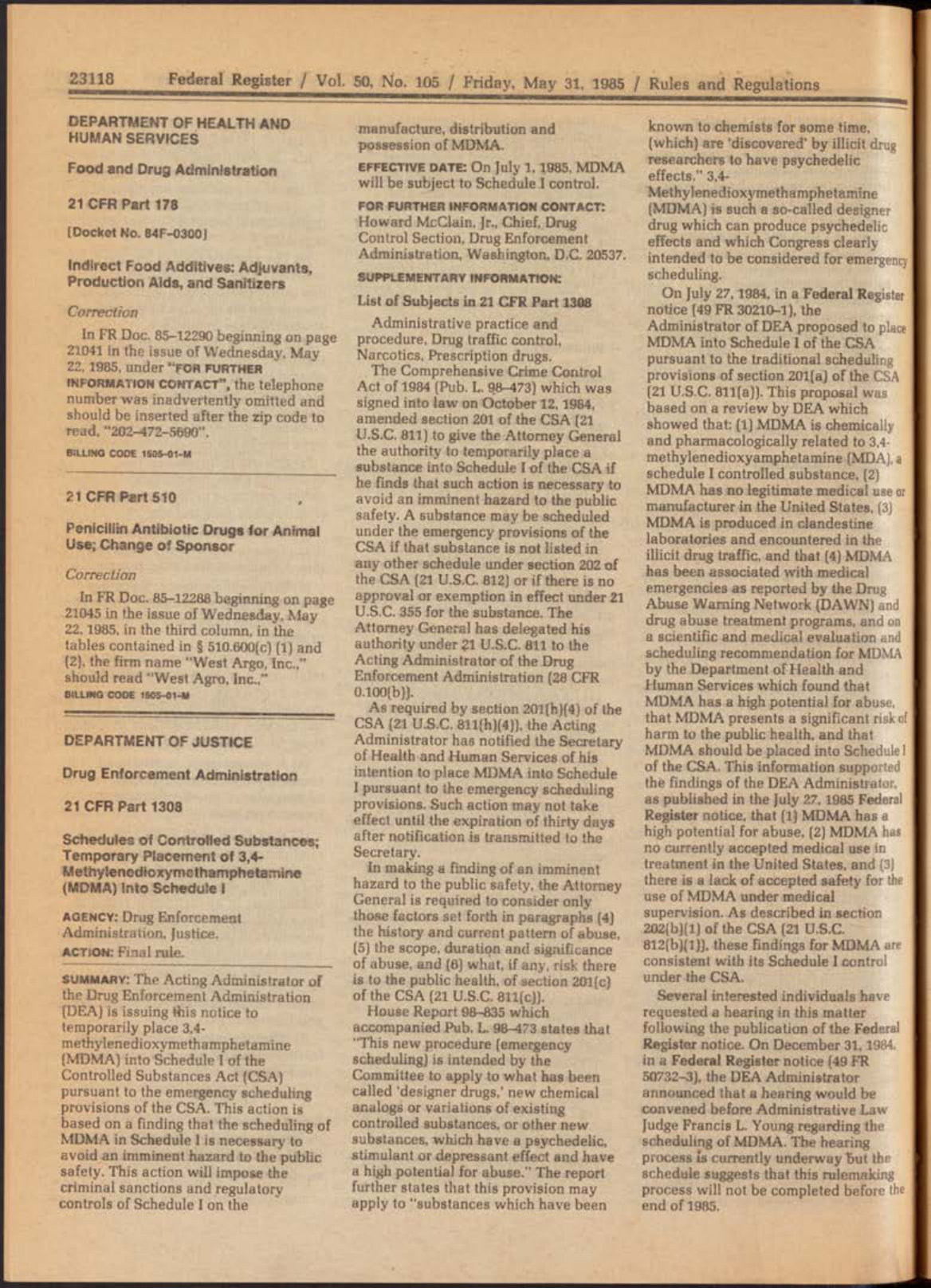
Schedules of Controlled Substances; Temporary Placement of 3,4-Methylenedioxymethamphetamine (MDMA) Into Schedule I

DEA emergency scheduling of MDMA

The Drug Enforcement Administration's order placing MDMA in Schedule I on an emergency basis from July 1, 1985, using powers Congress had given it the year before for so-called designer drugs. The notice cites rising recreational use, promotional parties, and a new rat study showing that the related drug MDA destroyed serotonin nerve terminals. It was issued while Judge Francis L. Young's hearings on permanent scheduling were still under way. Full text of the notice.

Psychopharmacologic Drugs Advisory Committee Meeting on Midomafetamine (MDMA) for PTSD: Discussion and Votes

FDA advisory committee on MDMA, 2024

The transcript of the FDA advisory committee that reviewed Lykos Therapeutics' application for MDMA-assisted therapy for post-traumatic stress disorder. Hosted here are the chair's opening of the committee questions and the two votes: 2 to 9 against finding the drug effective, and 1 to 10 against finding that its benefits outweighed its risks, with each member's stated reasons. Members cited functional unblinding, expectation bias, the many trial participants who had used MDMA before, and reports of misconduct. The FDA declined to approve the application in August 2024.

Psychedelic Drugs: Considerations for Clinical Investigations (Guidance for Industry)

FDA Psychedelic Drugs Guidance

Considerations for Clinical Investigations (Guidance for Industry)

FDA guidance (July 2026) for sponsors developing psychedelics—5-HT2A agonists including psilocybin and LSD, plus MDMA—as approved medicines. It addresses the regulatory pathway for Schedule I drugs in clinical trials and identifies methodological challenges: perceptual effects complicate blinding ('functional unblinding'), and the independent contribution of psychotherapy paired with dosing remains uncharacterized.