Back to topics

Topic

Self-experiment

Researchers and writers who took the drugs themselves and recorded what happened.

16
Sources
16
People
5
Eras
Researches, Chemical and Philosophical; Chiefly Concerning Nitrous Oxide

Researches, Chemical and Philosophical; Chiefly Concerning Nitrous Oxide

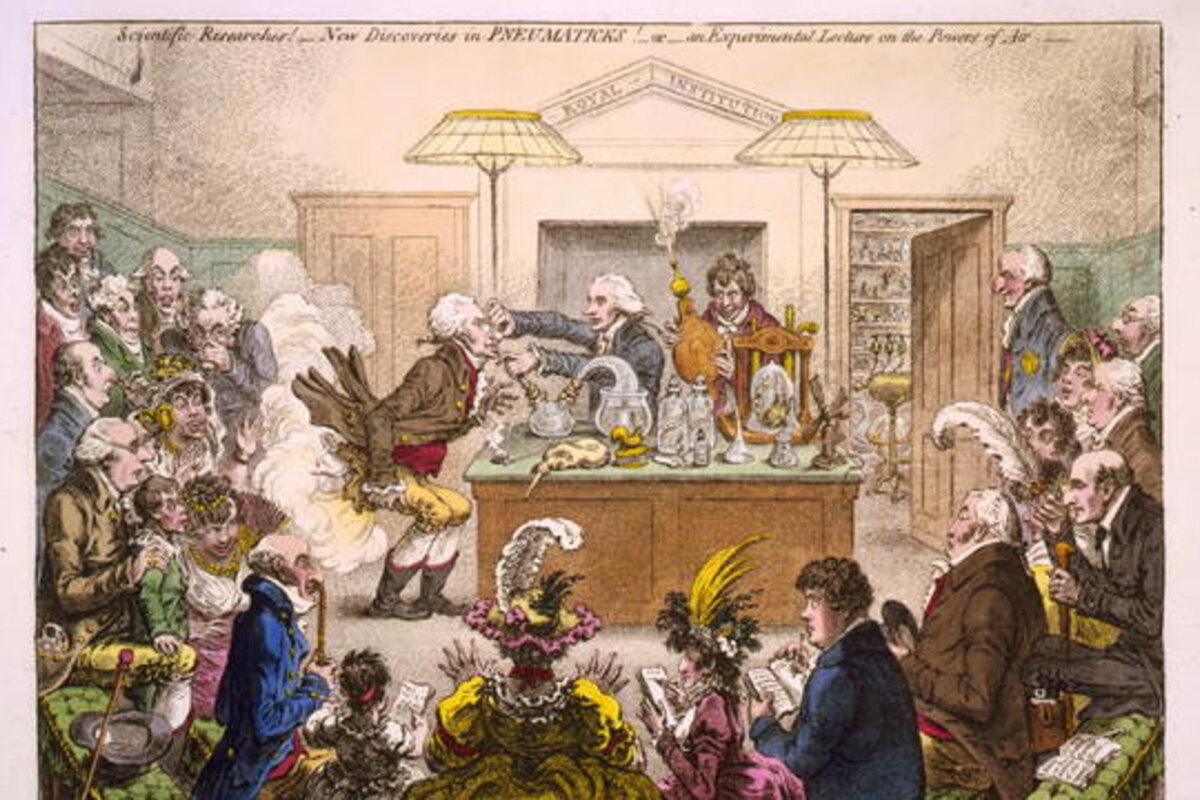
Humphry Davy's account of breathing nitrous oxide at Thomas Beddoes's Pneumatic Institution in Bristol in 1799, from the fourth part of his Researches. The excerpt gives Davy's own experiments, including the session that ended with "Nothing exists but thoughts!", and the reports he collected from Robert Southey, Peter Roget, Samuel Taylor Coleridge, and Thomas Wedgwood.

Note on Nitrous Oxide, from “On Some Hegelisms”

Note on Nitrous Oxide, from “On Some Hegelisms”

The note William James added to his essay "On Some Hegelisms" in Mind (1882), reporting nitrous oxide experiments he made after reading Blood's pamphlet. He describes a sense of metaphysical illumination and reconciliation of opposites that fades on recovery into "a few disjointed words and phrases." James reprinted the note in The Will to Believe (1897), and Charles Tart excerpted it in 1969 as "Subjective Effects of Nitrous Oxide."

Anaesthetics Antient and Modern: An Historical Sketch of Anaesthesia

Anaesthetics Antient and Modern

An Historical Sketch of Anaesthesia

An illustrated history of anaesthesia issued by the London drug firm Burroughs Wellcome & Co., which closes by advertising its own 'Wellcome' brand chloroform. Hosted here are the chapters on nitrous oxide, ether, and chloroform, covering Horace Wells's 1844 self-experiment, the ether demonstrations of William Morton and Charles Jackson, and James Young Simpson's 1847 chloroform trial.

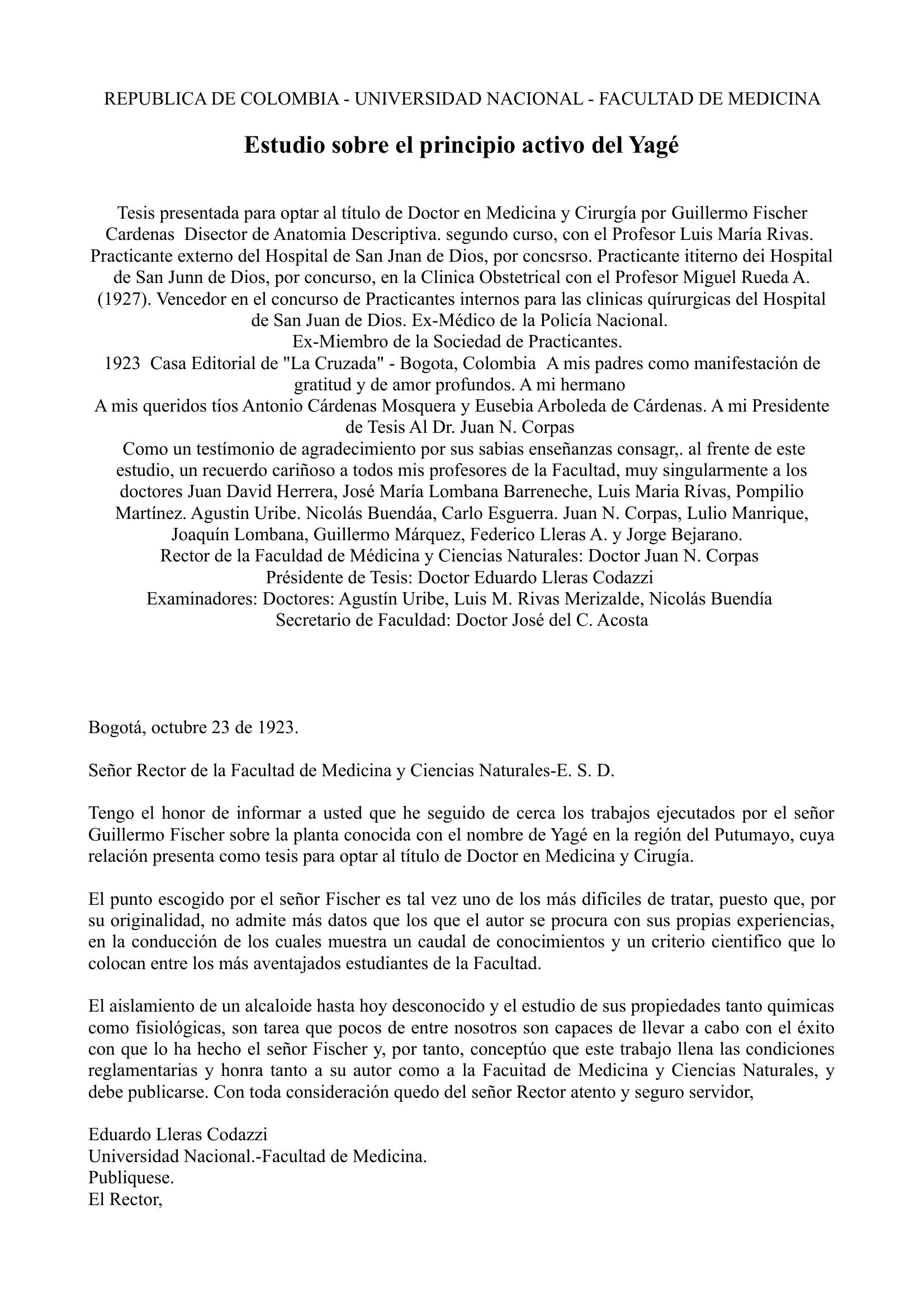
Estudio sobre el principio activo del Yagé

Study on the Active Principle of Yagé

A 1923 doctoral thesis reporting Fischer Cárdenas's isolation of the yagé alkaloid that Rafael Zerda Bayón had named telepathine (telepatina) decades earlier without isolating it. Seven case reports detail effects on human subjects, including the author's self-experiment, describing vivid dreams, visual hallucinations, and euphoria at low doses, followed by a systematic summary of physiological action.

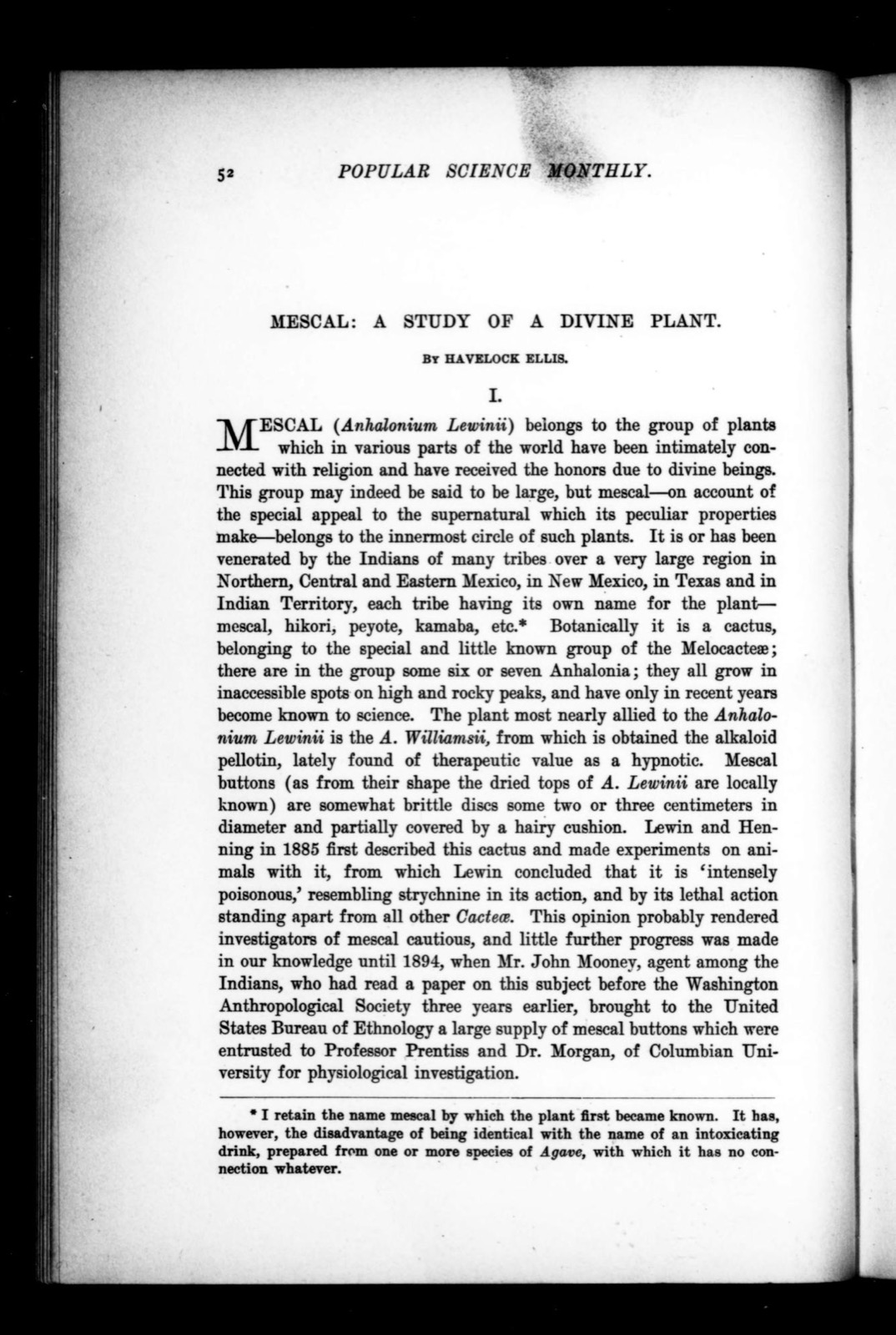
Ueber Pellote. Beiträge zur chemischen und pharmakologischen Kenntniss der Cacteen. Zweite Mittheilung

On Pellote (Second Communication)

Leipzig pharmacologist Arthur Heffter (1859–1925) reports his separation of five alkaloids from mescal buttons, among them mescaline ("Mezcalin"), and a series of self-experiments made between June and November 1897. Testing the whole drug, its resin, the mixed alkaloids and each isolated base in turn, he found that 0.15 g of mescaline hydrochloride alone reproduced the visions, slowed pulse, dilated pupils and loss of time sense produced by the cactus. Hosted here are the description of mescaline and its salts and the whole of section VI on the drug's action in humans.

Betty Eisner's First LSD Trip, October 10, 1955

Betty Eisner's first LSD trip

The psychologist Betty Eisner (1915–2004) recalls being the first research subject in Sidney Cohen's LSD study at UCLA in October 1955, quoting at length from the report she wrote after the session. The excerpt describes the psychological tests she was asked to take while under the drug, and her sense that they were trivial beside what she was experiencing. It is the opening chapter of her unpublished memoir, Remembrances of LSD Therapy Past (2002).