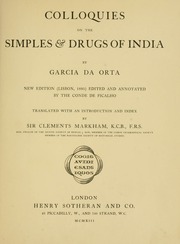
Eighth Colloquy: Bangue
A sixteenth-century Portuguese-Goan discussion of bangue, or bhang, describing cannabis preparations in South Asia, their relation to opium, and accounts of intoxication, appetite, laughter, sleep, and imaginative travel.
Topic
Browse primary sources, people, eras, and related themes connected to medicine.

A sixteenth-century Portuguese-Goan discussion of bangue, or bhang, describing cannabis preparations in South Asia, their relation to opium, and accounts of intoxication, appetite, laughter, sleep, and imaginative travel.
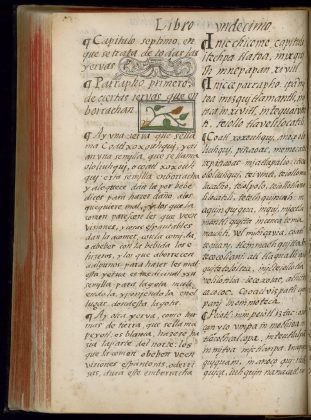
Sahagún’s Book 11 on herbs that intoxicate
Spanish entries from Book 11 of the Florentine Codex, the encyclopedia of Nahua life compiled by Bernardino de Sahagún and Nahua scholars at Tlatelolco around 1577. They describe ololiuhqui, peyotl, tlapatl, mixitl, and teonanácatl, plants and mushrooms that cause intoxication or visions, with an English translation made for the archive.
Colonial anti-idolatry texts on divination, healing, and visionary plants
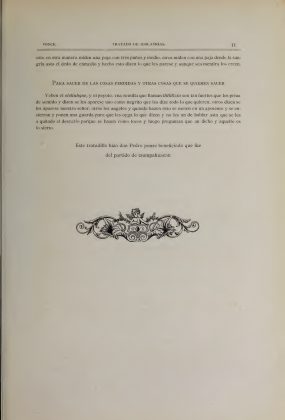
A set of Spanish colonial anti-idolatry excerpts describing ololiuhqui and peyote as oracular substances used in healing, theft investigation, divination, and diagnosis of sorcery. The source preserves rare early descriptions of visionary plant practice while also showing how clerical authorities criminalized and demonized Indigenous ritual knowledge.
Moreau de Tours on dawamesc, self-experiment, and experimental psychiatry
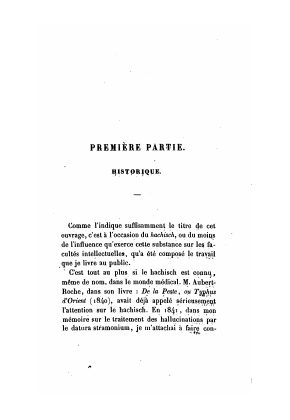
Selected passages from Moreau de Tours's 1845 psychiatric treatise on hashish, including his insistence on personal experience, description of dawamesc preparation and dosing, and claim that hashish offered a unique experimental route into the psychology of madness.
An 1858 Ecuadorian account of ayahuasca visions and divination
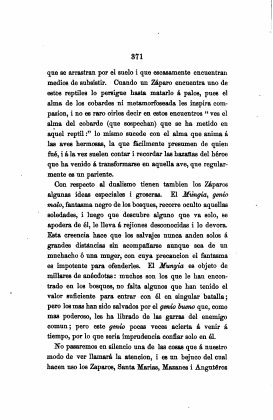
Manuel Villavicencio's 1858 geography gives an early Spanish account of ayahuasca among Indigenous groups of eastern Ecuador, including divination, warfare, illness diagnosis, visionary effects, and a first-person report of his own experience.
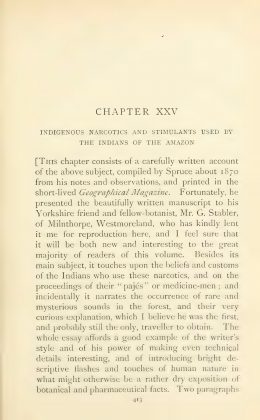
Richard Spruce on ayahuasca, yopo/paricá, and Amazonian medicine-men
Richard Spruce's nineteenth-century account of caapi, aya-huasca, niopo, and paricá, based on field observations in the Uaupés, Orinoco, Rio Negro, Napo, and Pastasa regions. The excerpt records plant identifications, preparation methods, visual effects, ceremonial uses, and the role of payes in curing and divination.

An Historical Sketch of Anaesthesia
An illustrated history of anaesthesia issued by the London drug firm Burroughs Wellcome & Co., which closes by advertising its own 'Wellcome' brand chloroform. Hosted here are the chapters on nitrous oxide, ether, and chloroform, covering Horace Wells's 1844 self-experiment, the ether demonstrations of William Morton and Charles Jackson, and James Young Simpson's 1847 chloroform trial.