1970-2000

Browse filters
Active filters:1970-2000 xClear all
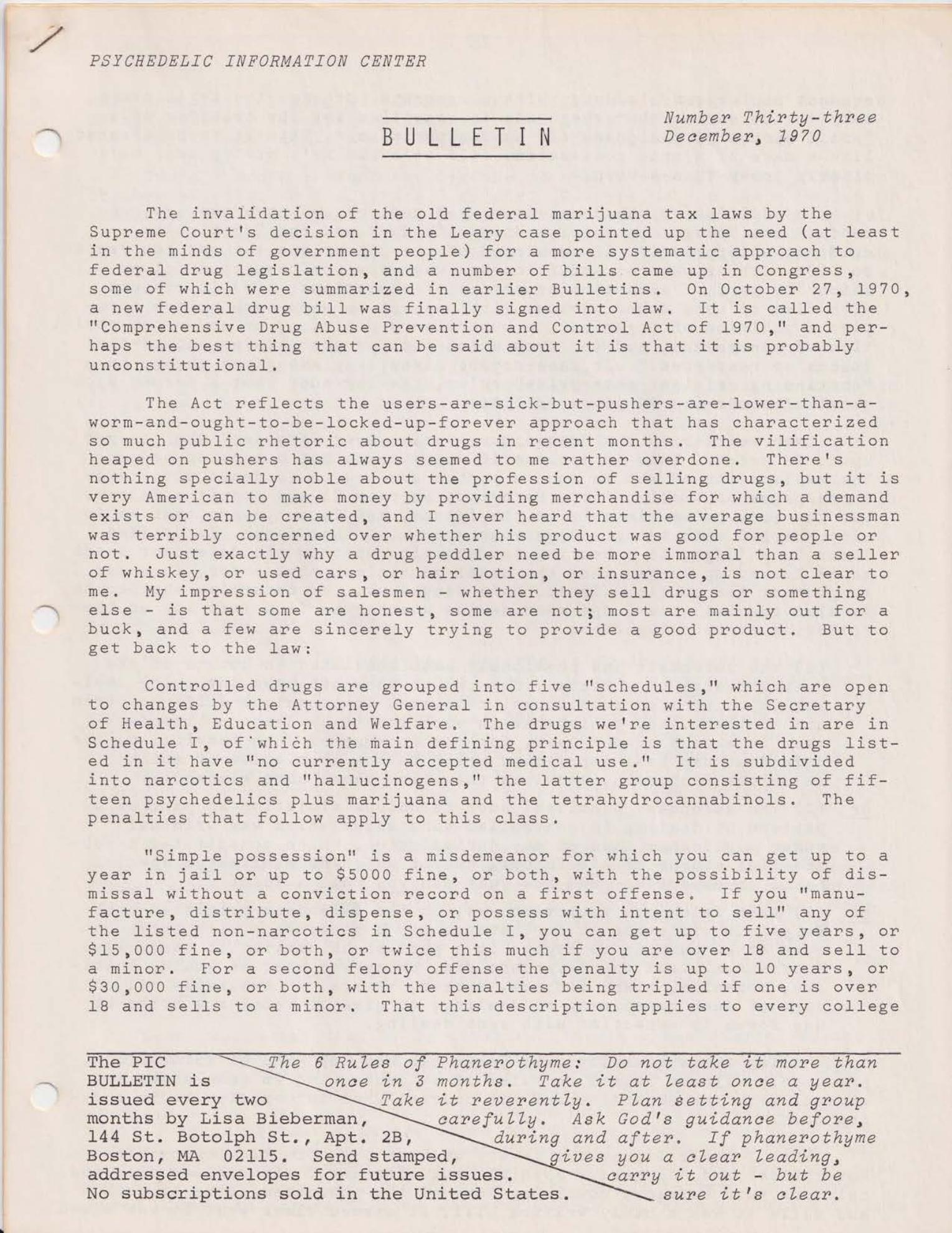
PIC Bulletin 33
Source, 1970

No. 33

Lisa Bieberman's December 1970 bulletin explains the Comprehensive Drug Abuse Prevention and Control Act, signed on October 27, 1970, which placed LSD and other psychedelics in Schedule I. She criticizes its penalties, its "continuing criminal enterprise" and "dangerous special drug offender" provisions, and its no-knock searches, then argues against the claim that drug-induced religious experience is "unnatural."

Read more
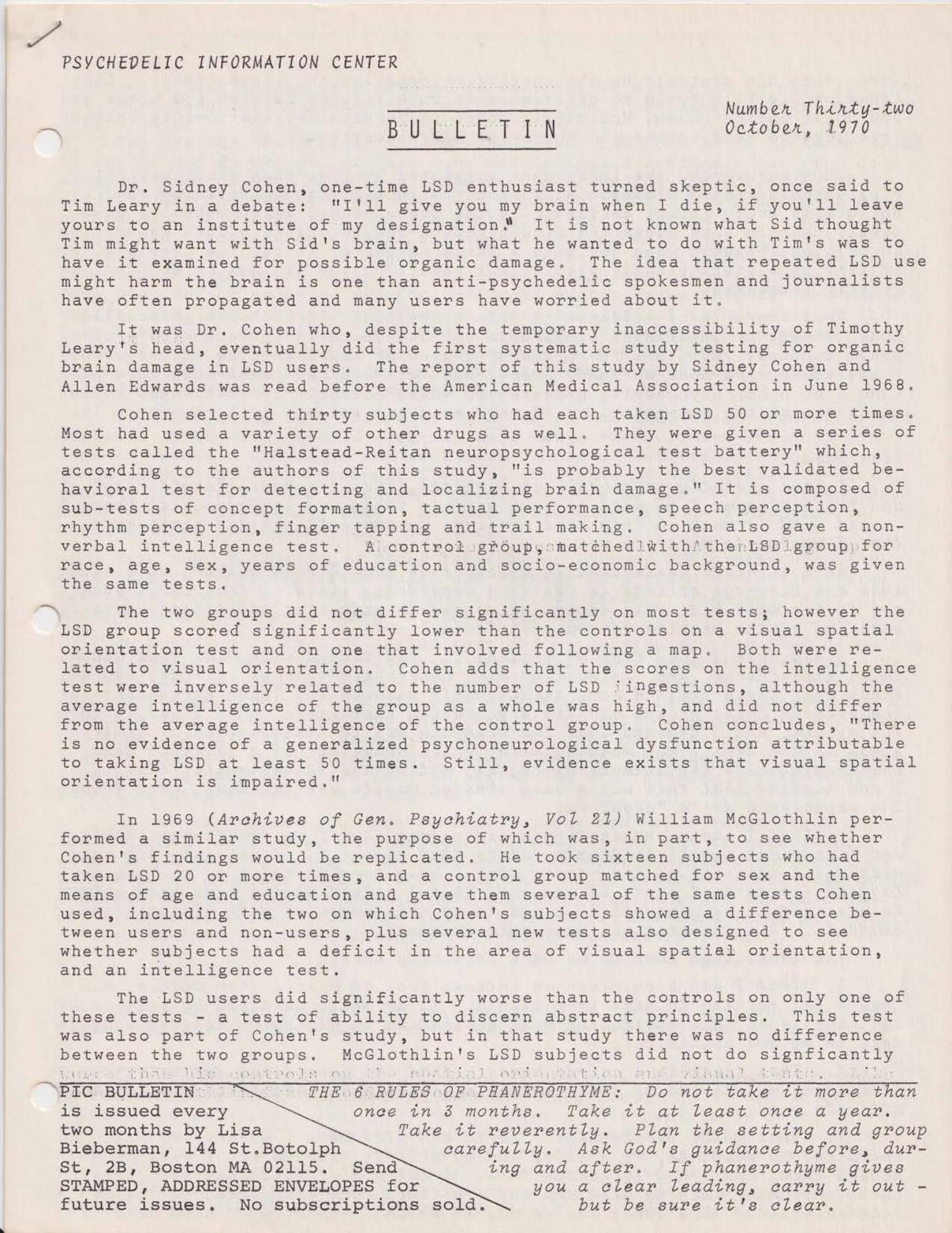
PIC Bulletin 32
Source, 1970

No. 32

Lisa Bieberman's October 1970 bulletin reviews the two studies then available on whether heavy LSD use damages the brain: Sidney Cohen and Allen Edwards's 1968 neuropsychological tests of thirty users, and William McGlothlin's 1969 attempt to replicate them. Because their results disagree, she concludes there is no evidence of general brain damage. The issue also prints a social worker's letter about how taking LSD changed his work with drug-using teenagers.

Read more
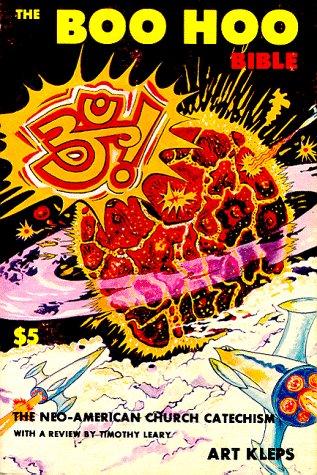
How to Guide a Session (from The Boo Hoo Bible)
Source, 1971

How to Guide a Session

Art Kleps's chapter on running an LSD session from The Boo Hoo Bible (1971), the Neo-American Church catechism and handbook. Hosted here is roughly the first half of the chapter: Kleps's advice on the session room, his distinction between 'Ivory' (spiritual) and 'Horny' (psychological) sessions, his view of what a guide needs to know, and his 'Good Answer / Bad Answer' examples for questions a subject might ask during a session.

Read more
PIC Bulletin 34
Source, 1971

No. 34

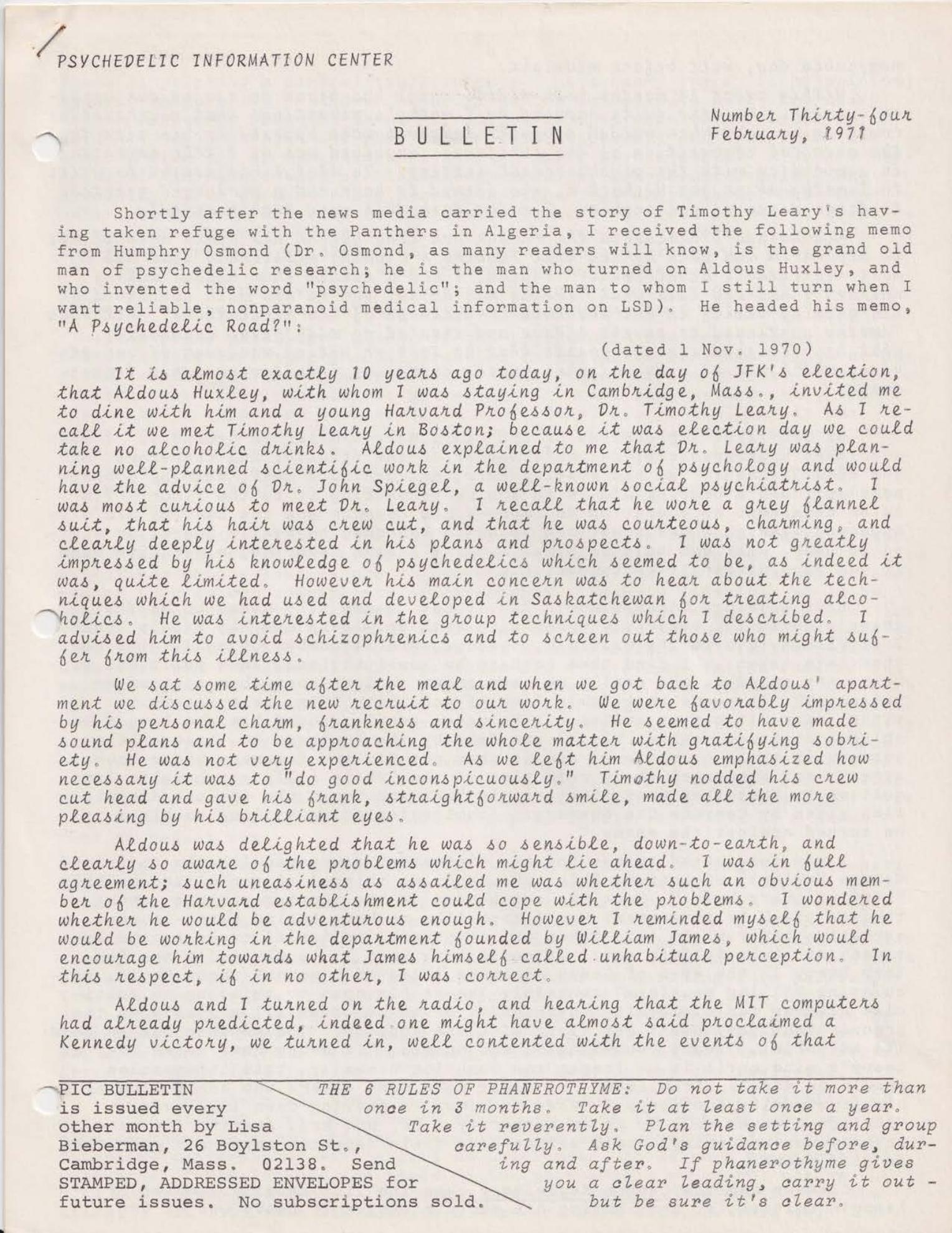
Lisa Bieberman's February 1971 bulletin responds to news that the Black Panthers in Algeria had put the escaped Timothy Leary under house arrest. It prints a memo from Humphry Osmond recalling how he and Aldous Huxley met Leary in 1960 and later came to distrust his missionary zeal, followed by Bieberman's own memories of Leary at Harvard and a critique of press claims that LSD had ruined his mind.

Read more
The Narcotic Pepper: The Chemistry and Pharmacology of Piper methysticum and Related Species
Academic Article, 1973

The Narcotic Pepper

The Chemistry and Pharmacology of Piper methysticum and Related Species

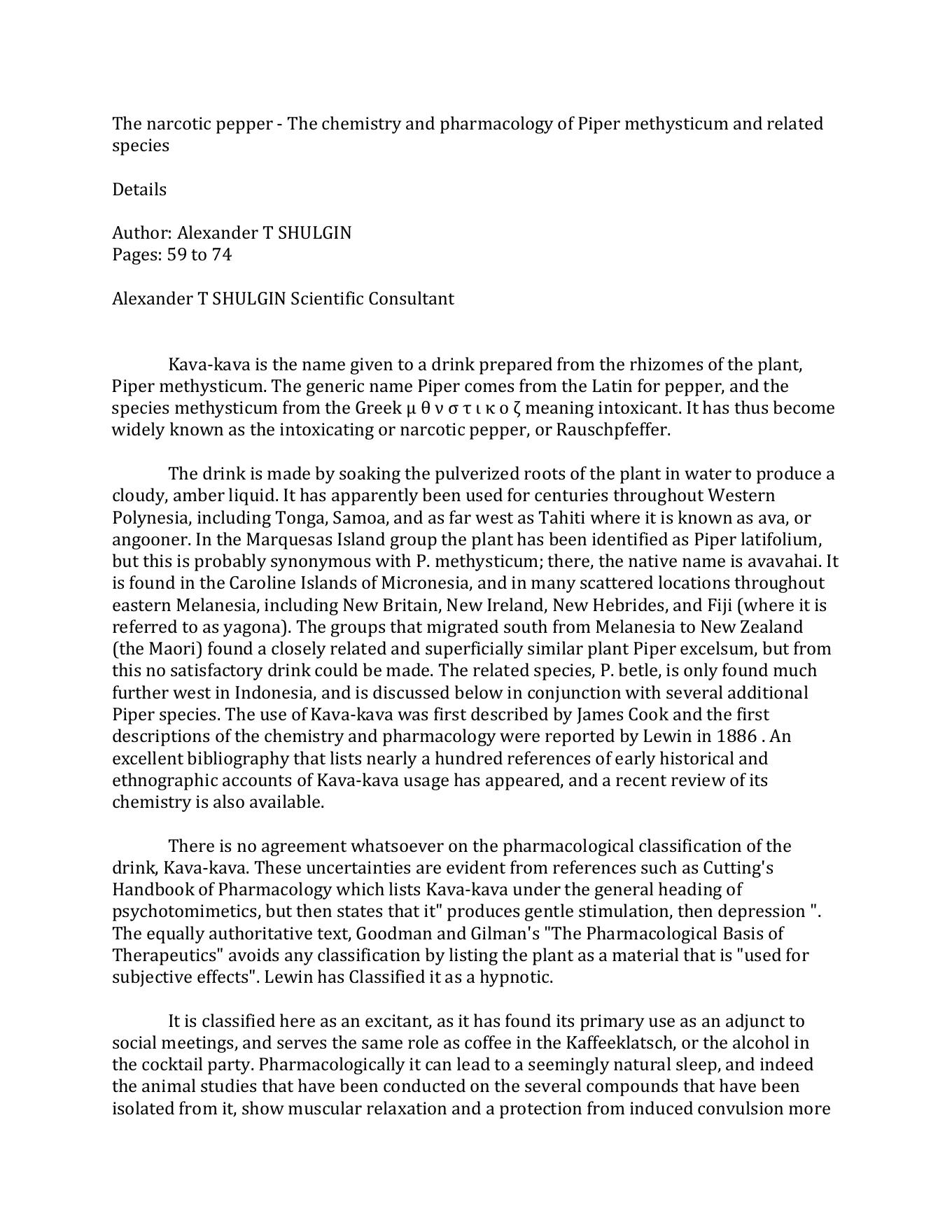
Alexander Shulgin's review of kava, Piper methysticum, covering Pacific preparation practices, pharmacological classification, and the chemistry of kavalactones and related Piper species.

Read more
FBI Interview of Timothy Leary on His 1970 Prison Escape and the Brotherhood of Eternal Love
Testimony, 17 July 1974 (interview); 12 August 1974 (transmittal airtel)

FBI File: Leary's Escape Network

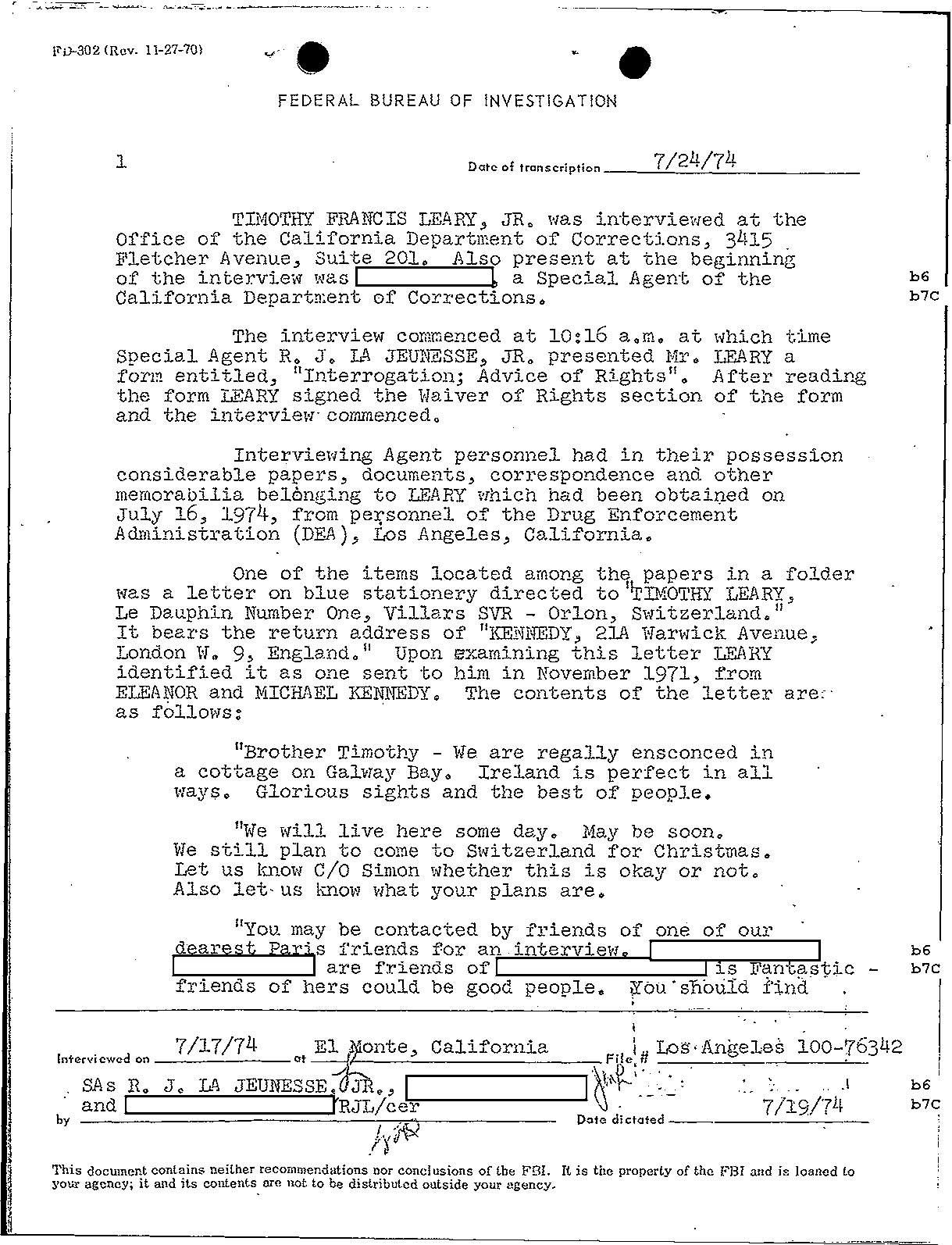
An FBI FD-302 interview (July 1974) in which recaptured Timothy Leary decodes the coded correspondence from his September 1970 prison escape. Leary identifies the Brotherhood of Eternal Love as the Laguna Beach LSD collective 'Group', Michael Randall as 'M', attorney Michael Kennedy, fellow inmate William Bellinger, and the Weathermen as 'Consultants' who staged the escape.

Read more
Virola theiodora como alucinógena e tóxica
Academic Article, 1974

Virola theiodora como alucinógena e tóxica

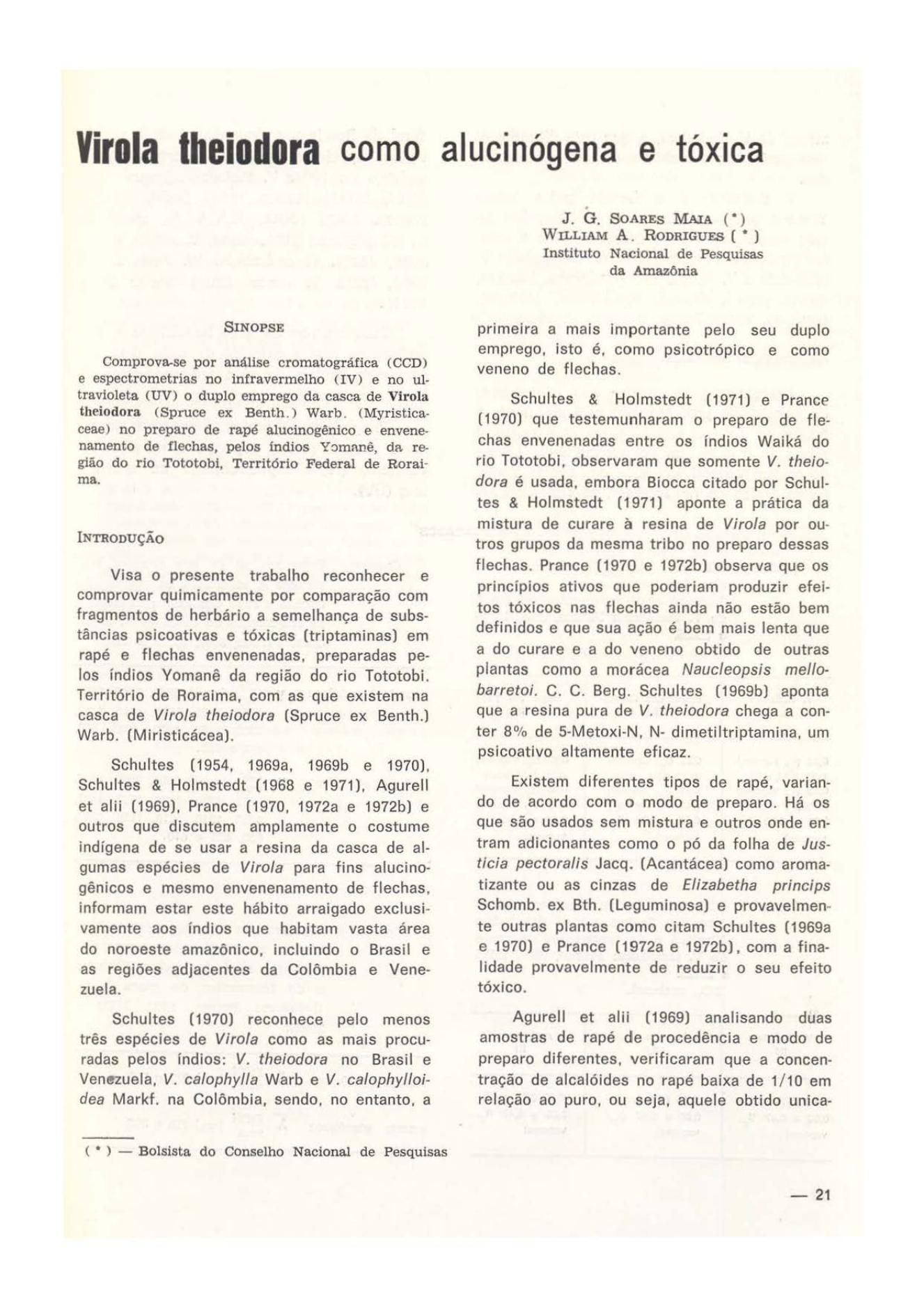
A short Brazilian natural-products chemistry article confirming the double use of Virola theiodora bark in Yomanê hallucinogenic snuff and arrow poison from the Tototobi River region of Roraima.

Read more
CIA R&D and Testing of Behavioral Drugs
Testimony, 5 February 1975

CIA R&D and Testing of Behavioral Drugs (1975)

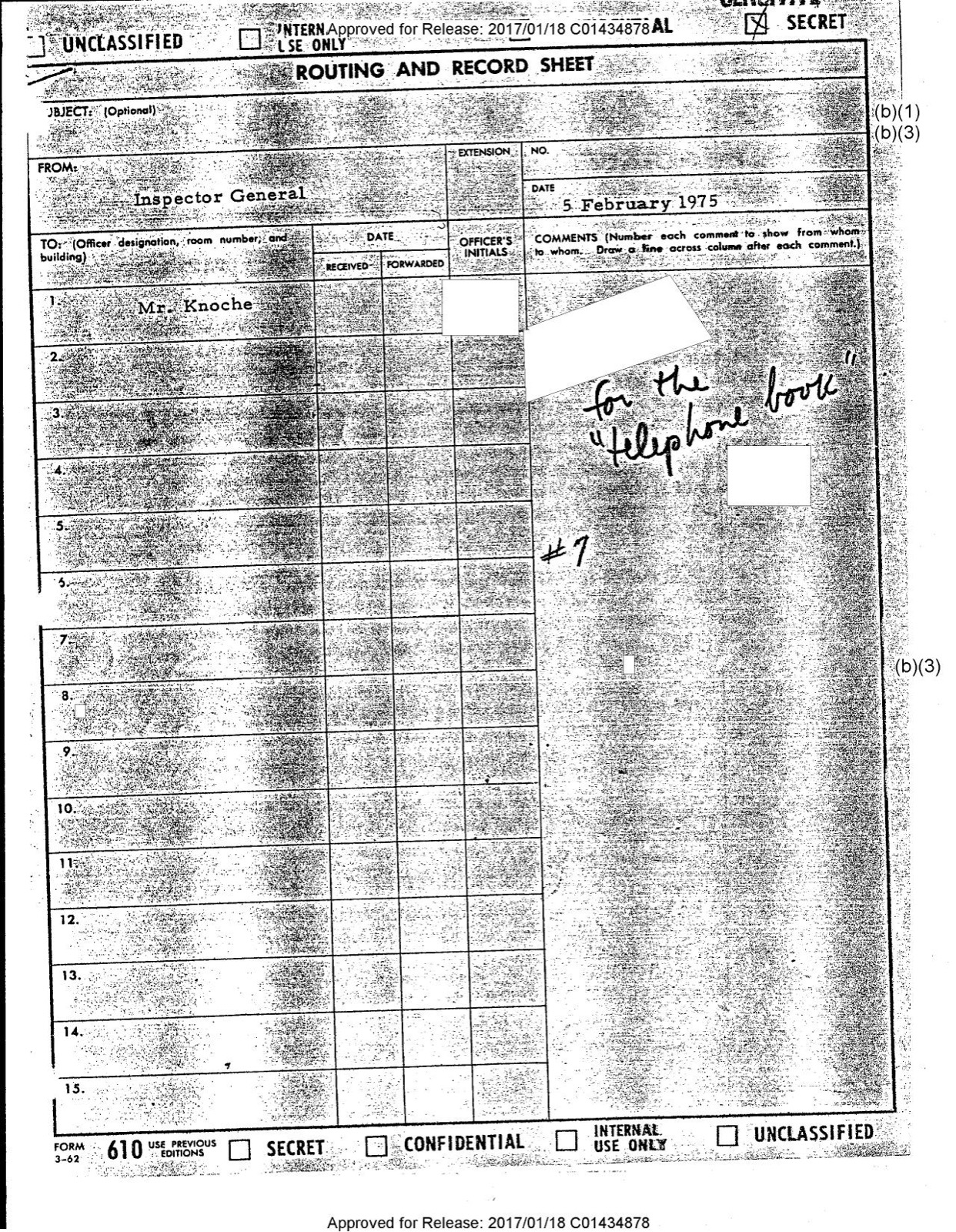
An Inspector General memorandum and attached summary paper on CIA behavioral-drug programs from BLUEBIRD (1949) through OFTEN/CHICKWIT (1967-1973). It includes the Agency's account of Frank Olson's death after being surreptitiously dosed with LSD at Deep Creek Lake in November 1953.

Read more
Report to the President by the Commission on CIA Activities within the United States
Source, June 1975

Report to the President by the Commission on CIA Activities within the United States

Rockefeller Commission findings on CIA drug testing and domestic activities

The Rockefeller Commission's 1975 report was the first major presidential inquiry to put CIA drug experiments, including LSD-related episodes and the death of Frank Olson, into an official public account. It became a bridge between the commission investigation, the Church Committee, and the later Senate MKULTRA hearing.

Read more
Testimony of Sidney Gottlieb before the Senate Select Committee on Intelligence Activities
Testimony, 15 October 1975

Sidney Gottlieb Church Committee Testimony (1975)

Staff testimony by CIA chemist Sidney Gottlieb before the Church Committee on MKULTRA. Gottlieb discusses LSD training for intelligence officers and contract research, and confirms TSS had no informed-consent policy for contracted experiments.

Read more
Foreign and Military Intelligence: Church Committee Final Report, Book I
Source, 1976

Foreign and Military Intelligence

Full Senate report including the chapter on chemical and biological agents

Book I of the Church Committee final report, Foreign and Military Intelligence, includes the committee's findings on CIA testing and use of chemical and biological agents. The full volume places MKULTRA and LSD-related experimentation within broader findings on covert action, intelligence oversight, and congressional accountability.

Read more
Use of Volunteers in Chemical Agent Research
Testimony, March 1976

Army Inspector General Report on LSD Volunteers

An Army Inspector General review of volunteer drug testing at Edgewood Arsenal and in Intelligence Corps LSD trials (1958-1960). It finds that volunteers in the Intelligence Corps LSD program did not receive informed consent before their first dose.

Read more
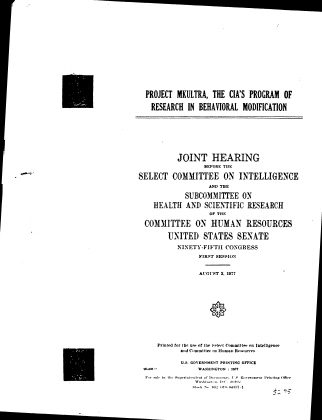
Project MKULTRA, the CIA's Program of Research in Behavioral Modification
Testimony, August 3, 1977

Project MKULTRA, the CIA's Program of Research in Behavioral Modification

1977 Senate joint hearing on LSD, behavioral research, and CIA records

A joint Senate hearing on Project MKULTRA after CIA director Stansfield Turner informed Congress that financial records had surfaced for previously destroyed behavioral-research files. The hearing and appendices document LSD-related projects, agency recordkeeping, and congressional oversight of CIA human-subjects research.

Read more
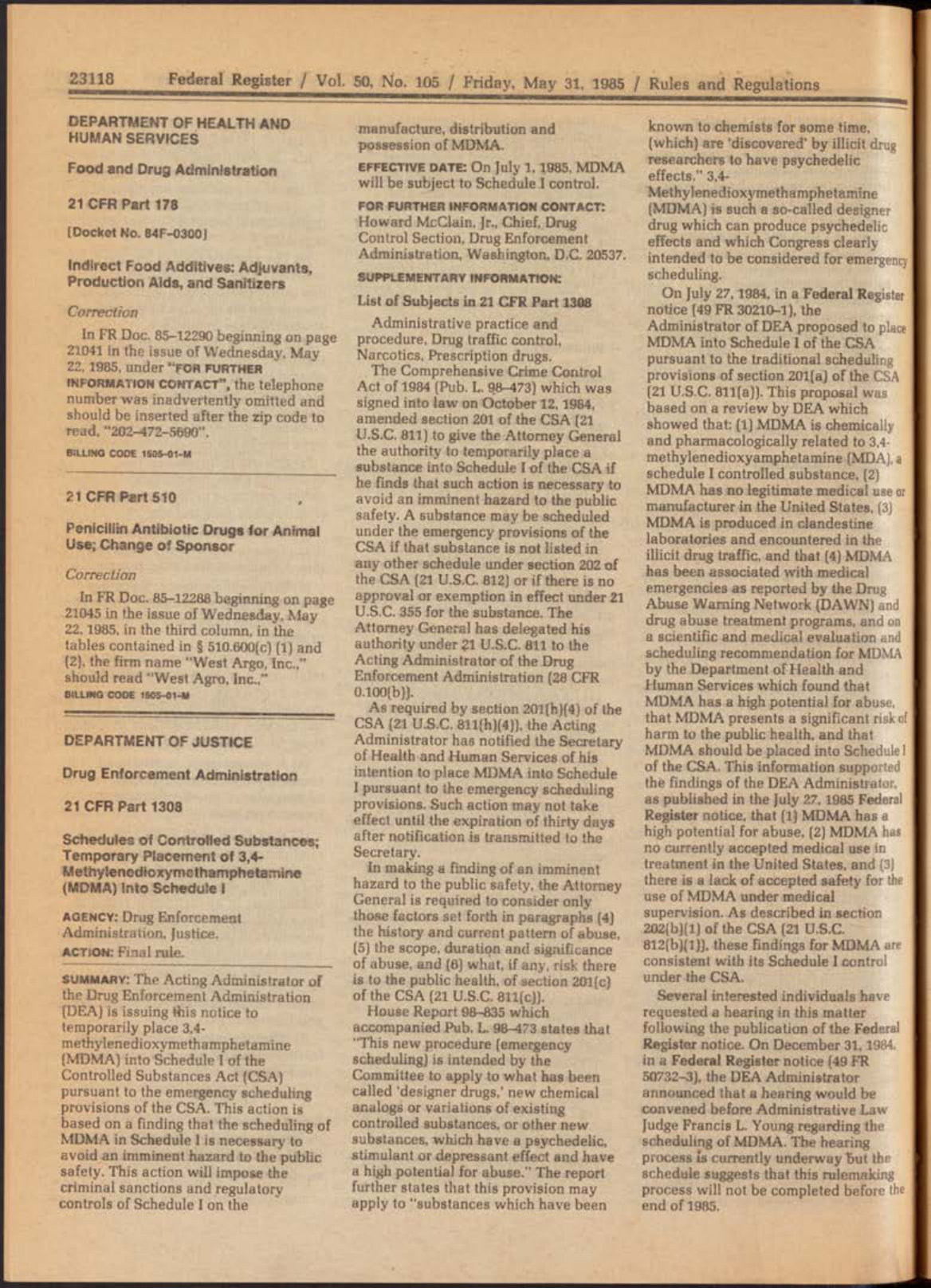
Schedules of Controlled Substances; Temporary Placement of 3,4-Methylenedioxymethamphetamine (MDMA) Into Schedule I
Source, May 31, 1985 (effective July 1, 1985)

DEA emergency scheduling of MDMA

The Drug Enforcement Administration's order placing MDMA in Schedule I on an emergency basis from July 1, 1985, using powers Congress had given it the year before for so-called designer drugs. The notice cites rising recreational use, promotional parties, and a new rat study showing that the related drug MDA destroyed serotonin nerve terminals. It was issued while Judge Francis L. Young's hearings on permanent scheduling were still under way. Full text of the notice.

Read more
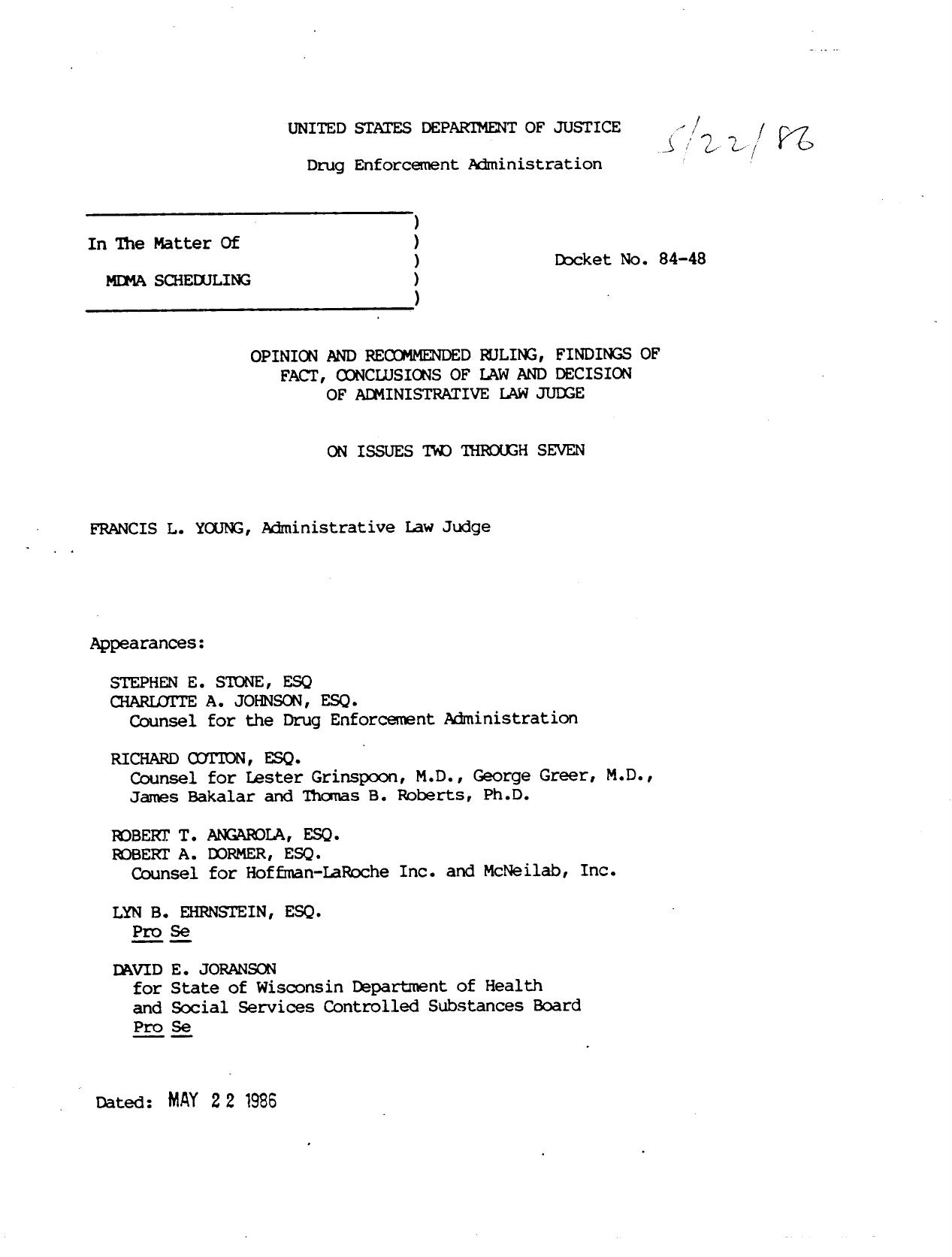
Opinion and Recommended Ruling, Findings of Fact, Conclusions of Law, and Decision of Administrative Law Judge (MDMA Scheduling)
Source, May 22, 1986

In re MDMA Scheduling (ALJ Young opinion)

After seventeen days of hearings, Administrative Law Judge Francis L. Young recommends placing MDMA in Schedule III rather than Schedule I. He finds currently accepted medical use and accepted safety for medical supervision based on psychiatrists' testimony, animal lethality studies, and clinical experience with supervised psychotherapy.

Read more
Grinspoon v. Drug Enforcement Administration
Source, September 18, 1987

Grinspoon v. DEA

The First Circuit vacates the DEA's rule placing MDMA in Schedule I, holding the Administrator's interpretation of 'accepted medical use' was contrary to Congress's intent. Dr. Grinspoon, a Harvard psychiatrist seeking to research MDMA therapeutically, brought the appeal after the Administrator overruled the ALJ's Schedule III recommendation.

Read more
Employment Division, Department of Human Resources of Oregon v. Smith
Source, April 17, 1990

Employment Division v. Smith

The Supreme Court holds that Oregon may deny unemployment benefits to two Native American Church members dismissed for sacramental peyote use, since a neutral criminal drug law requires no religious exemption. Blackmun dissents.

Read more
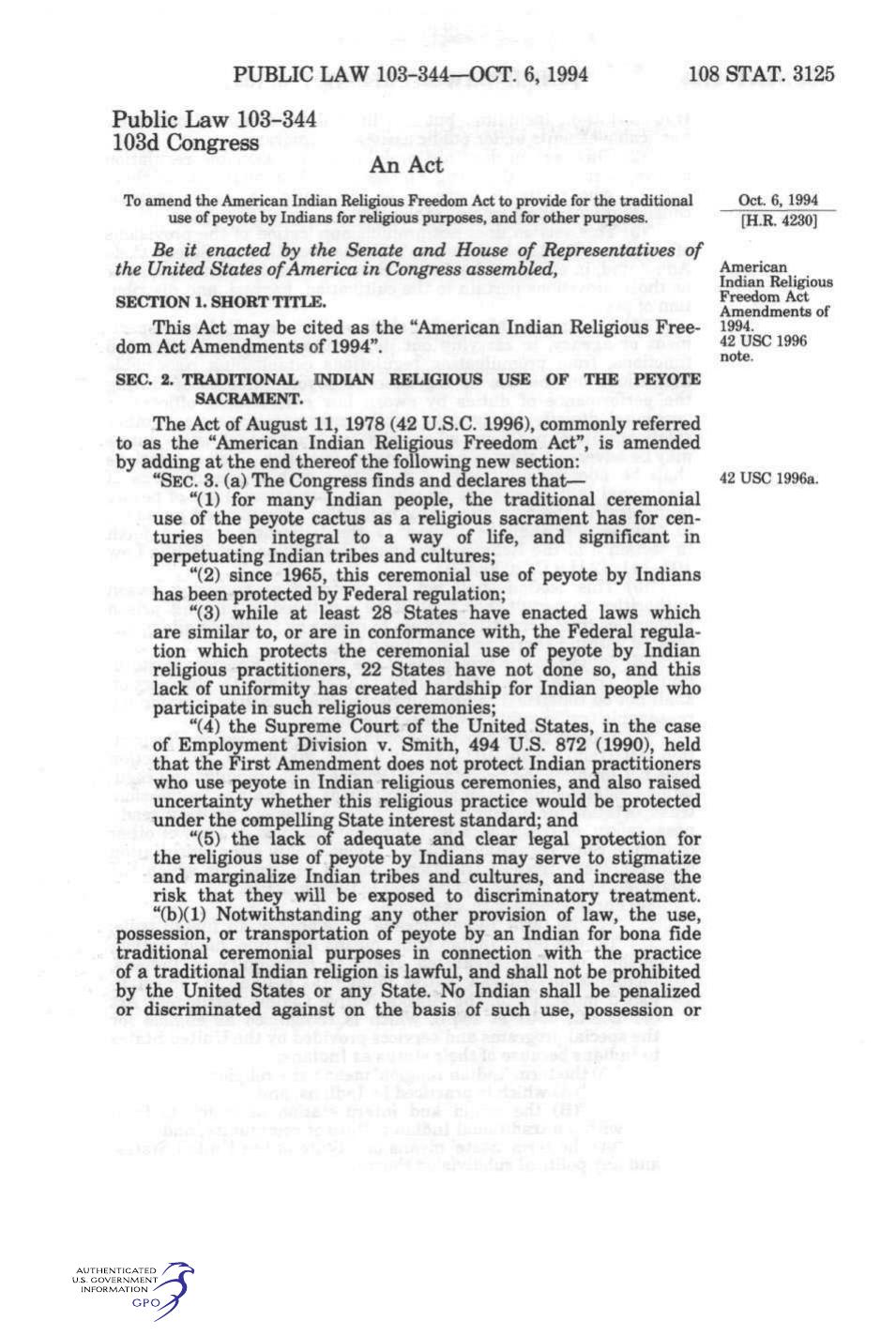
American Indian Religious Freedom Act Amendments of 1994 (Public Law 103-344)
Source, Approved October 6, 1994

AIRFA Amendments of 1994

Congress restored a nationwide exemption for the ceremonial use of peyote by Indians in connection with traditional religions. The statute carves out exceptions for prison, military, and safety-sensitive positions.

Read more
Hallucinogens: An Update (NIDA Research Monograph 146)
Academic Article, 1994

NIDA Research Monograph 146

An Update (NIDA Research Monograph 146)

Proceedings of a 1992 NIDA technical review on hallucinogen research, prompted by rising LSD use among teenagers. Includes Rick Strassman's account of the regulatory process (IRB, DEA, FDA) for his DMT study, the first human hallucinogen study approved since the early 1970s.

Read more