Texts / LSD

Browse filters
Active filters:Text xLSD xClear all
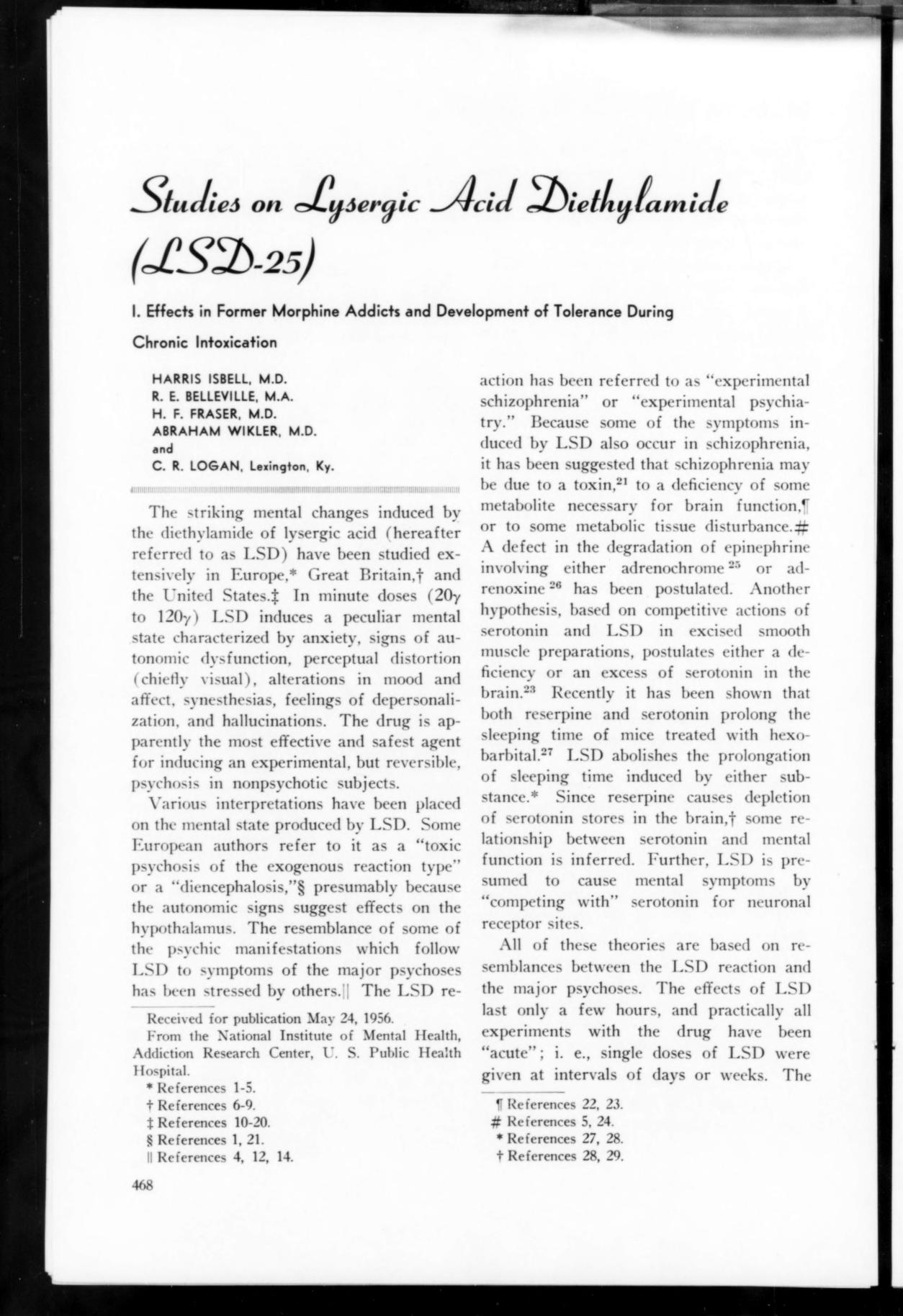
Studies on Lysergic Acid Diethylamide (LSD-25): I. Effects in Former Morphine Addicts and Development of Tolerance During Chronic Intoxication

Studies on LSD-25: Tolerance in Former Morphine Addicts

I. Effects in Former Morphine Addicts and Development of Tolerance During Chronic Intoxication

Harris Isbell and colleagues at the NIMH Addiction Research Center in Lexington, Kentucky, gave LSD daily for up to eighty-five days to former morphine addicts to measure tolerance and compare effects to psychosis. They found rapid tolerance to both physiological and mental effects, which disappeared upon discontinuation.

Psychoanalysis and LSD-25: Foundations for a Combined Therapeutic Technique

Psychoanalysis and LSD-25

Foundations for a Combined Therapeutic Technique

Luisa G. de Álvarez de Toledo's paper to the Argentine Psychoanalytic Association in Buenos Aires on September 10, 1957, setting out a method for combining LSD sessions with psychoanalysis. Case reports by Alberto E. Fontana and Francisco Pérez Morales follow. It is one of the earliest attempts in Latin America to fit LSD into psychoanalytic treatment.

The Psychedelic Review, Vol. I, No. 1

Psychedelic Review, No. 1

The founding issue of The Psychedelic Review, published in June 1963 by Timothy Leary and Ralph Metzner's International Federation for Internal Freedom. Hosted here are the issue's unsigned Editorial and Statement of Purpose, which set out the journal's program and explain its choice of the word 'psychedelic.' The issue's bylined articles, by Gerald Heard, R. Gordon Wasson, and Alan Watts, are described in the front matter but not reproduced.

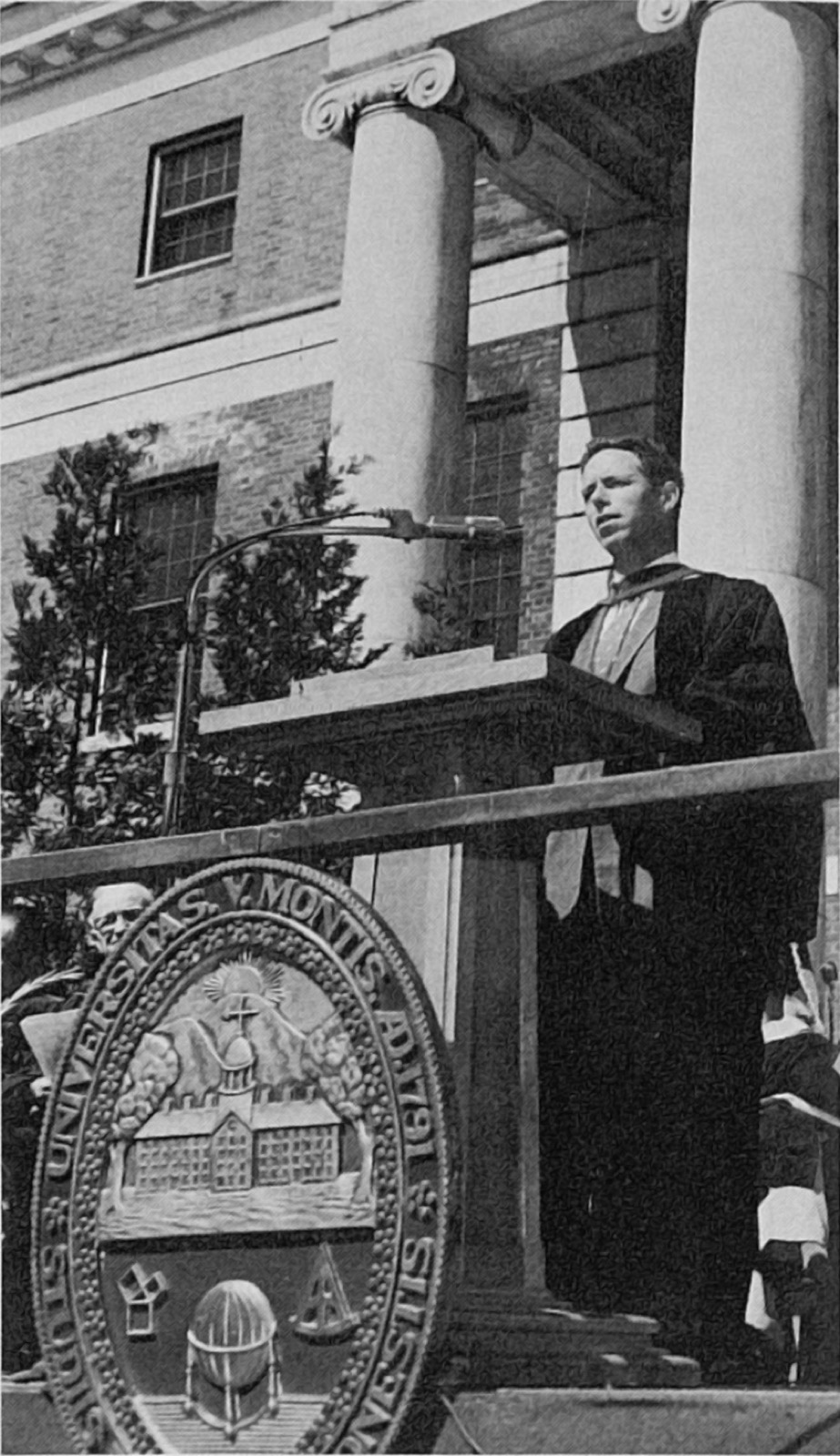
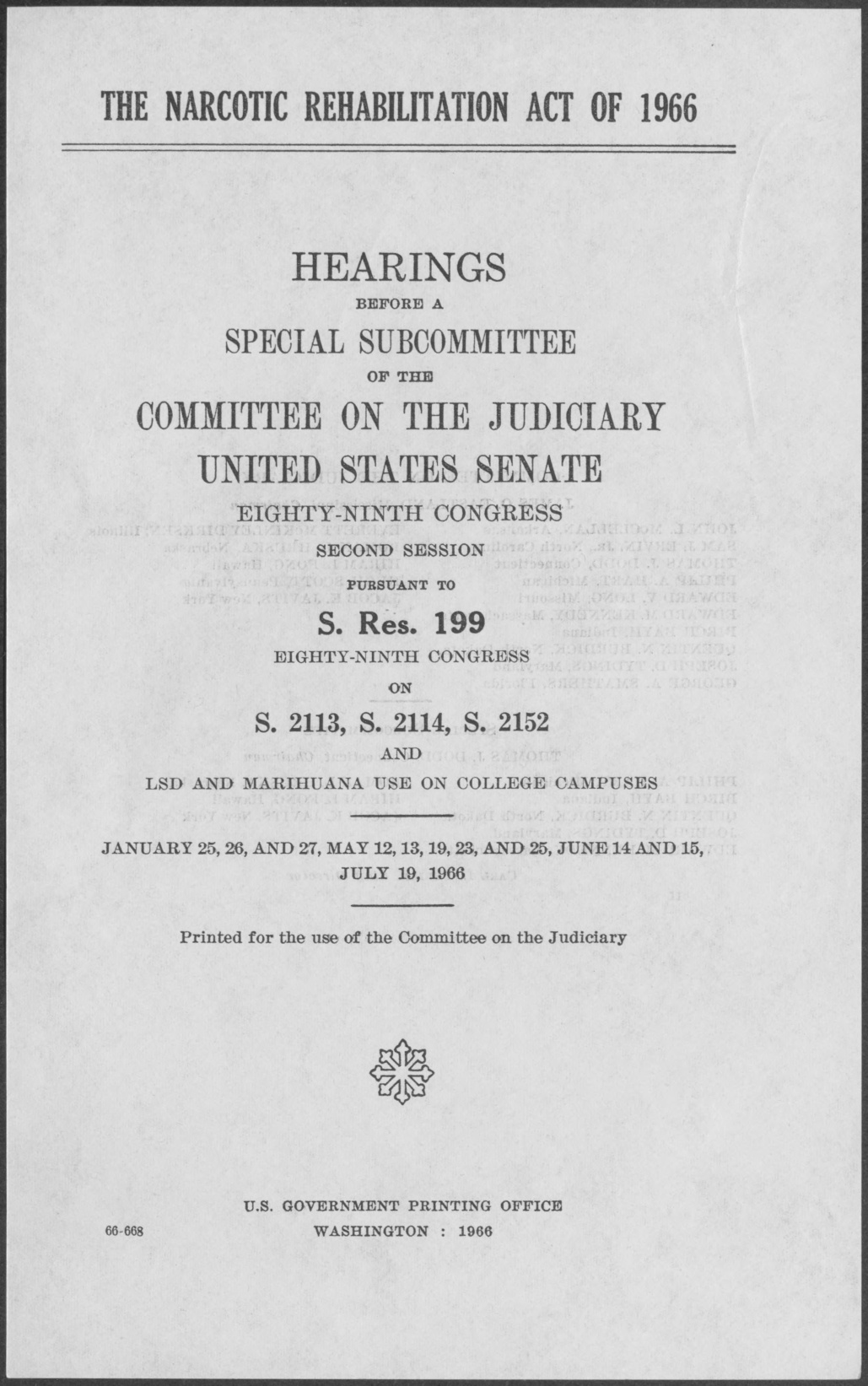
Testimony of Allen Ginsberg on LSD before a Special Subcommittee of the Senate Committee on the Judiciary

Ginsberg Senate Testimony on LSD (1966)

The poet Allen Ginsberg (1926–1997) testified on June 14, 1966, before the special Senate Judiciary subcommittee holding hearings on narcotic rehabilitation and LSD on college campuses, with Quentin N. Burdick (1908–1992) presiding. He read a long prepared statement describing his visionary experience of 1948 and his use of peyote, mescaline, LSD, and ayahuasca, then argued from newspaper coverage and the medical literature that LSD's dangers had been exaggerated and that research should be expanded. The record hosts the full printed text, pp. 487–509, including his questioning by Burdick and Jacob K. Javits (1904–1986), his list of proposed research topics (Exhibit No. 76), and the references he put into the record.

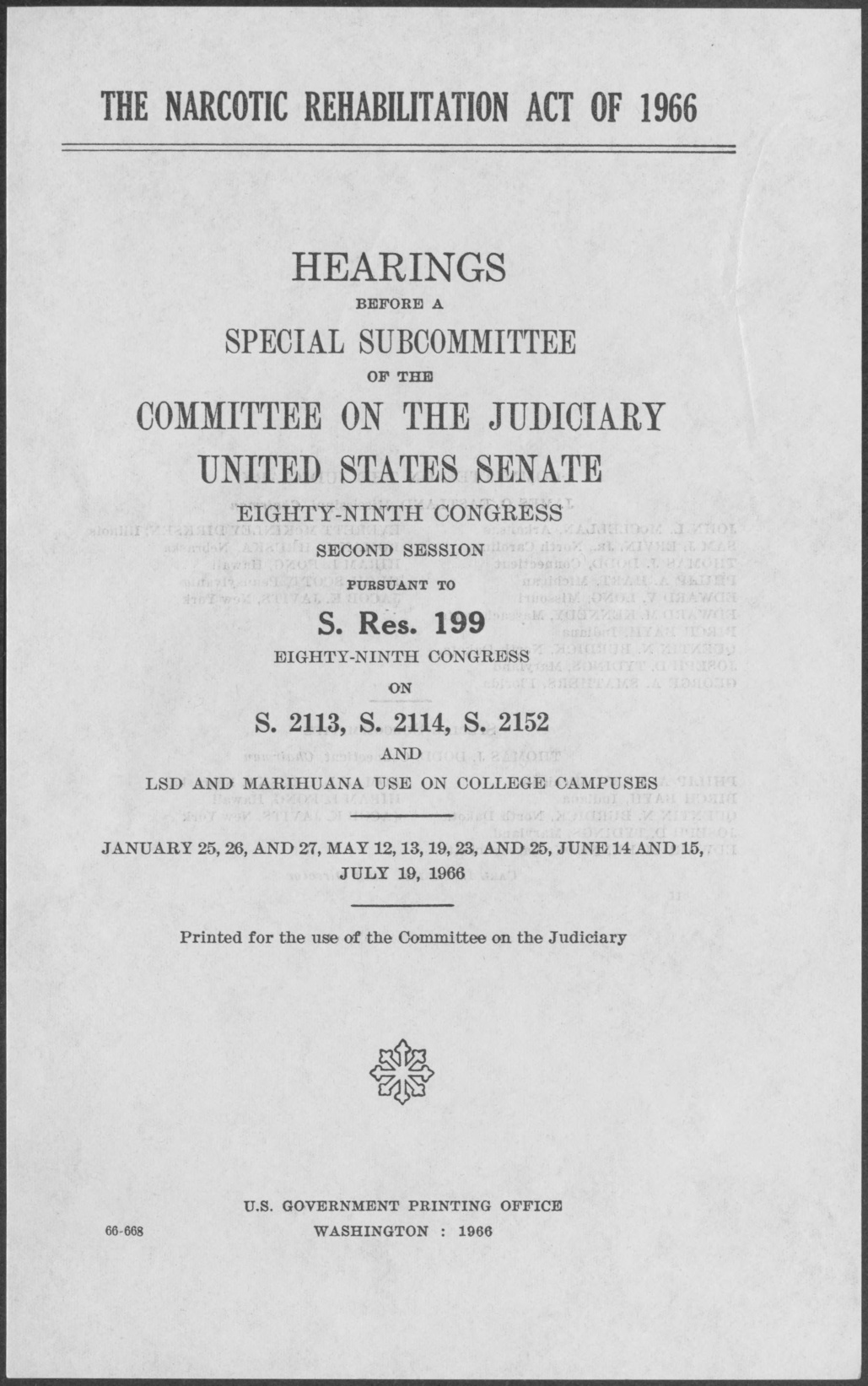
Testimony of Timothy Leary on LSD before a Special Subcommittee of the Senate Committee on the Judiciary

Leary Senate Testimony on LSD (1966)

Timothy Leary (1920–1996), then president of the Castalia Foundation at Millbrook, New York, testified on May 13, 1966, before the special Senate Judiciary subcommittee chaired by Thomas J. Dodd (1907–1971) that was holding hearings on narcotic addict rehabilitation and on LSD use on college campuses. Leary proposed licensing adults to use psychedelics and offering supervised university courses, and he sparred at length with Senator Edward M. Kennedy (1932–2009) over control, possession, and danger. The record hosts the full printed exchange, pp. 238–258, from Dodd's introduction to the recess.

The Houseboat Summit

Houseboat Summit

A conversation among Leary, Ginsberg, Snyder, and Watts, taped aboard Watts's houseboat and published in San Francisco Oracle no. 7 (February 1967). Hosted here is the opening run of the conversation, in which the four debate dropping out of mainstream society versus working within it, and trace the psychedelic movement's lineage back through earlier utopian and religious dissent. The full conversation continues on to LSD, utopian withdrawal, and post-drop-out economics.

External source
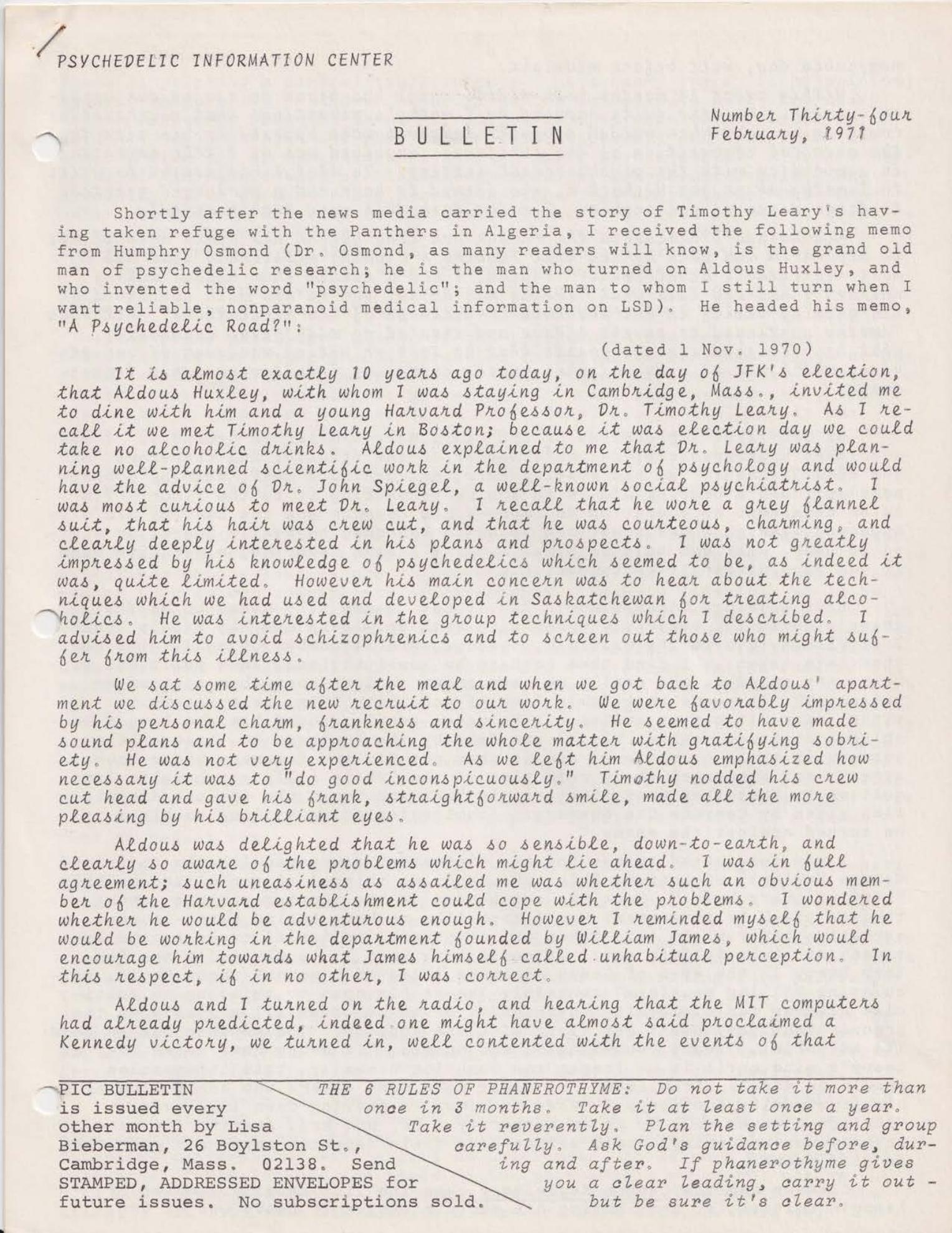
PIC Bulletin 32

No. 32

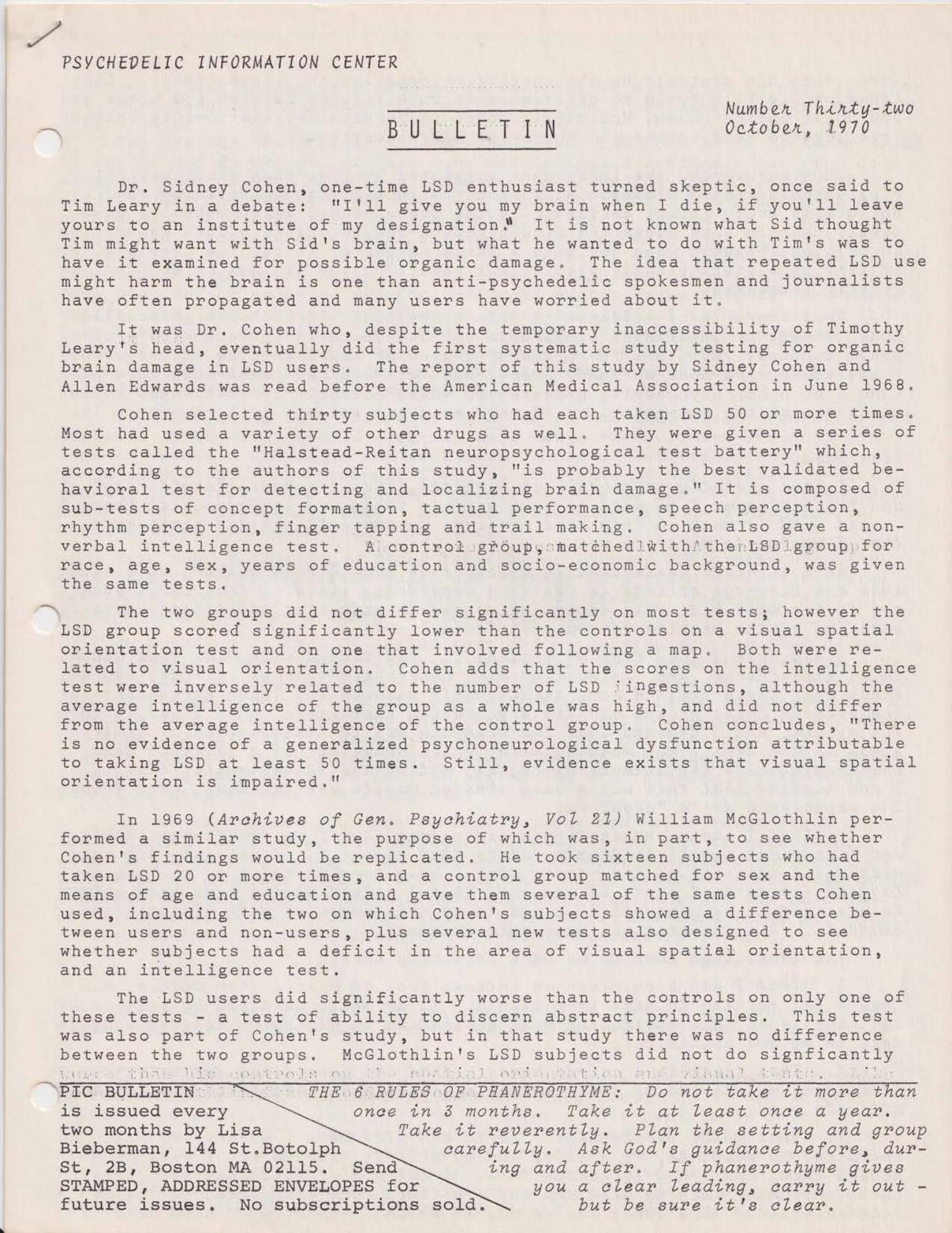
Lisa Bieberman's October 1970 bulletin reviews the two studies then available on whether heavy LSD use damages the brain: Sidney Cohen and Allen Edwards's 1968 neuropsychological tests of thirty users, and William McGlothlin's 1969 attempt to replicate them. Because their results disagree, she concludes there is no evidence of general brain damage. The issue also prints a social worker's letter about how taking LSD changed his work with drug-using teenagers.

Report to the President by the Commission on CIA Activities within the United States

Report to the President by the Commission on CIA Activities within the United States

Rockefeller Commission findings on CIA drug testing and domestic activities

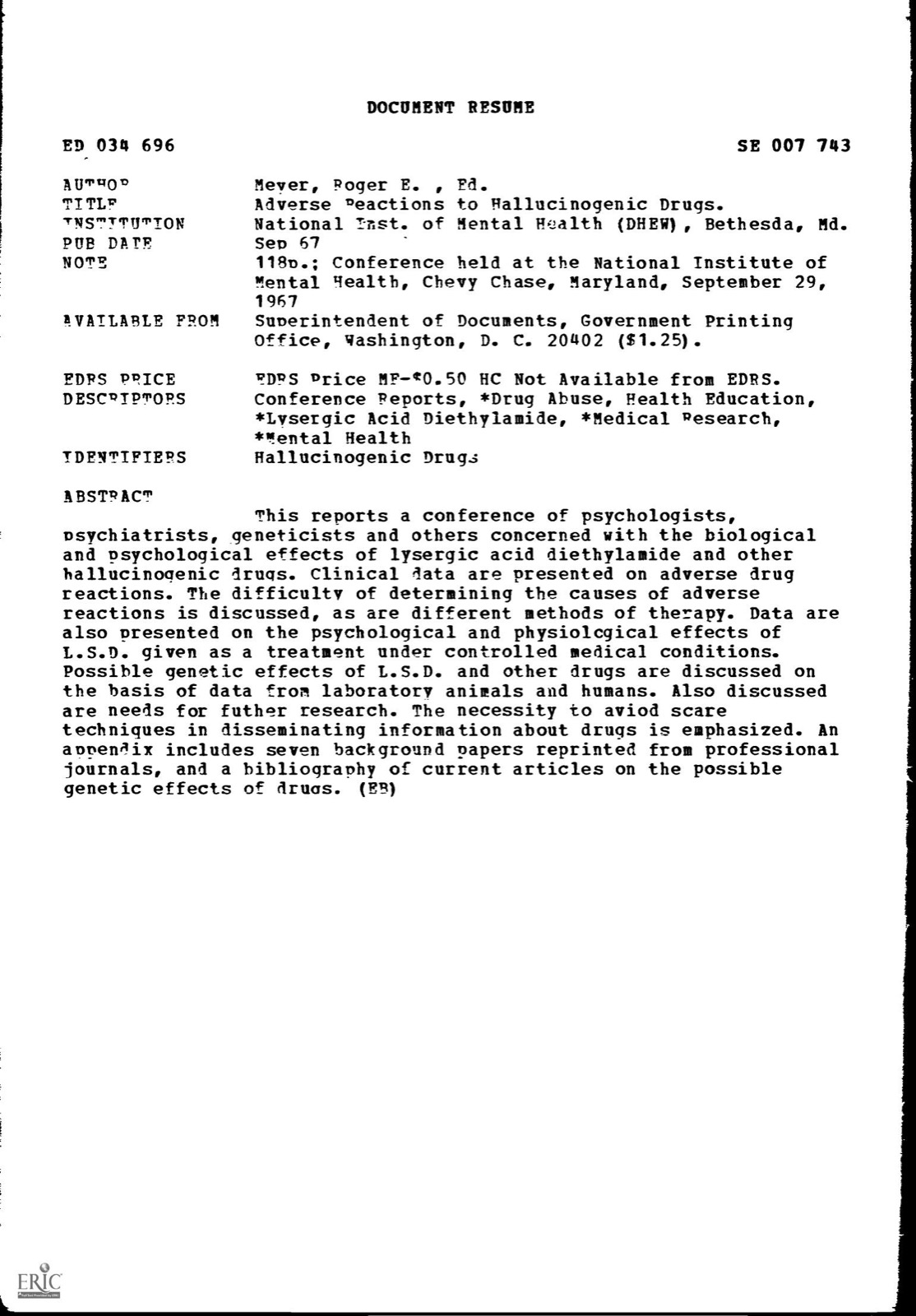
The Rockefeller Commission's 1975 report was the first major presidential inquiry to put CIA drug experiments, including LSD-related episodes and the death of Frank Olson, into an official public account. It became a bridge between the commission investigation, the Church Committee, and the later Senate MKULTRA hearing.

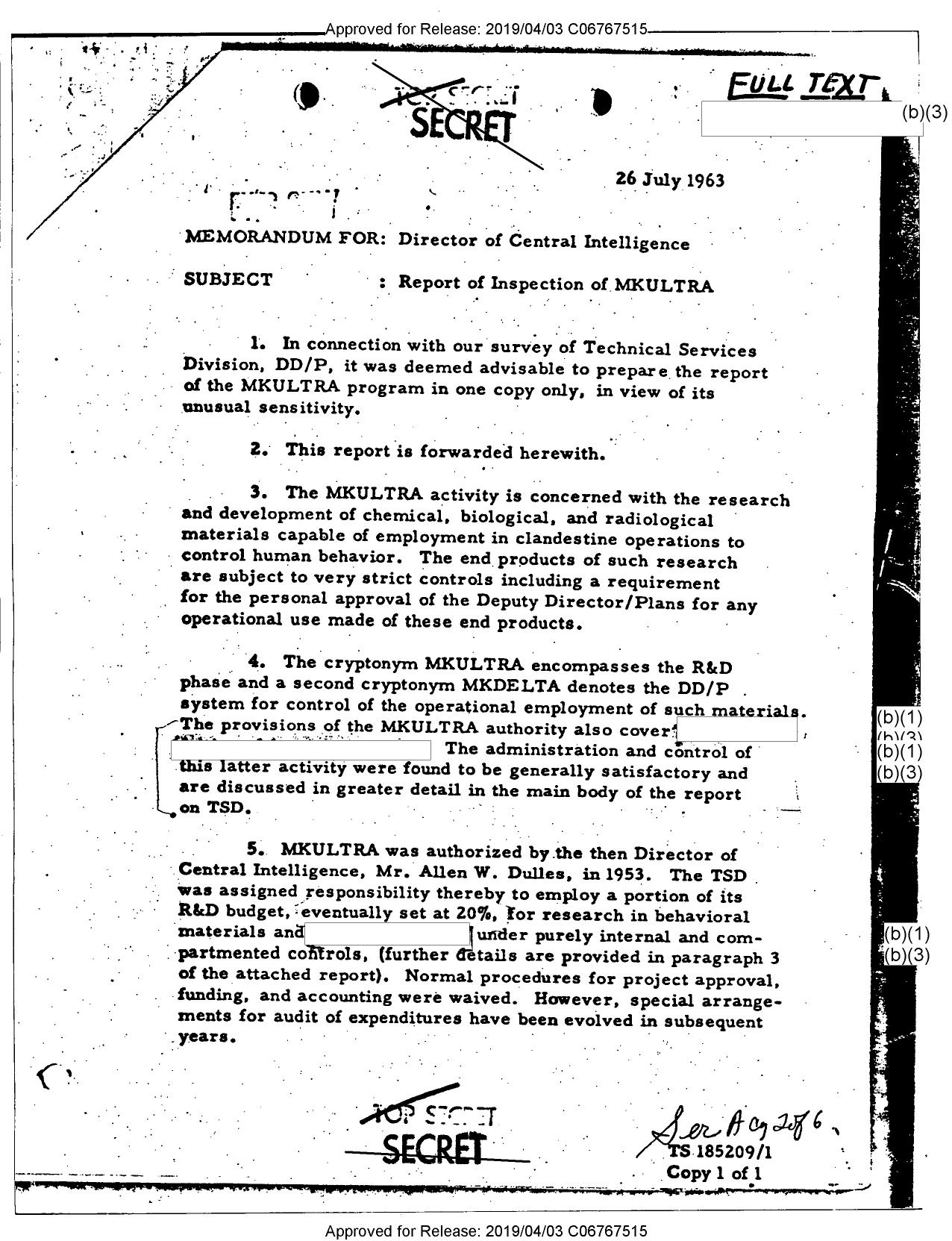
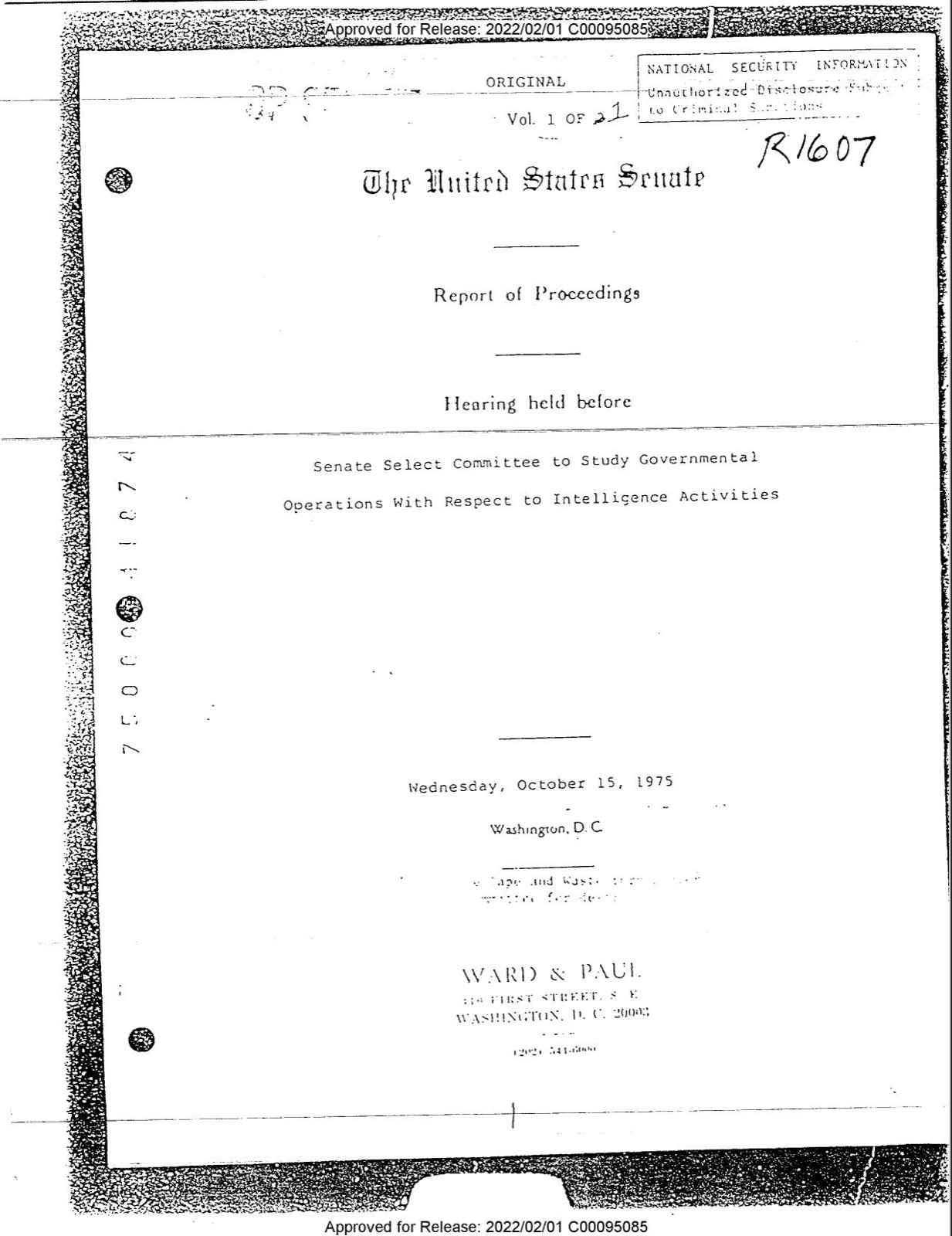
Project MKULTRA, the CIA's Program of Research in Behavioral Modification

Project MKULTRA, the CIA's Program of Research in Behavioral Modification

1977 Senate joint hearing on LSD, behavioral research, and CIA records

A joint Senate hearing on Project MKULTRA after CIA director Stansfield Turner informed Congress that financial records had surfaced for previously destroyed behavioral-research files. The hearing and appendices document LSD-related projects, agency recordkeeping, and congressional oversight of CIA human-subjects research.

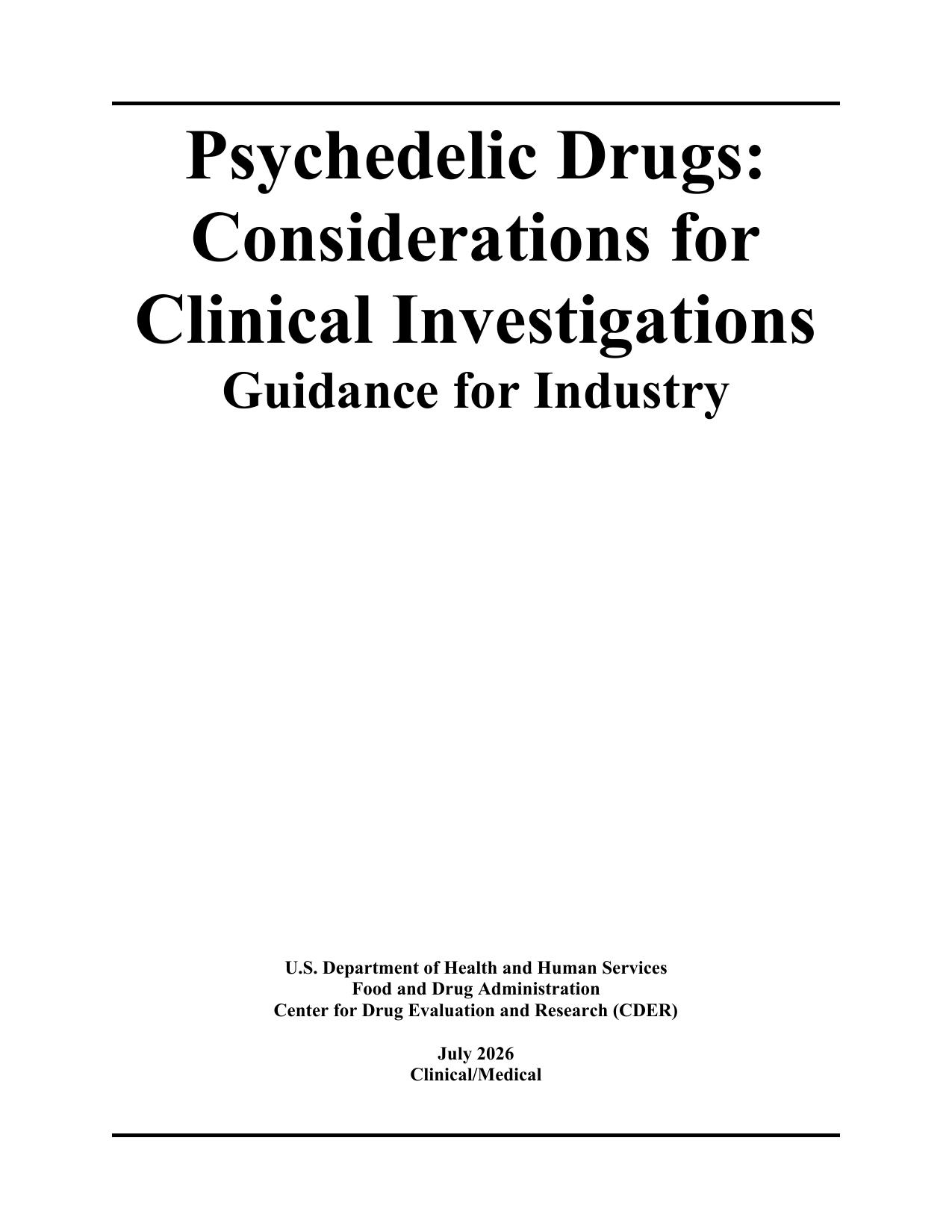
Psychedelic Drugs: Considerations for Clinical Investigations (Guidance for Industry)

FDA Psychedelic Drugs Guidance

Considerations for Clinical Investigations (Guidance for Industry)

FDA guidance (July 2026) for sponsors developing psychedelics—5-HT2A agonists including psilocybin and LSD, plus MDMA—as approved medicines. It addresses the regulatory pathway for Schedule I drugs in clinical trials and identifies methodological challenges: perceptual effects complicate blinding ('functional unblinding'), and the independent contribution of psychotherapy paired with dosing remains uncharacterized.