Browse filters
Active filters:LSD xClear all
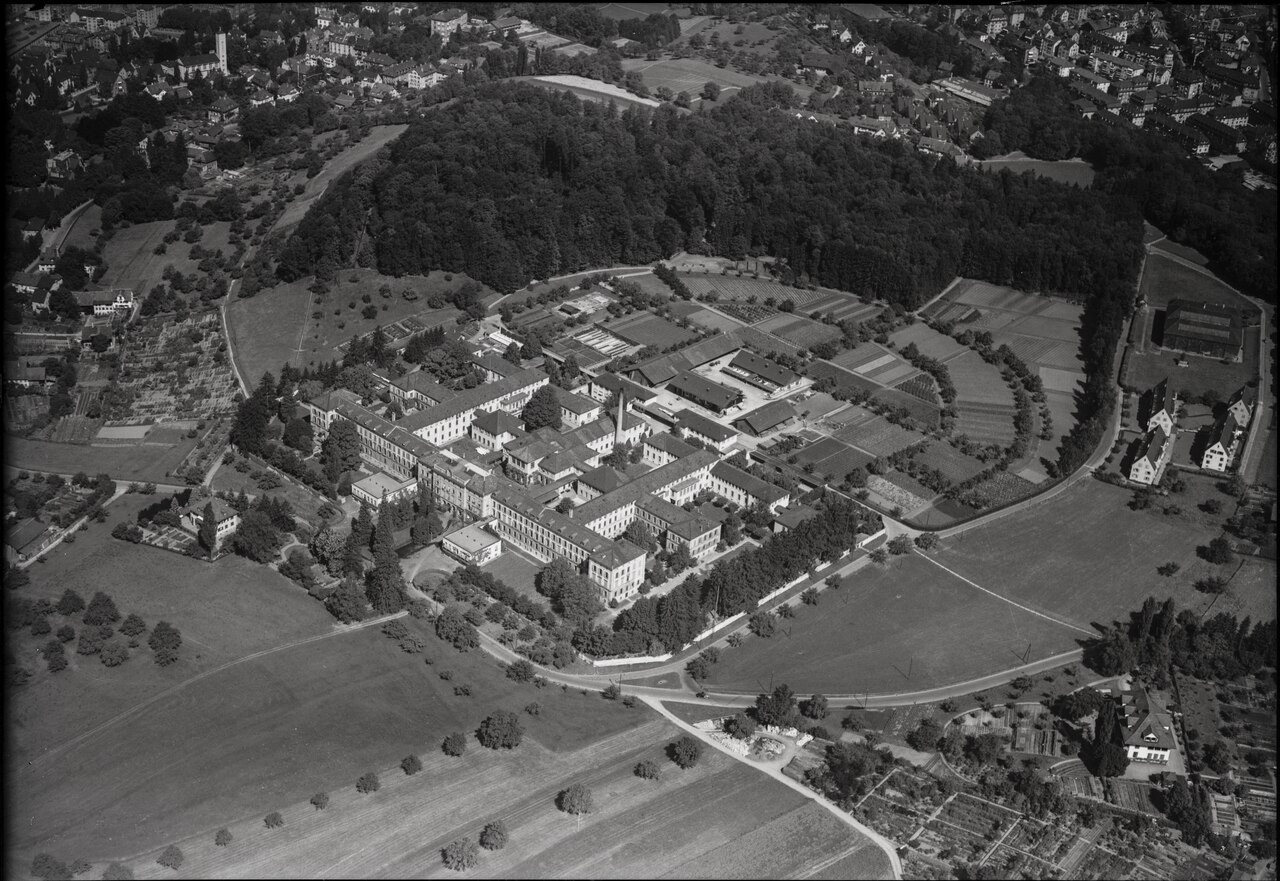
Lysergsäure-diäthylamid, ein Phantastikum aus der Mutterkorngruppe
Academic Article, 1947

LSD, a Phantasticum from the Ergot Group

Werner Stoll's first systematic clinical study of LSD, examining sixteen healthy volunteers and six schizophrenic patients, plus Stoll's own self-experiment. Published in 1947 following Hofmann's 1943 discovery at Sandoz, it established key vocabulary for psychiatric LSD research.

Read more
Schizophrenia: A New Approach
Academic Article, April 1952

Schizophrenia

A New Approach

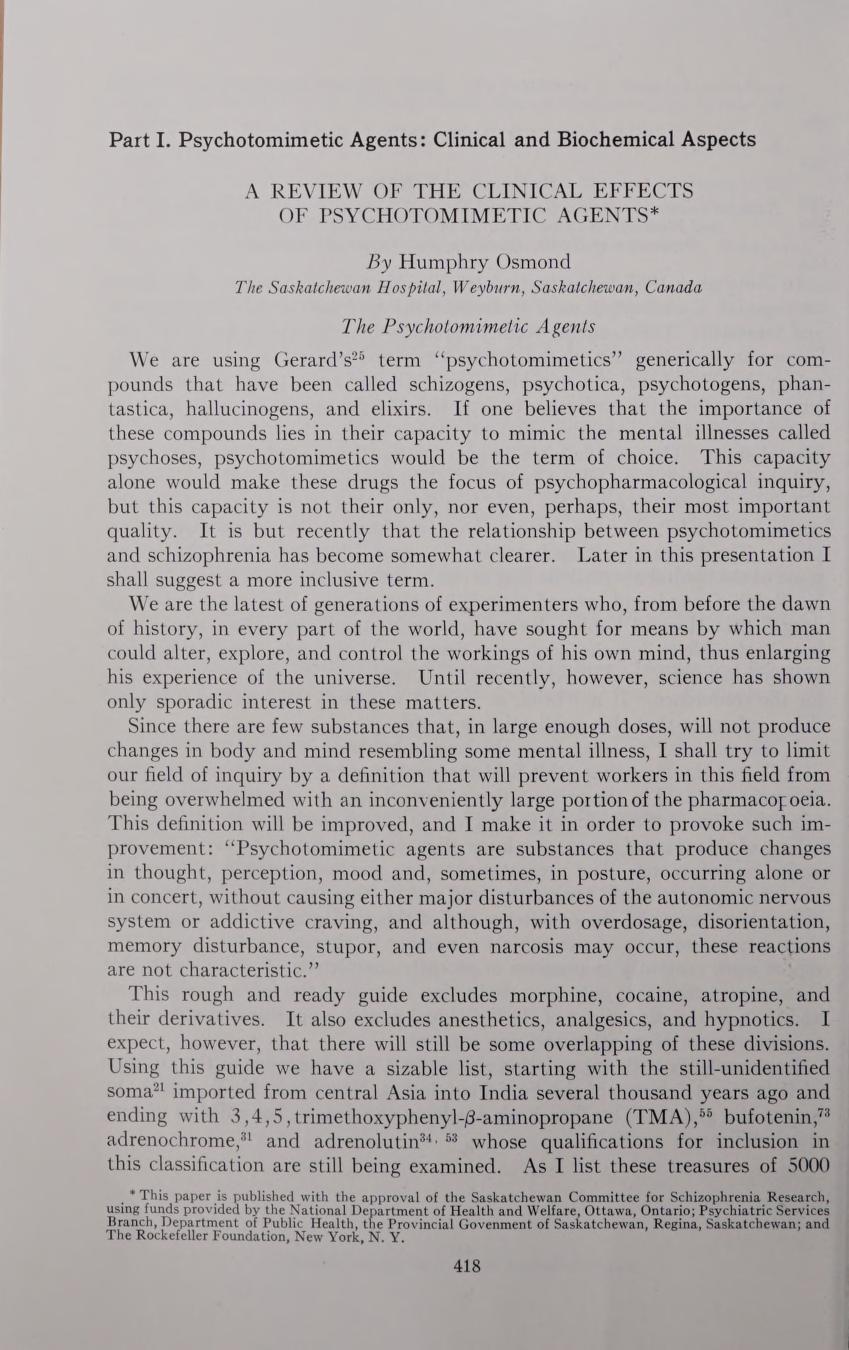
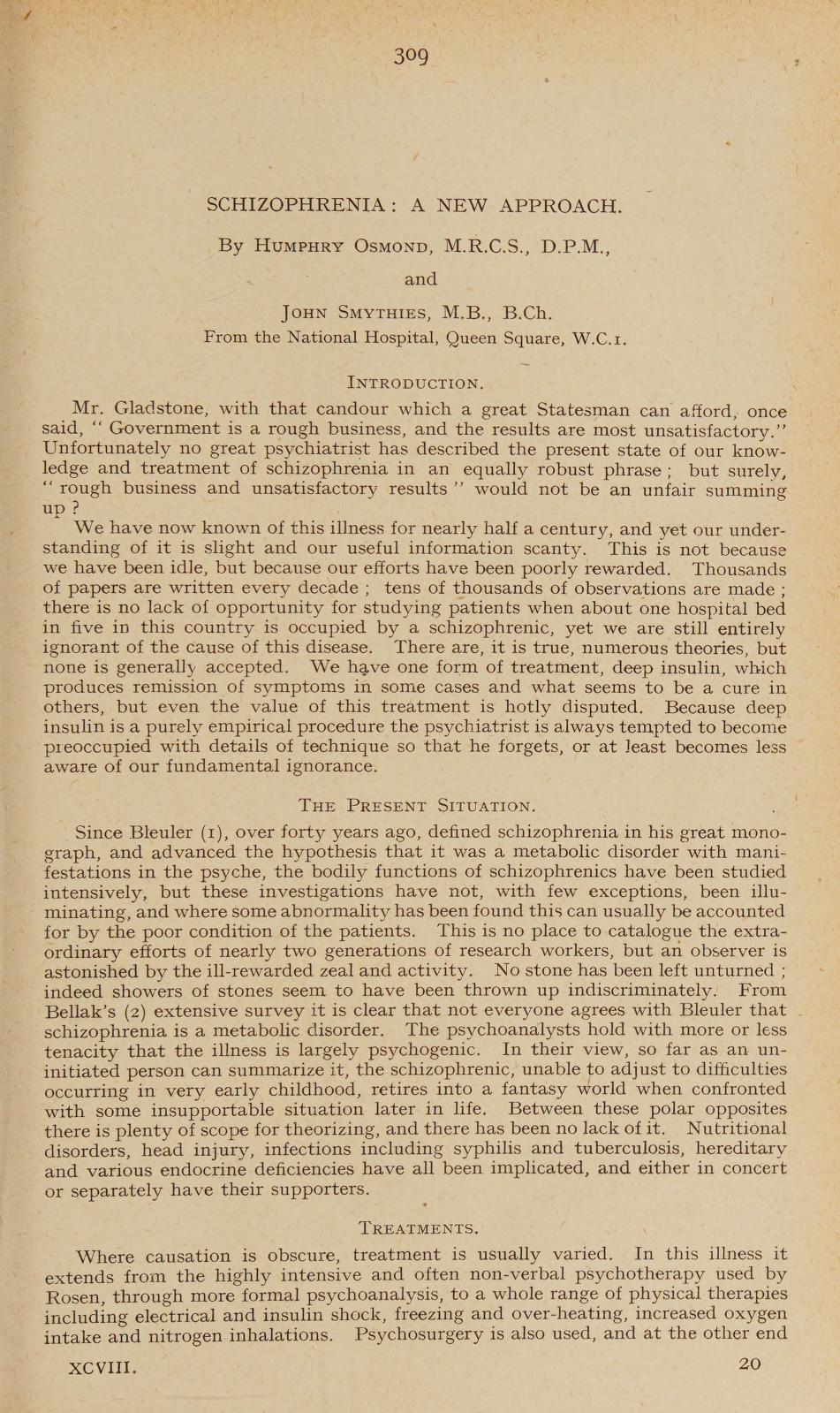
Osmond and Smythies argue that schizophrenia involves a naturally occurring adrenaline derivative chemically close to mescaline. Hosted here is a fair-use excerpt: their case that mescaline intoxication reproduces the symptoms of acute schizophrenia, the biochemical note on how a disorder of adrenaline's transmethylation could form such a compound, and their resulting hypothesis and discussion.

Read more
Experimental Schizophrenia-Like Symptoms
Academic Article, February 1952

Experimental Schizophrenia-Like Symptoms

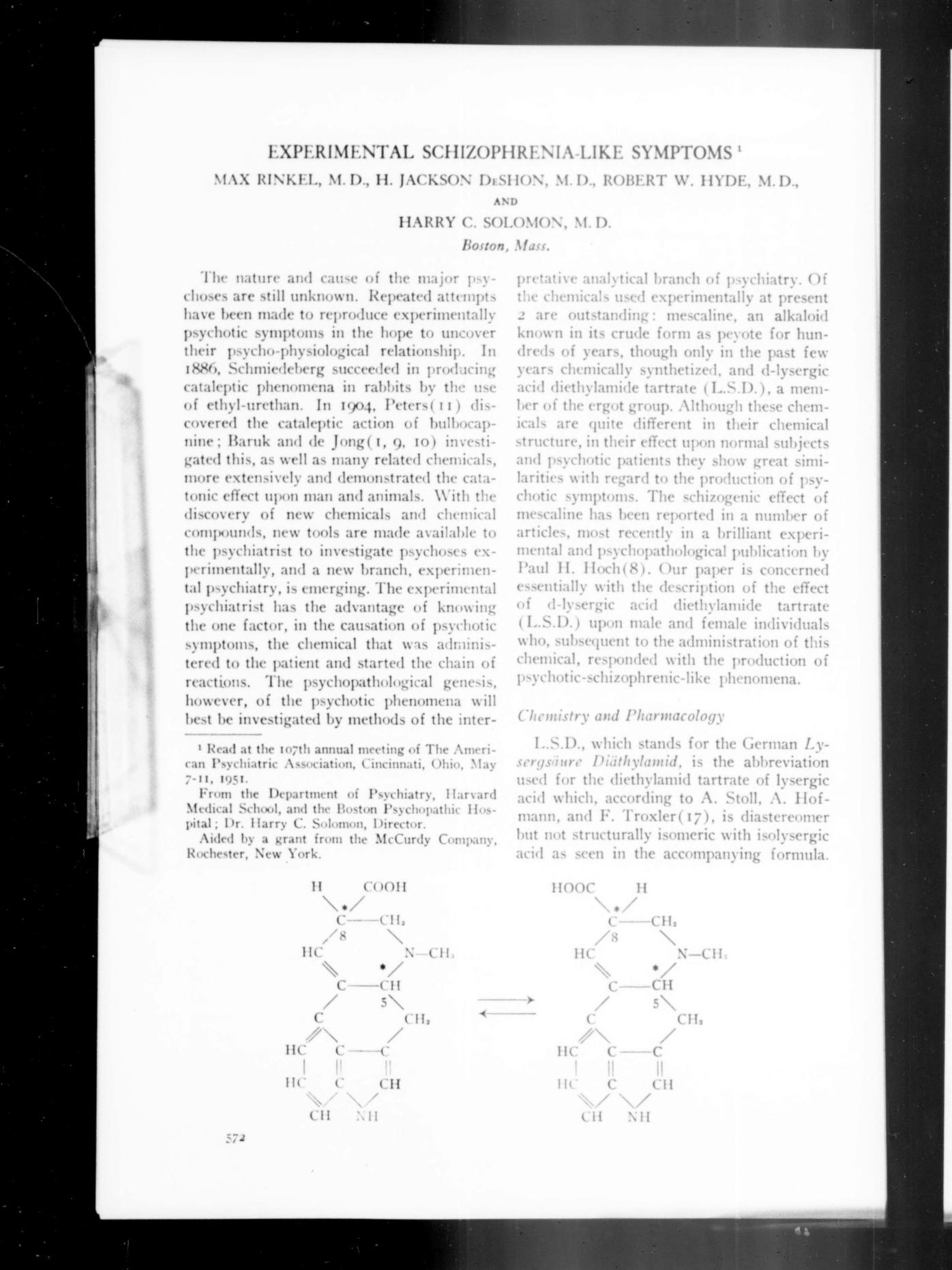
Rinkel and colleagues at Boston Psychopathic Hospital administered microgram doses of LSD tartrate to normal volunteers and schizophrenic, depressive, and paranoid patients. They reported the drug reliably produced thought disorder, hallucination, and depersonalization resembling clinical schizophrenia.

Read more
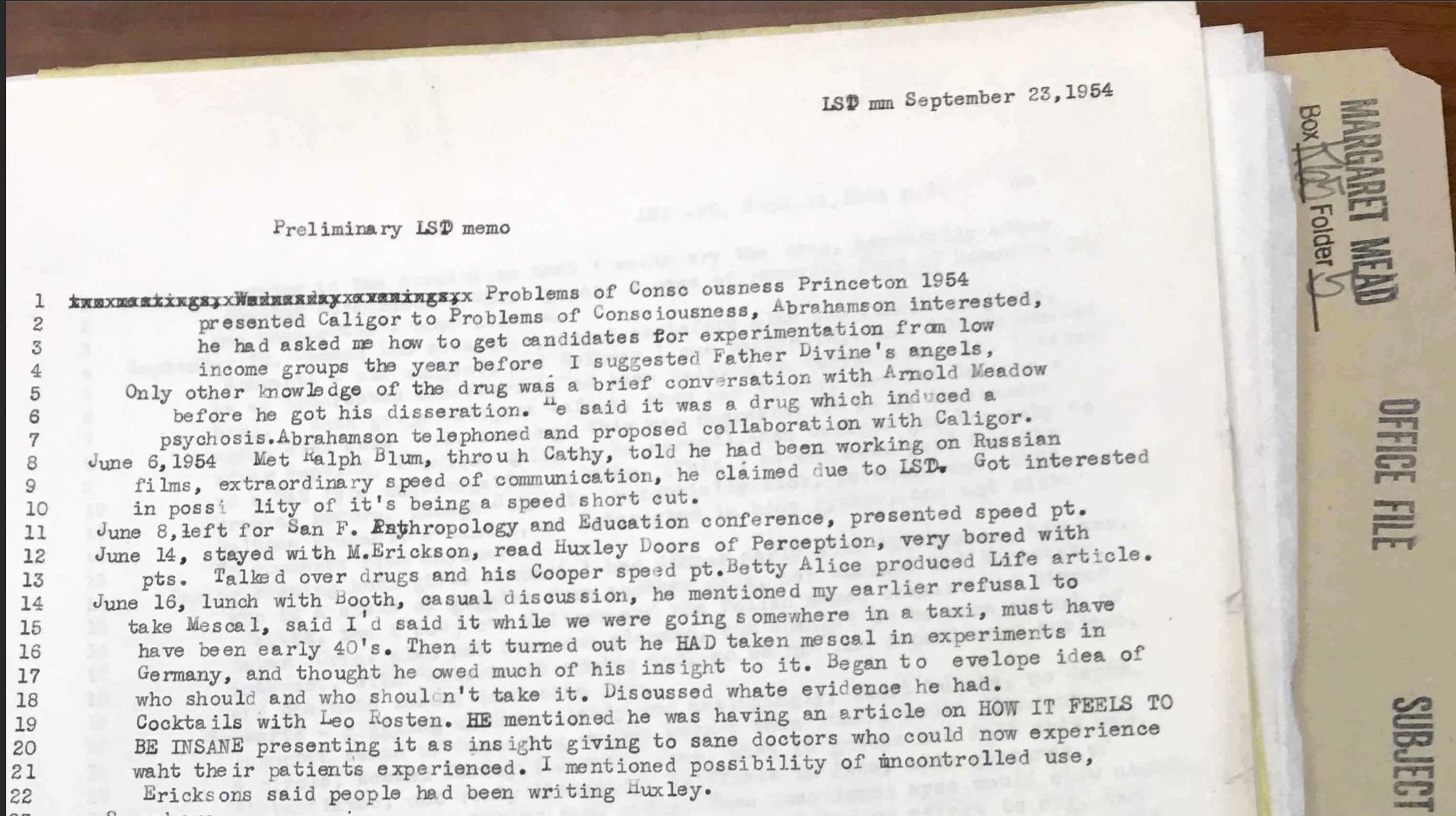
Margaret Mead’s LSD Memo
Manuscript, September 23-25, 1954

Margaret Mead’s LSD Memo

A memo from anthropologist [Margaret Mead](/biographies/margaret-mead)'s papers at the Library of Congress, recording her interest in LSD and other psychedelics in the summer of 1954 and her work with [Harold Abramson](/biographies/harold-abramson)'s research team, including [Conan Kornetsky](/biographies/conan-kornetsky) and [Murray Jarvik](/biographies/murray-jarvik).

Read more
Betty Eisner's First LSD Trip, October 10, 1955
Manuscript, October 10, 1955 (recalled in 2002)

Betty Eisner's first LSD trip

The psychologist Betty Eisner (1915–2004) recalls being the first research subject in Sidney Cohen's LSD study at UCLA in October 1955, quoting at length from the report she wrote after the session. The excerpt describes the psychological tests she was asked to take while under the drug, and her sense that they were trivial beside what she was experiencing. It is the opening chapter of her unpublished memoir, Remembrances of LSD Therapy Past (2002).

Read more
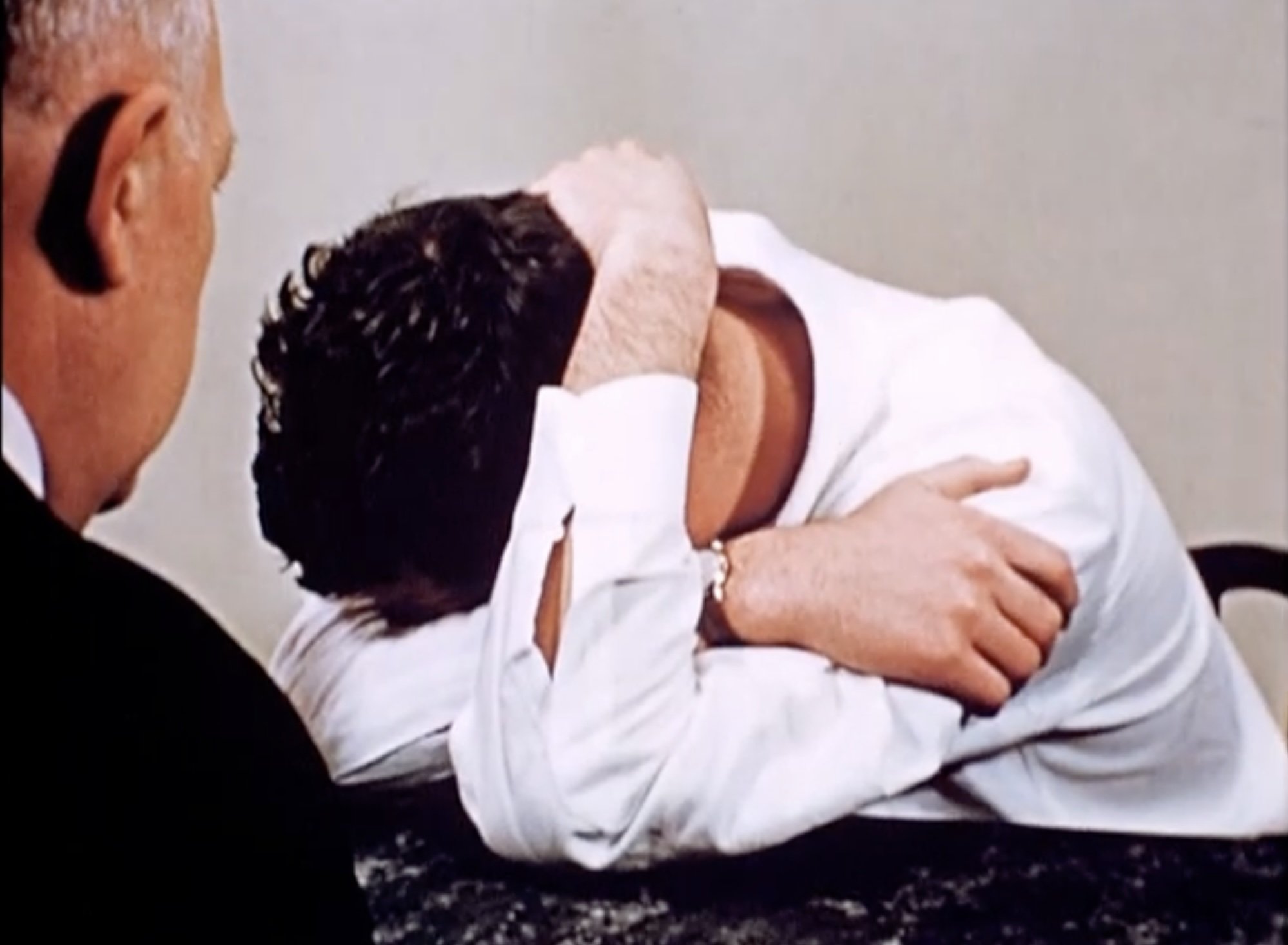
Experimental Compound MER 17 (Frenquel) and LSD-25
Film, 1955

Experimental Compound MER 17 (Frenquel) and LSD-25

A 1955 medical film made for the drug company Wm. S. Merrell about Howard D. Fabing's experiments at Christ Hospital in Cincinnati. A 22-year-old graduate student, "Ronnie," takes 100 micrograms of LSD; the film then shows Merrell's compound MER-17 (azacyclonol, sold as Frenquel) given to prevent or reverse the effects. It belongs to the 1950s search for drugs that could block a "model psychosis."

Read more
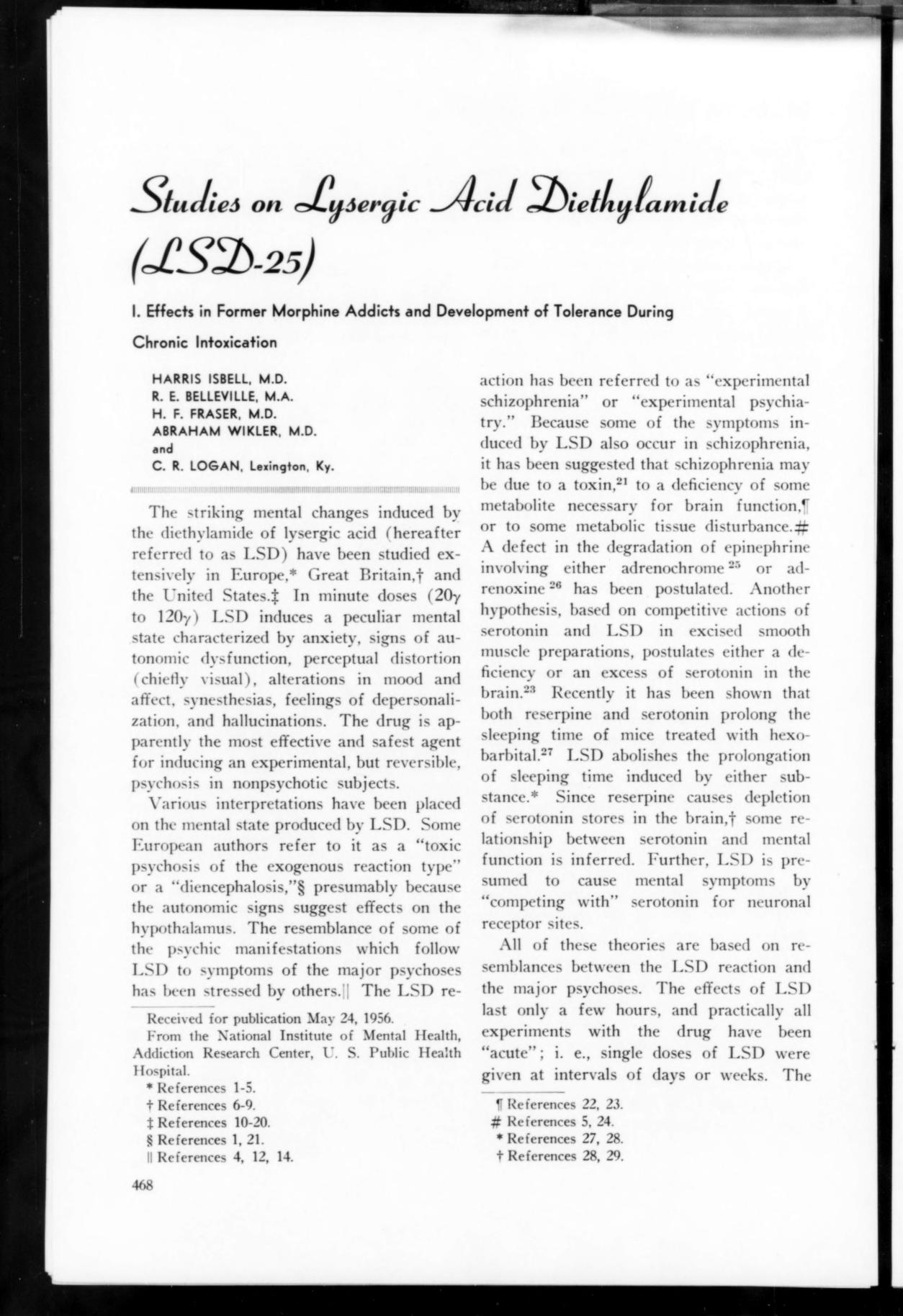
Studies on Lysergic Acid Diethylamide (LSD-25): I. Effects in Former Morphine Addicts and Development of Tolerance During Chronic Intoxication
Academic Article, November 1956

Studies on LSD-25: Tolerance in Former Morphine Addicts

I. Effects in Former Morphine Addicts and Development of Tolerance During Chronic Intoxication

Harris Isbell and colleagues at the NIMH Addiction Research Center in Lexington, Kentucky, gave LSD daily for up to eighty-five days to former morphine addicts to measure tolerance and compare effects to psychosis. They found rapid tolerance to both physiological and mental effects, which disappeared upon discontinuation.

Read more
Psychoanalysis and LSD-25: Foundations for a Combined Therapeutic Technique
Academic Article, September 10, 1957

Psychoanalysis and LSD-25

Foundations for a Combined Therapeutic Technique

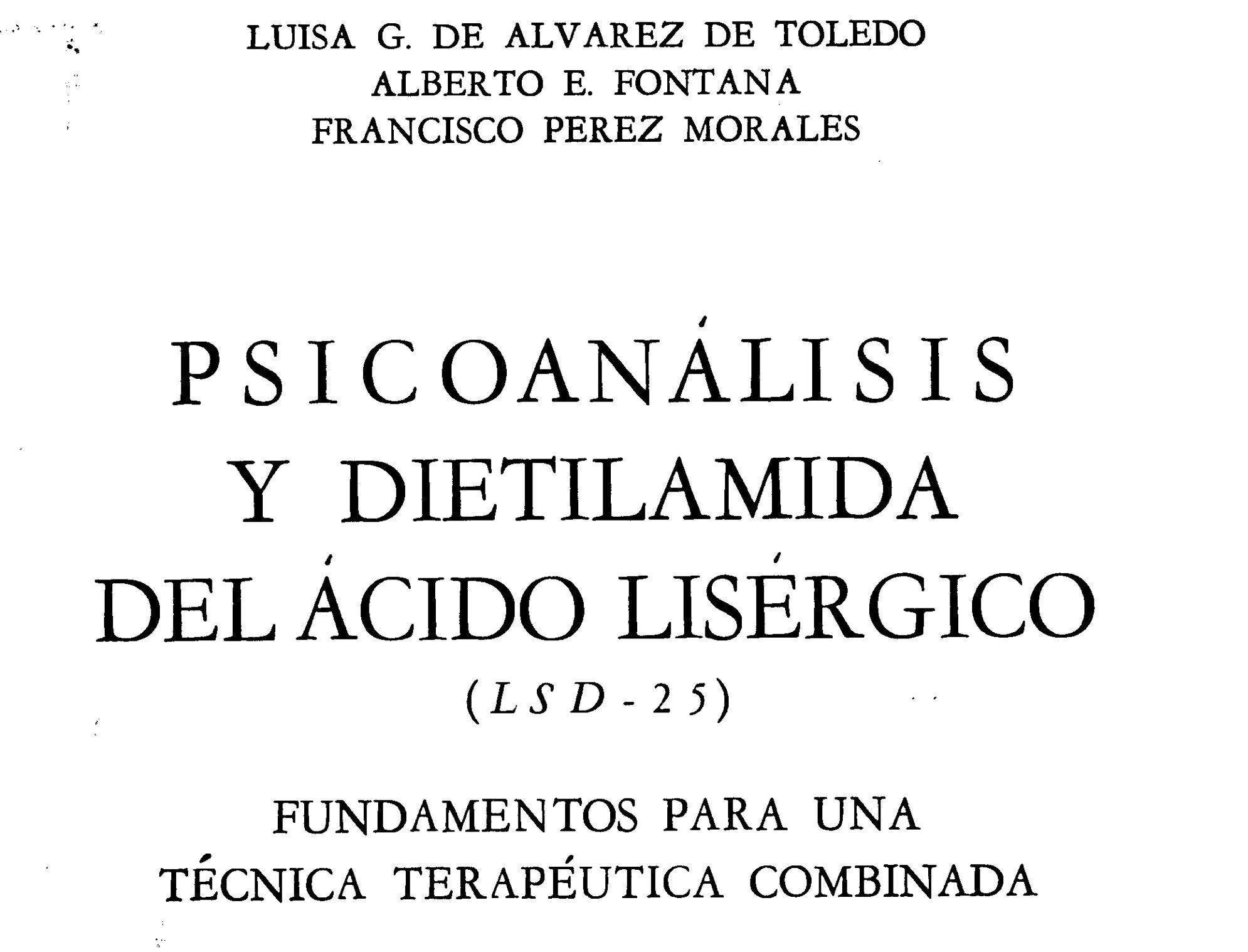
Luisa G. de Álvarez de Toledo's paper to the Argentine Psychoanalytic Association in Buenos Aires on September 10, 1957, setting out a method for combining LSD sessions with psychoanalysis. Case reports by Alberto E. Fontana and Francisco Pérez Morales follow. It is one of the earliest attempts in Latin America to fit LSD into psychoanalytic treatment.

Read more
Lysergic Acid Diethylamide: Side Effects and Complications
Academic Article, January 1960

Lysergic Acid Diethylamide

Side Effects and Complications

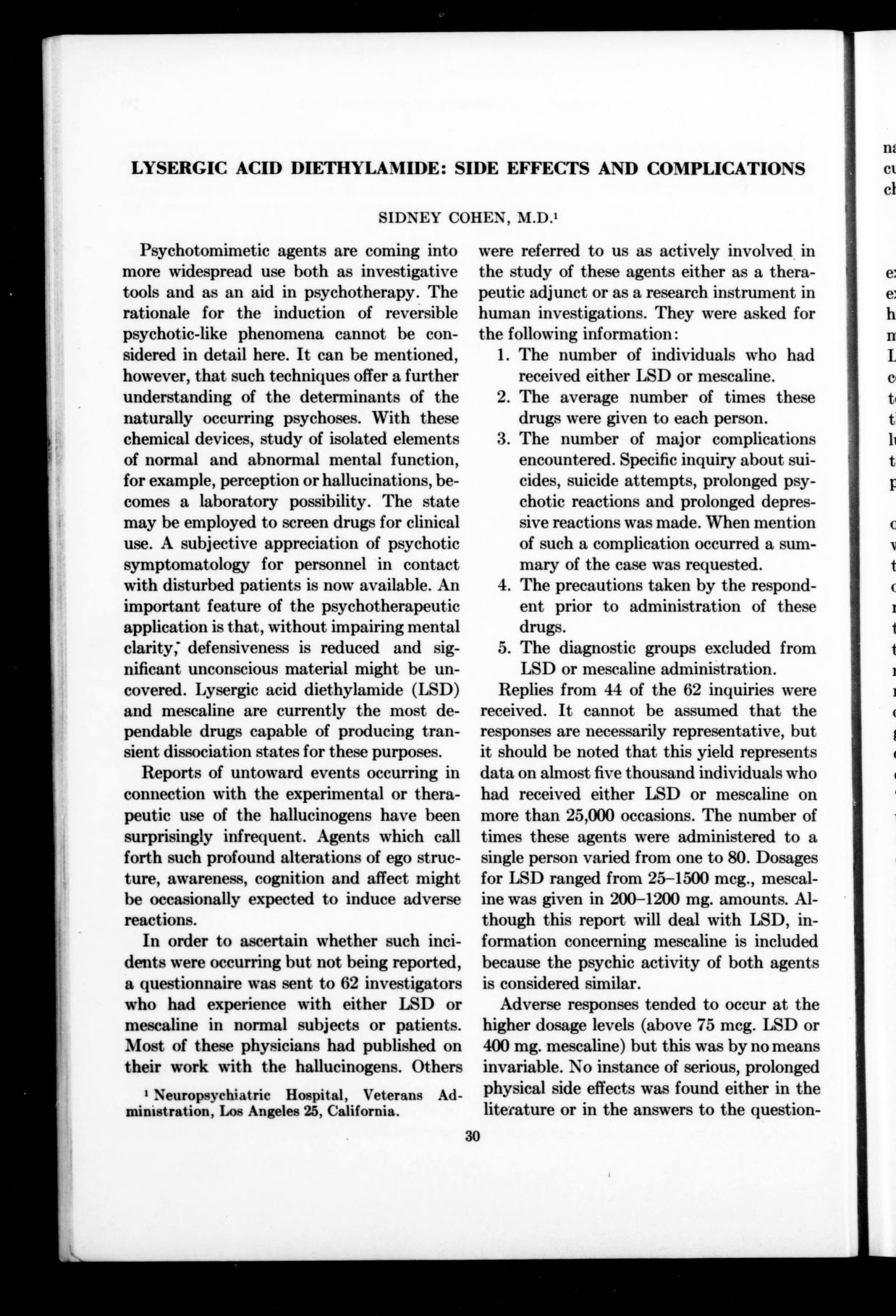
Sidney Cohen surveyed researchers at the VA Neuropsychiatric Hospital who had administered LSD or mescaline to nearly 5,000 subjects across more than 25,000 doses. He found no cases of serious prolonged physical harm and quantified low rates of suicide attempts, psychotic breaks over 48 hours, and other adverse effects.

Read more
Clinical Investigation of EA 1729
Source, June 1961

Clinical Investigation of EA 1729 (CRDLR 3074)

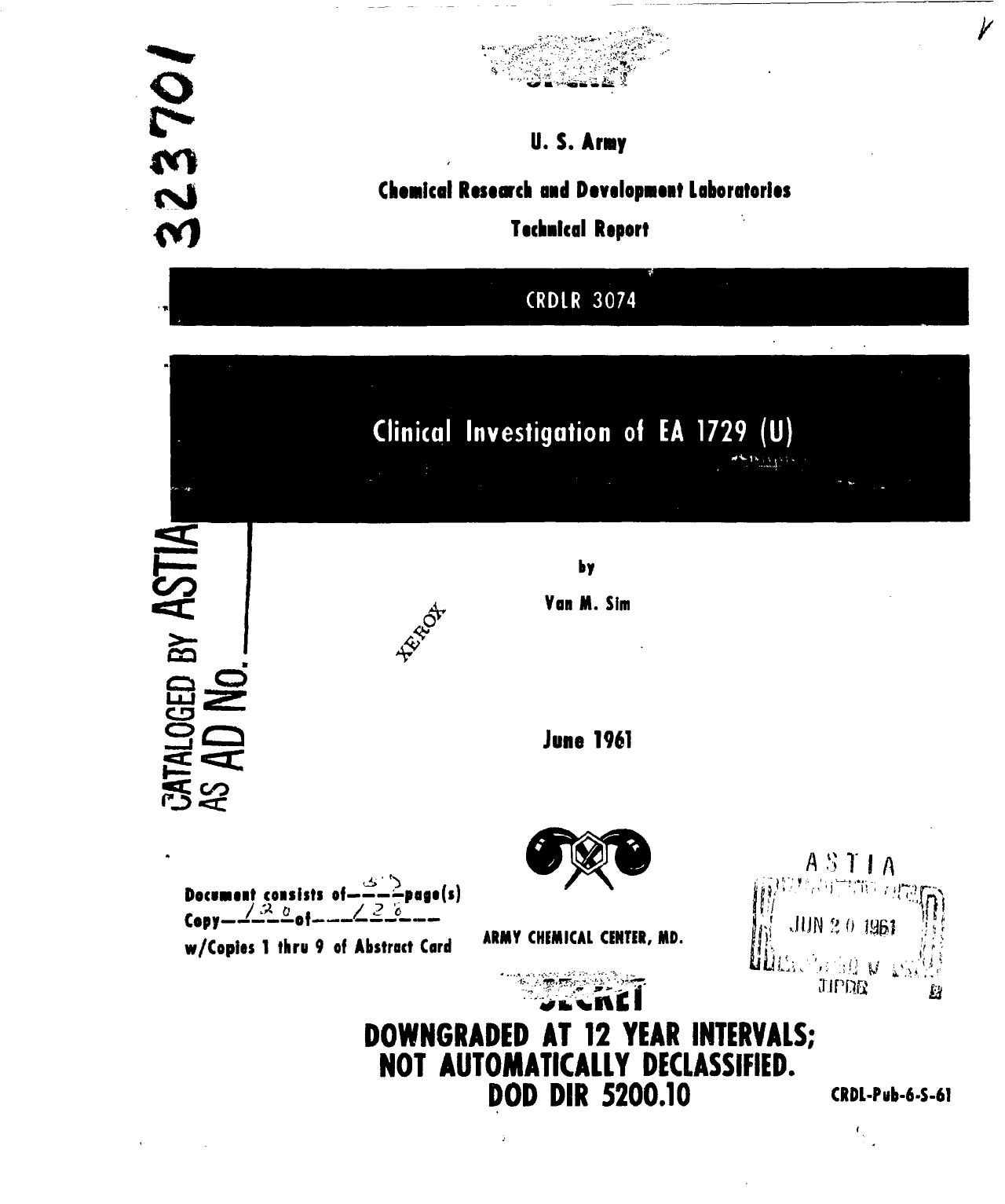
A declassified Army Chemical Research and Development Laboratories report on EA 1729 (LSD-25) as a non-lethal incapacitating agent. Includes clinical studies from 1955-1960 and September 1958 field tests at Fort Bragg in which whole military units were dosed with LSD and evaluated on operational tasks; all units proved unable to perform their missions.

Read more
Report of Inspection of MKULTRA
Testimony, 26 July 1963

CIA Inspector General MKULTRA Report

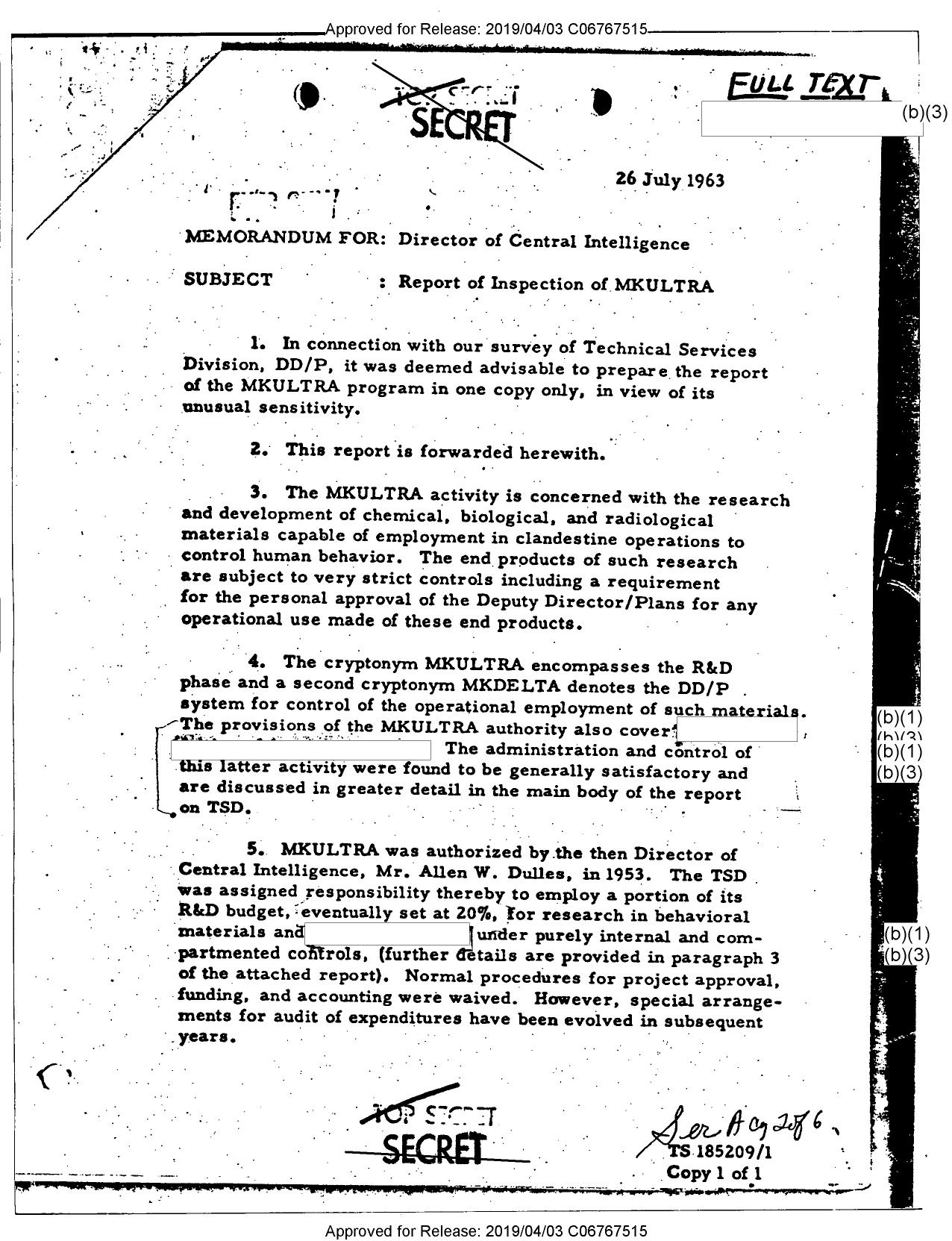
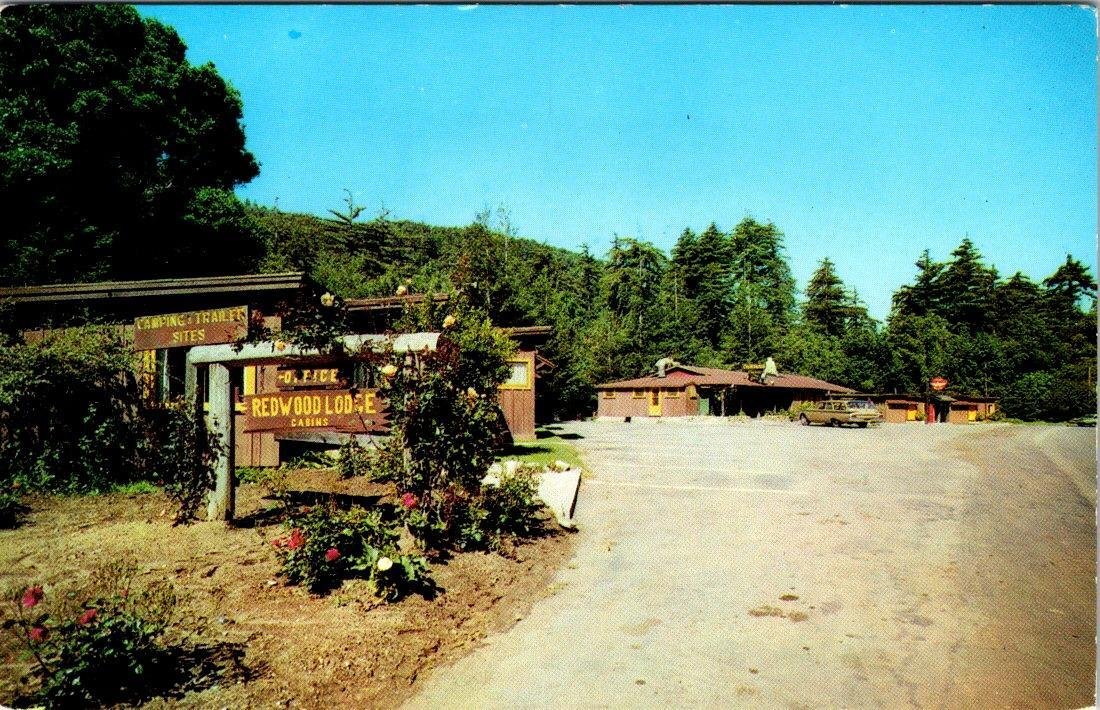
The CIA Inspector General's internal audit of MKULTRA, documenting covert LSD and drug testing on unwitting American citizens through a Bureau of Narcotics safehouse arrangement. The Inspector General finds safeguards inadequate and recommends terminating unwitting testing on Americans.

Read more
The Psychedelic Review, Vol. I, No. 1
Academic Article, June 1963

Psychedelic Review, No. 1

The founding issue of The Psychedelic Review, published in June 1963 by Timothy Leary and Ralph Metzner's International Federation for Internal Freedom. Hosted here are the issue's unsigned Editorial and Statement of Purpose, which set out the journal's program and explain its choice of the word 'psychedelic.' The issue's bylined articles, by Gerald Heard, R. Gordon Wasson, and Alan Watts, are described in the front matter but not reproduced.

Read more
The Psychedelic Experience: A Manual Based on the Tibetan Book of the Dead
Book, 1964

The Psychedelic Experience

A Manual Based on the Tibetan Book of the Dead

Leary, Metzner and Alpert recast the Tibetan Book of the Dead as a manual for LSD, psilocybin and mescaline sessions. Hosted here is a fair-use excerpt: the book's opening definition of 'set and setting,' and the full 'Preparation' and 'The Setting' sections, which give that idea its practical, session-by-session form.

Read more
Allen Ginsberg and Joe K. Adams Discuss LSD
Audio/Video, December 12, 1965

Allen Ginsberg and Joe K. Adams Discuss LSD

Allen Ginsberg's tape of a December 1965 conversation with the psychologist Joe K. Adams, with Peter Orlovsky present. Adams describes the months-long manic episode that followed an LSD session in 1960 and his involuntary hospitalization, and talks about figures in Bay Area psychedelic research such as Charles Savage and Karl Bowman.

Read more
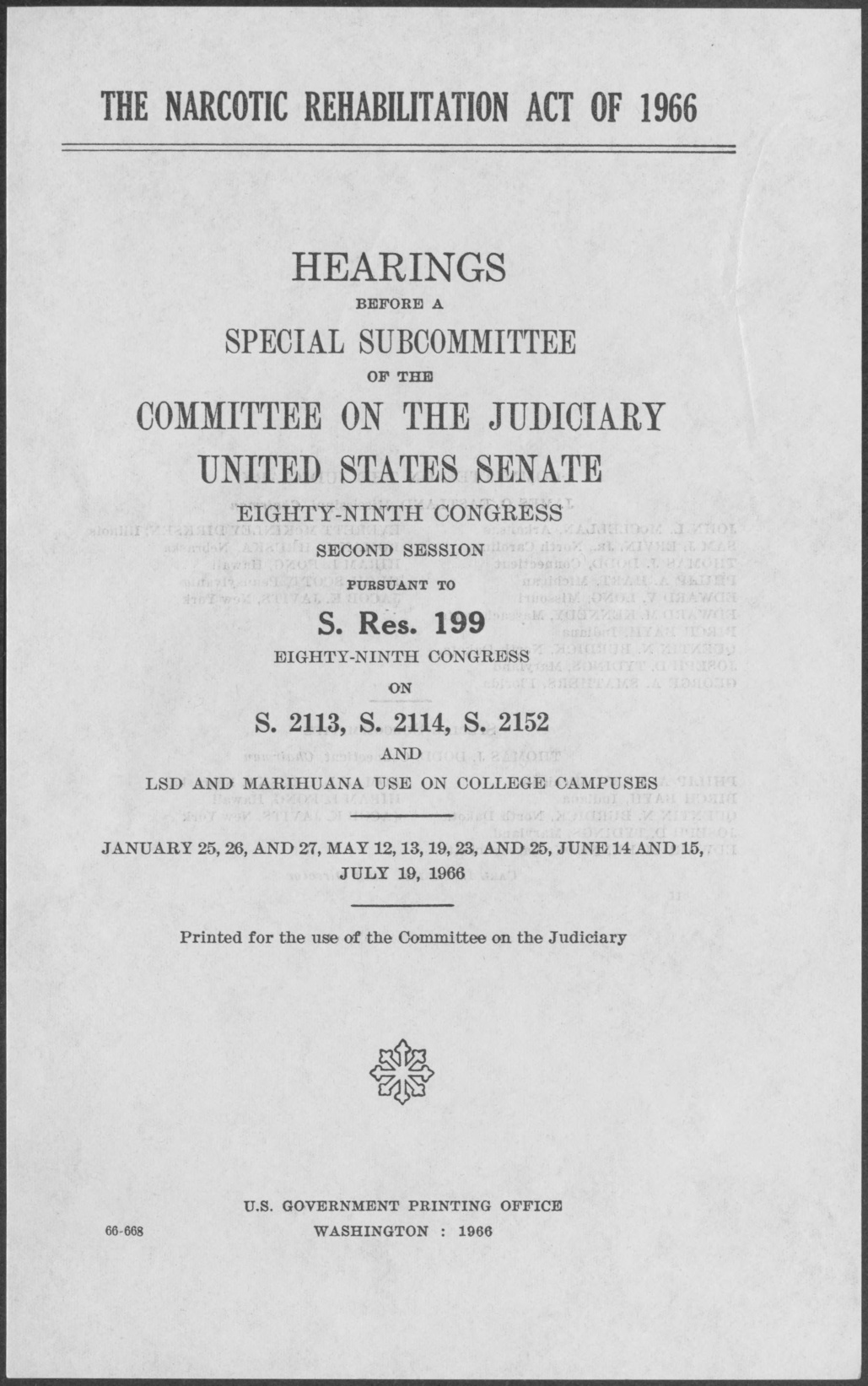
Testimony of Allen Ginsberg on LSD before a Special Subcommittee of the Senate Committee on the Judiciary
Testimony, June 14, 1966

Ginsberg Senate Testimony on LSD (1966)

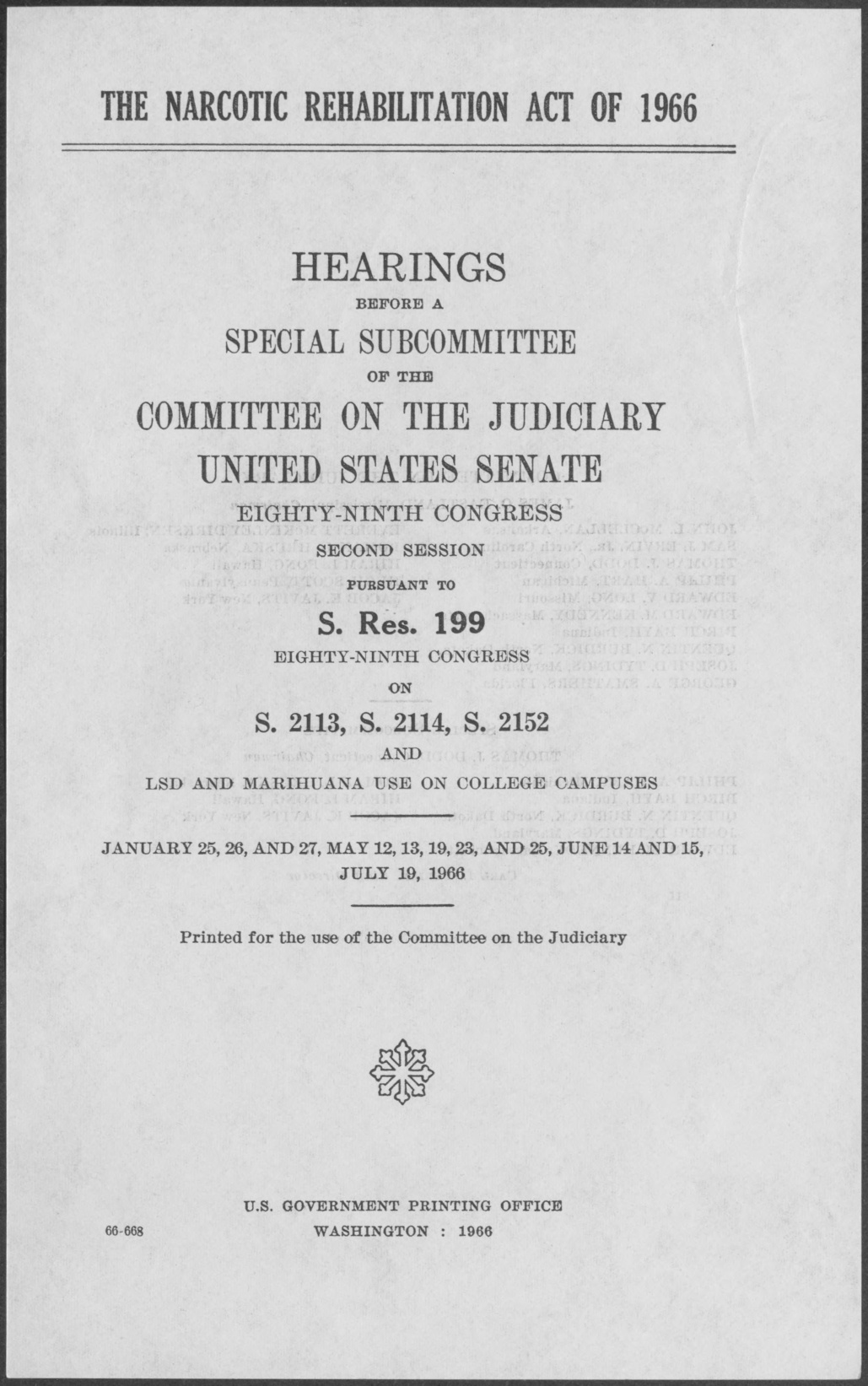
The poet Allen Ginsberg (1926–1997) testified on June 14, 1966, before the special Senate Judiciary subcommittee holding hearings on narcotic rehabilitation and LSD on college campuses, with Quentin N. Burdick (1908–1992) presiding. He read a long prepared statement describing his visionary experience of 1948 and his use of peyote, mescaline, LSD, and ayahuasca, then argued from newspaper coverage and the medical literature that LSD's dangers had been exaggerated and that research should be expanded. The record hosts the full printed text, pp. 487–509, including his questioning by Burdick and Jacob K. Javits (1904–1986), his list of proposed research topics (Exhibit No. 76), and the references he put into the record.

Read more
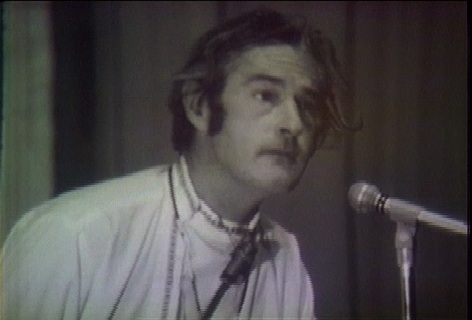
Testimony of Timothy Leary on LSD before a Special Subcommittee of the Senate Committee on the Judiciary
Testimony, May 13, 1966

Leary Senate Testimony on LSD (1966)

Timothy Leary (1920–1996), then president of the Castalia Foundation at Millbrook, New York, testified on May 13, 1966, before the special Senate Judiciary subcommittee chaired by Thomas J. Dodd (1907–1971) that was holding hearings on narcotic addict rehabilitation and on LSD use on college campuses. Leary proposed licensing adults to use psychedelics and offering supervised university courses, and he sparred at length with Senator Edward M. Kennedy (1932–2009) over control, possession, and danger. The record hosts the full printed exchange, pp. 238–258, from Dodd's introduction to the recess.

Read more
LSD: Lettvin vs Leary
Audio/Video, November 20, 1967

LSD: Lettvin vs Leary

NET Journal debate with transcript from Innisfree's LSD: The Great Debate

A televised debate between Timothy Leary and MIT professor Jerome Lettvin over LSD, religion, danger, judgment, and social control, staged at MIT's Kresge Auditorium and later broadcast by NET Journal.

Read more
The Houseboat Summit
Newspaper Article, February 1967

Houseboat Summit

A conversation among Leary, Ginsberg, Snyder, and Watts, taped aboard Watts's houseboat and published in San Francisco Oracle no. 7 (February 1967). Hosted here is the opening run of the conversation, in which the four debate dropping out of mainstream society versus working within it, and trace the psychedelic movement's lineage back through earlier utopian and religious dissent. The full conversation continues on to LSD, utopian withdrawal, and post-drop-out economics.

Read more
United States v. Kuch
Source, July 1, 1968

United States v. Kuch

Judge Gesell denies the Neo-American Church's motion to dismiss LSD and marihuana charges against a minister. The court catalogs the church's symbols and regalia, concludes it lacks genuine religious doctrine, and rejects an equal-protection claim based on the Native American Church's peyote exemption.

Read more
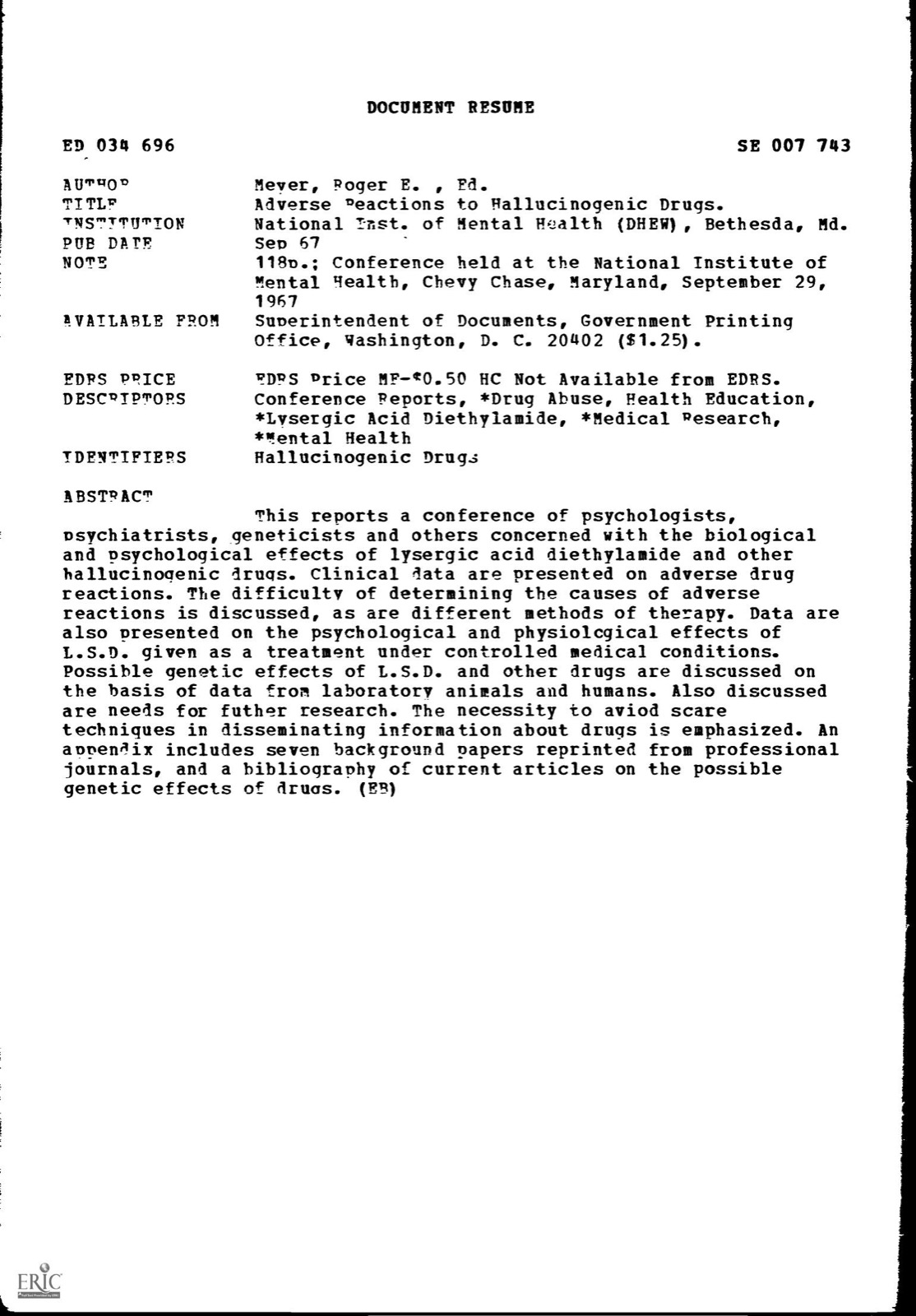
Adverse Reactions to Hallucinogenic Drugs: Proceedings of a Conference Held at the National Institute of Mental Health
Source, 1969 (conference held September 29, 1967)

Adverse Reactions to Hallucinogenic Drugs

Proceedings of a Conference Held at the National Institute of Mental Health

Proceedings of an NIMH conference held September 29, 1967, on adverse reactions to hallucinogenic drugs, published 1969. Addressed LSD's alleged chromosomal and teratogenic effects and the government's challenge in communicating risks to the drug-using public without propaganda.

Read more
PIC Bulletin 33
Source, 1970

No. 33

Lisa Bieberman's December 1970 bulletin explains the Comprehensive Drug Abuse Prevention and Control Act, signed on October 27, 1970, which placed LSD and other psychedelics in Schedule I. She criticizes its penalties, its "continuing criminal enterprise" and "dangerous special drug offender" provisions, and its no-knock searches, then argues against the claim that drug-induced religious experience is "unnatural."

Read more
PIC Bulletin 32
Source, 1970

No. 32

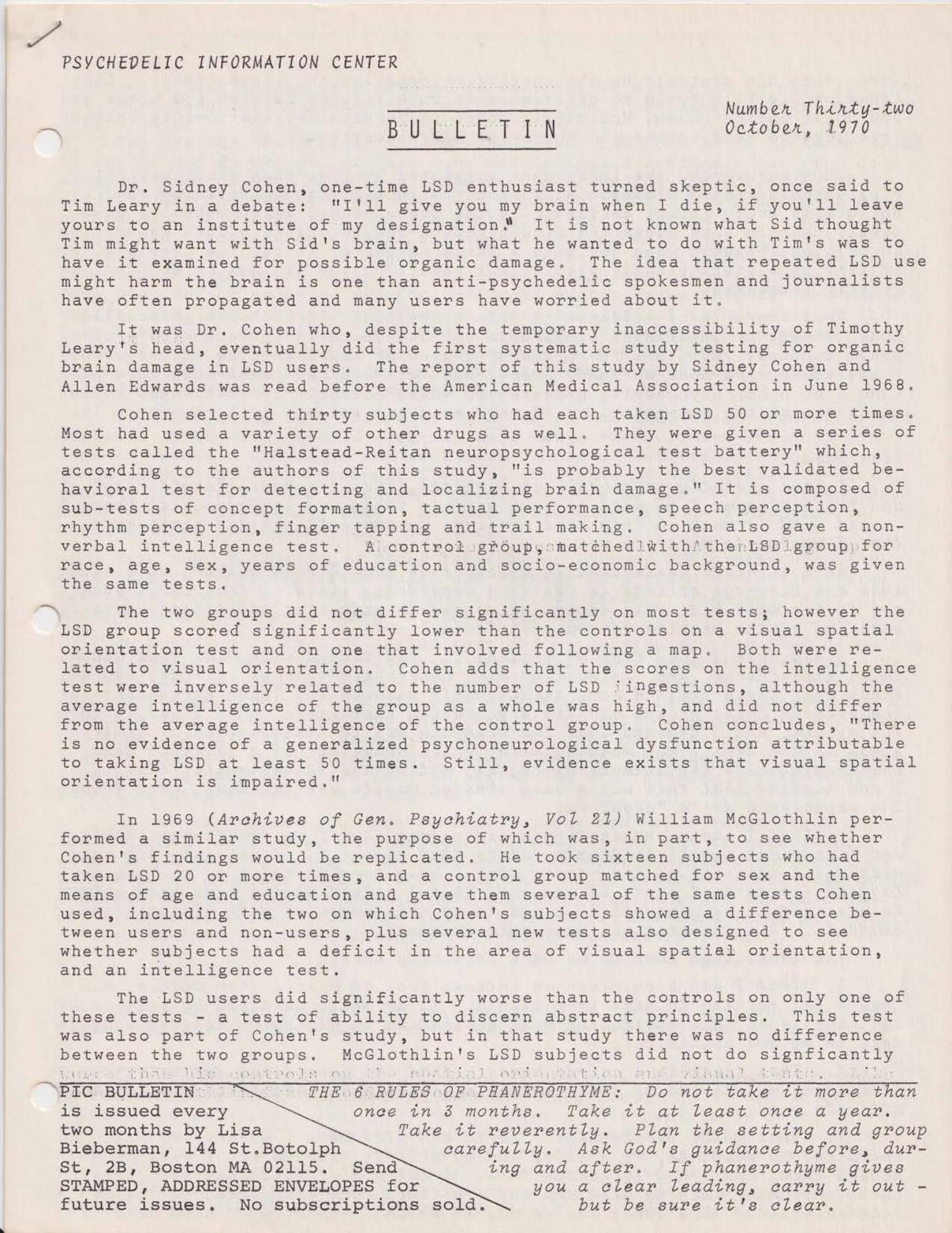
Lisa Bieberman's October 1970 bulletin reviews the two studies then available on whether heavy LSD use damages the brain: Sidney Cohen and Allen Edwards's 1968 neuropsychological tests of thirty users, and William McGlothlin's 1969 attempt to replicate them. Because their results disagree, she concludes there is no evidence of general brain damage. The issue also prints a social worker's letter about how taking LSD changed his work with drug-using teenagers.

Read more
How to Guide a Session (from The Boo Hoo Bible)
Source, 1971

How to Guide a Session

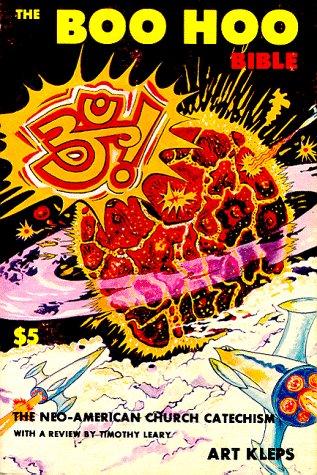
Art Kleps's chapter on running an LSD session from The Boo Hoo Bible (1971), the Neo-American Church catechism and handbook. Hosted here is roughly the first half of the chapter: Kleps's advice on the session room, his distinction between 'Ivory' (spiritual) and 'Horny' (psychological) sessions, his view of what a guide needs to know, and his 'Good Answer / Bad Answer' examples for questions a subject might ask during a session.

Read more
PIC Bulletin 34
Source, 1971

No. 34

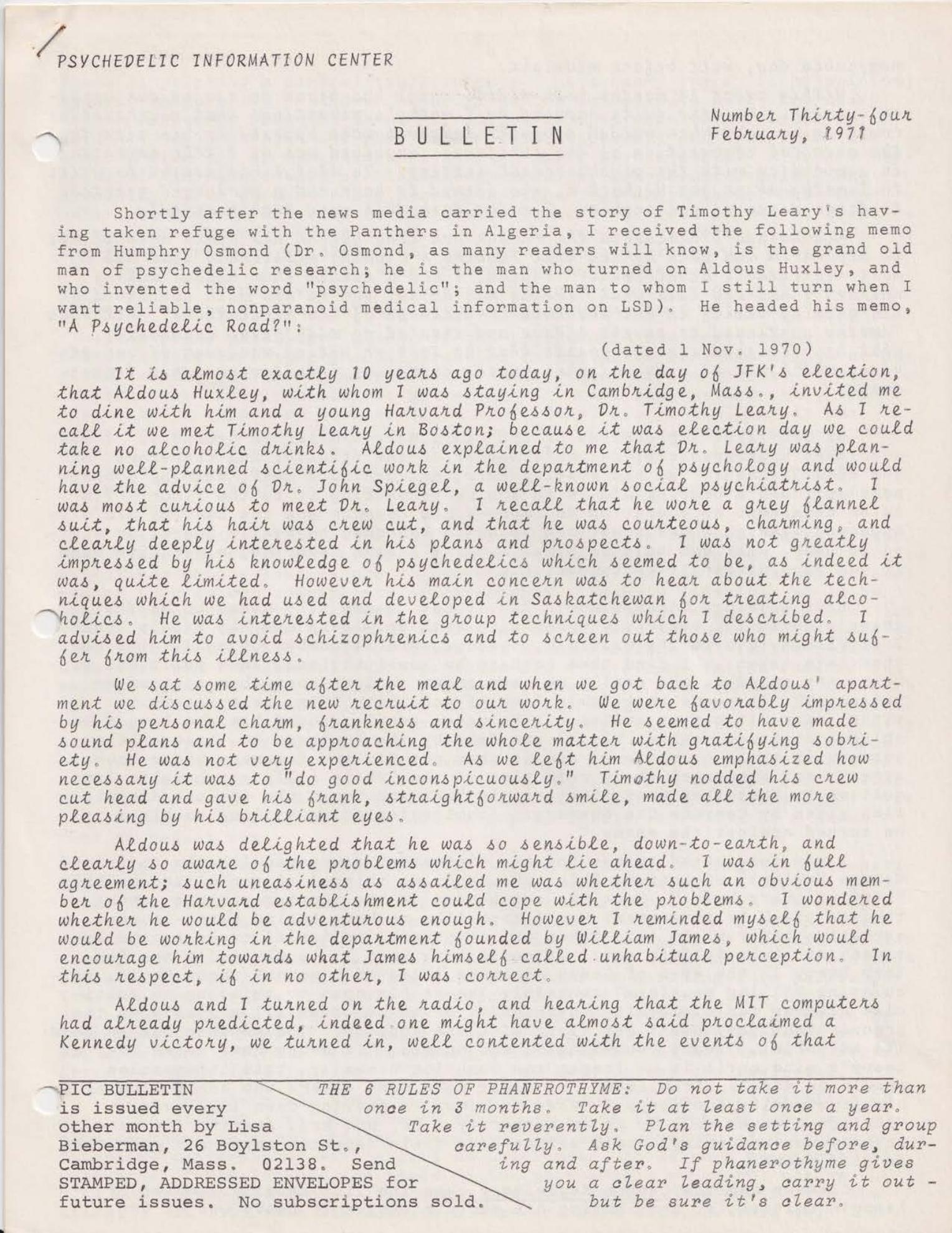
Lisa Bieberman's February 1971 bulletin responds to news that the Black Panthers in Algeria had put the escaped Timothy Leary under house arrest. It prints a memo from Humphry Osmond recalling how he and Aldous Huxley met Leary in 1960 and later came to distrust his missionary zeal, followed by Bieberman's own memories of Leary at Harvard and a critique of press claims that LSD had ruined his mind.

Read more
FBI Interview of Timothy Leary on His 1970 Prison Escape and the Brotherhood of Eternal Love
Testimony, 17 July 1974 (interview); 12 August 1974 (transmittal airtel)

FBI File: Leary's Escape Network

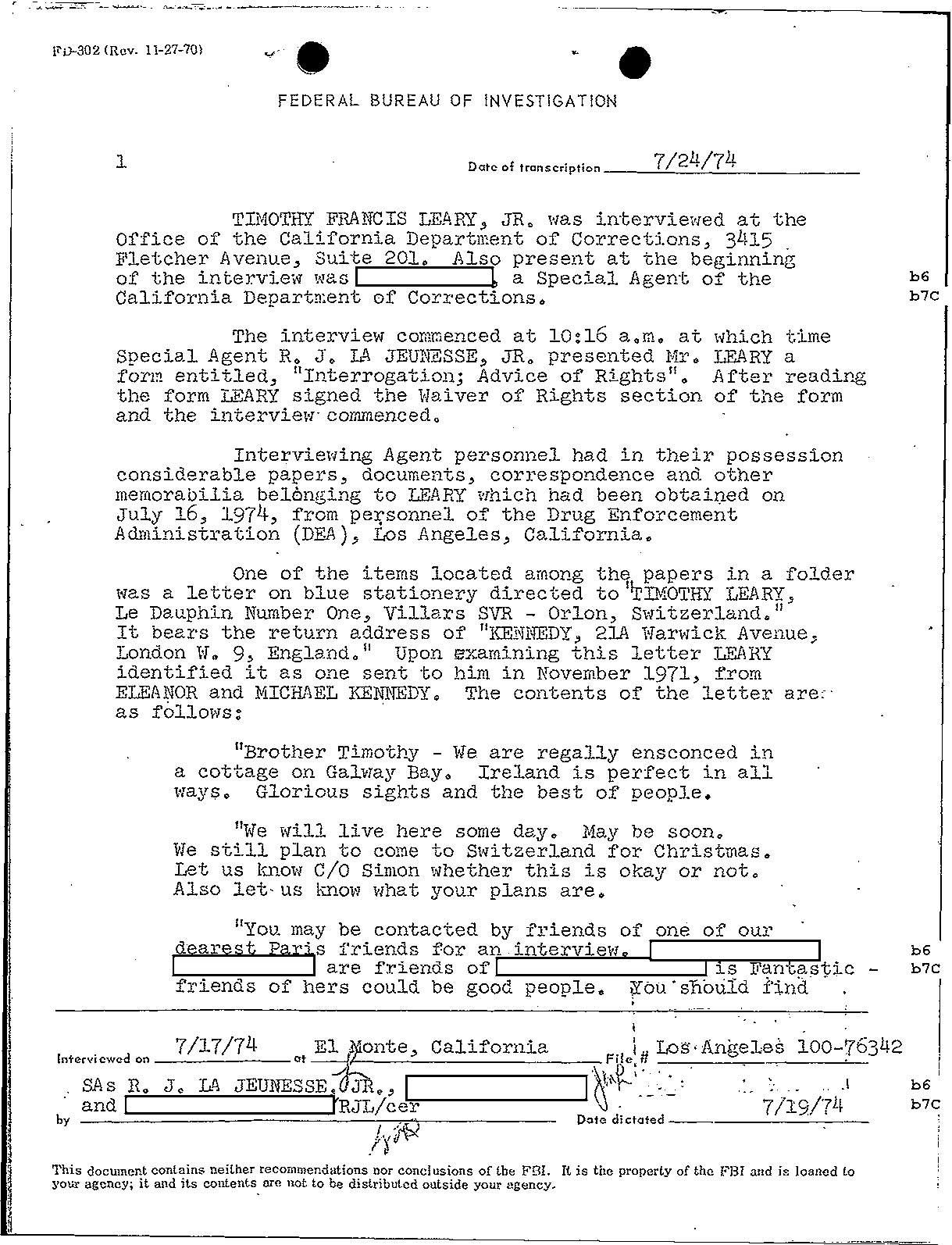
An FBI FD-302 interview (July 1974) in which recaptured Timothy Leary decodes the coded correspondence from his September 1970 prison escape. Leary identifies the Brotherhood of Eternal Love as the Laguna Beach LSD collective 'Group', Michael Randall as 'M', attorney Michael Kennedy, fellow inmate William Bellinger, and the Weathermen as 'Consultants' who staged the escape.

Read more
CIA R&D and Testing of Behavioral Drugs
Testimony, 5 February 1975

CIA R&D and Testing of Behavioral Drugs (1975)

An Inspector General memorandum and attached summary paper on CIA behavioral-drug programs from BLUEBIRD (1949) through OFTEN/CHICKWIT (1967-1973). It includes the Agency's account of Frank Olson's death after being surreptitiously dosed with LSD at Deep Creek Lake in November 1953.

Read more
Report to the President by the Commission on CIA Activities within the United States
Source, June 1975

Report to the President by the Commission on CIA Activities within the United States

Rockefeller Commission findings on CIA drug testing and domestic activities

The Rockefeller Commission's 1975 report was the first major presidential inquiry to put CIA drug experiments, including LSD-related episodes and the death of Frank Olson, into an official public account. It became a bridge between the commission investigation, the Church Committee, and the later Senate MKULTRA hearing.

Read more
Testimony of Sidney Gottlieb before the Senate Select Committee on Intelligence Activities
Testimony, 15 October 1975

Sidney Gottlieb Church Committee Testimony (1975)

Staff testimony by CIA chemist Sidney Gottlieb before the Church Committee on MKULTRA. Gottlieb discusses LSD training for intelligence officers and contract research, and confirms TSS had no informed-consent policy for contracted experiments.

Read more
Foreign and Military Intelligence: Church Committee Final Report, Book I
Source, 1976

Foreign and Military Intelligence

Full Senate report including the chapter on chemical and biological agents

Book I of the Church Committee final report, Foreign and Military Intelligence, includes the committee's findings on CIA testing and use of chemical and biological agents. The full volume places MKULTRA and LSD-related experimentation within broader findings on covert action, intelligence oversight, and congressional accountability.

Read more
Use of Volunteers in Chemical Agent Research
Testimony, March 1976

Army Inspector General Report on LSD Volunteers

An Army Inspector General review of volunteer drug testing at Edgewood Arsenal and in Intelligence Corps LSD trials (1958-1960). It finds that volunteers in the Intelligence Corps LSD program did not receive informed consent before their first dose.

Read more
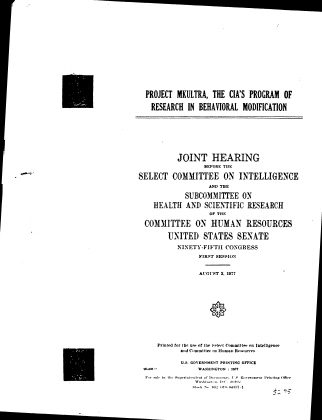
Project MKULTRA, the CIA's Program of Research in Behavioral Modification
Testimony, August 3, 1977

Project MKULTRA, the CIA's Program of Research in Behavioral Modification

1977 Senate joint hearing on LSD, behavioral research, and CIA records

A joint Senate hearing on Project MKULTRA after CIA director Stansfield Turner informed Congress that financial records had surfaced for previously destroyed behavioral-research files. The hearing and appendices document LSD-related projects, agency recordkeeping, and congressional oversight of CIA human-subjects research.

Read more
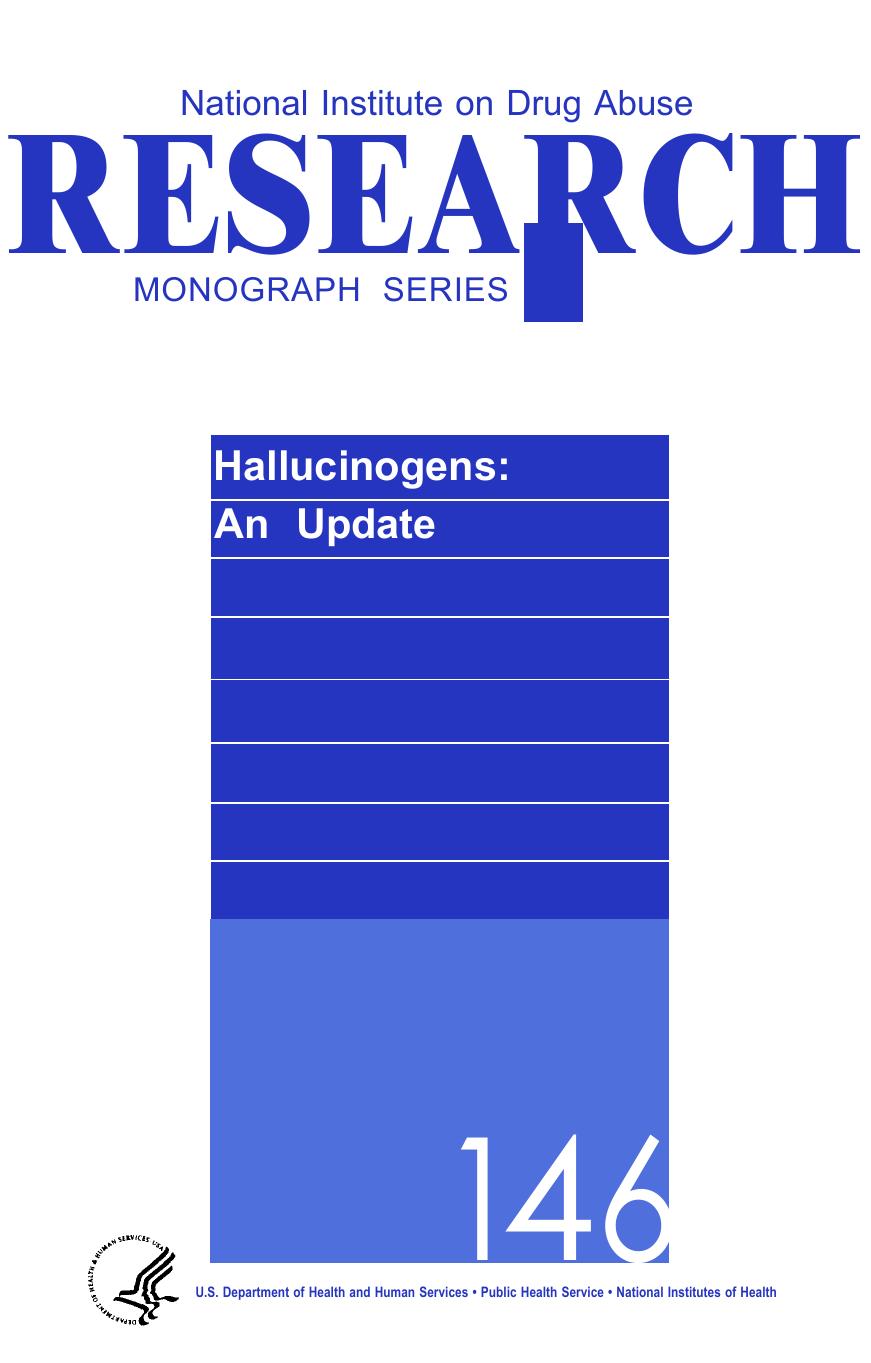
Hallucinogens: An Update (NIDA Research Monograph 146)
Academic Article, 1994

NIDA Research Monograph 146

An Update (NIDA Research Monograph 146)

Proceedings of a 1992 NIDA technical review on hallucinogen research, prompted by rising LSD use among teenagers. Includes Rick Strassman's account of the regulatory process (IRB, DEA, FDA) for his DMT study, the first human hallucinogen study approved since the early 1970s.

Read more
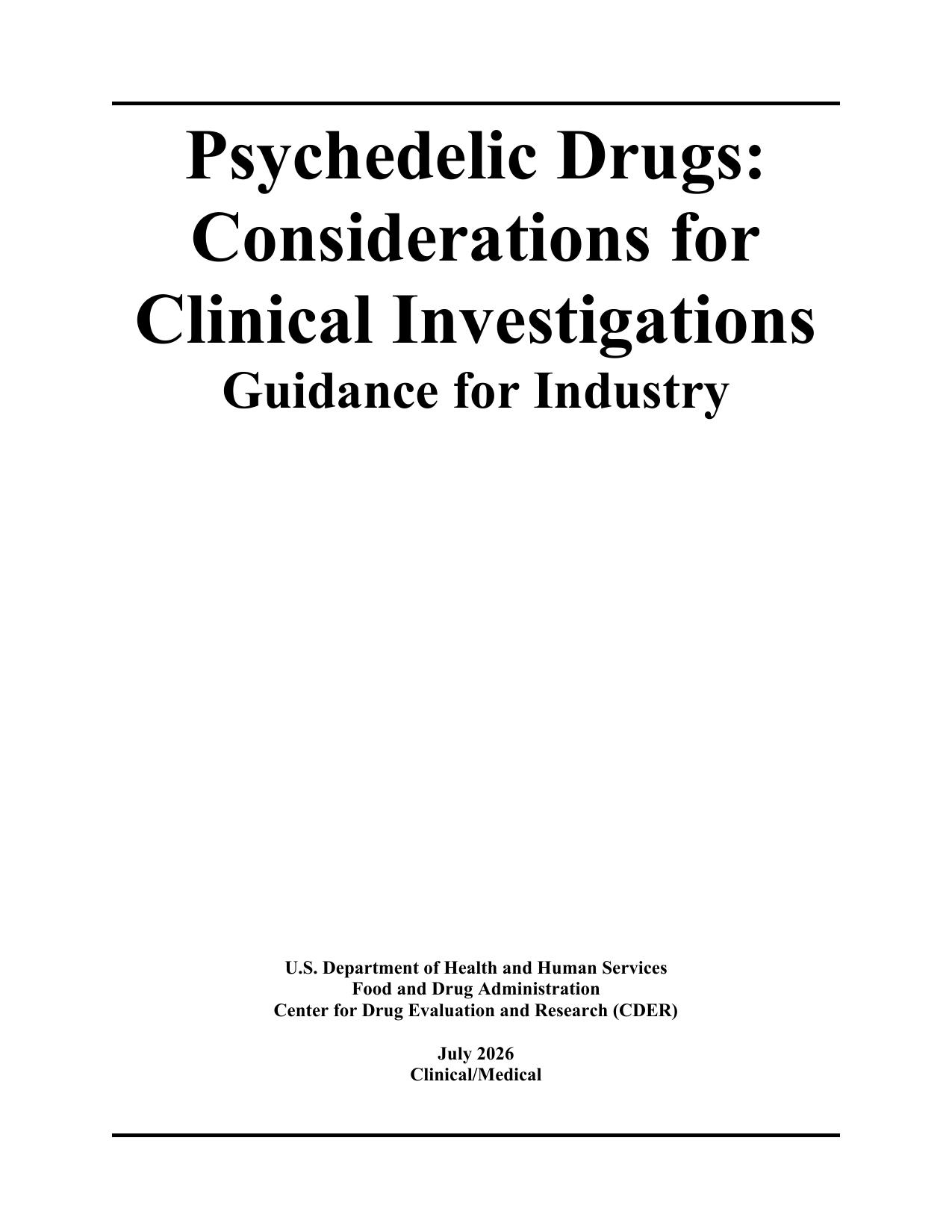
Psychedelic Drugs: Considerations for Clinical Investigations (Guidance for Industry)
Source, July 2026 (finalizing a June 2023 draft)

FDA Psychedelic Drugs Guidance

Considerations for Clinical Investigations (Guidance for Industry)

FDA guidance (July 2026) for sponsors developing psychedelics—5-HT2A agonists including psilocybin and LSD, plus MDMA—as approved medicines. It addresses the regulatory pathway for Schedule I drugs in clinical trials and identifies methodological challenges: perceptual effects complicate blinding ('functional unblinding'), and the independent contribution of psychotherapy paired with dosing remains uncharacterized.

Read more